IPO Section | Zero interest, zero fees, zero cash subscription
SpaceX Goes Public: How Hong Kong Investors Can Capitalize on the Opportunity
Content Summary
With reports that Elon Musk's space empire, SpaceX, has secretly filed for an IPO, this super unicorn valued at up to US$1.75 trillion has become the focus of global attention. This article, from the perspective of Hong Kong investors, dissects the "Galactic Core" business ecosystem it forms with Tesla and xAI. If Hong Kong investors are optimistic about SpaceX, they can participate in its investment through the following three main methods:
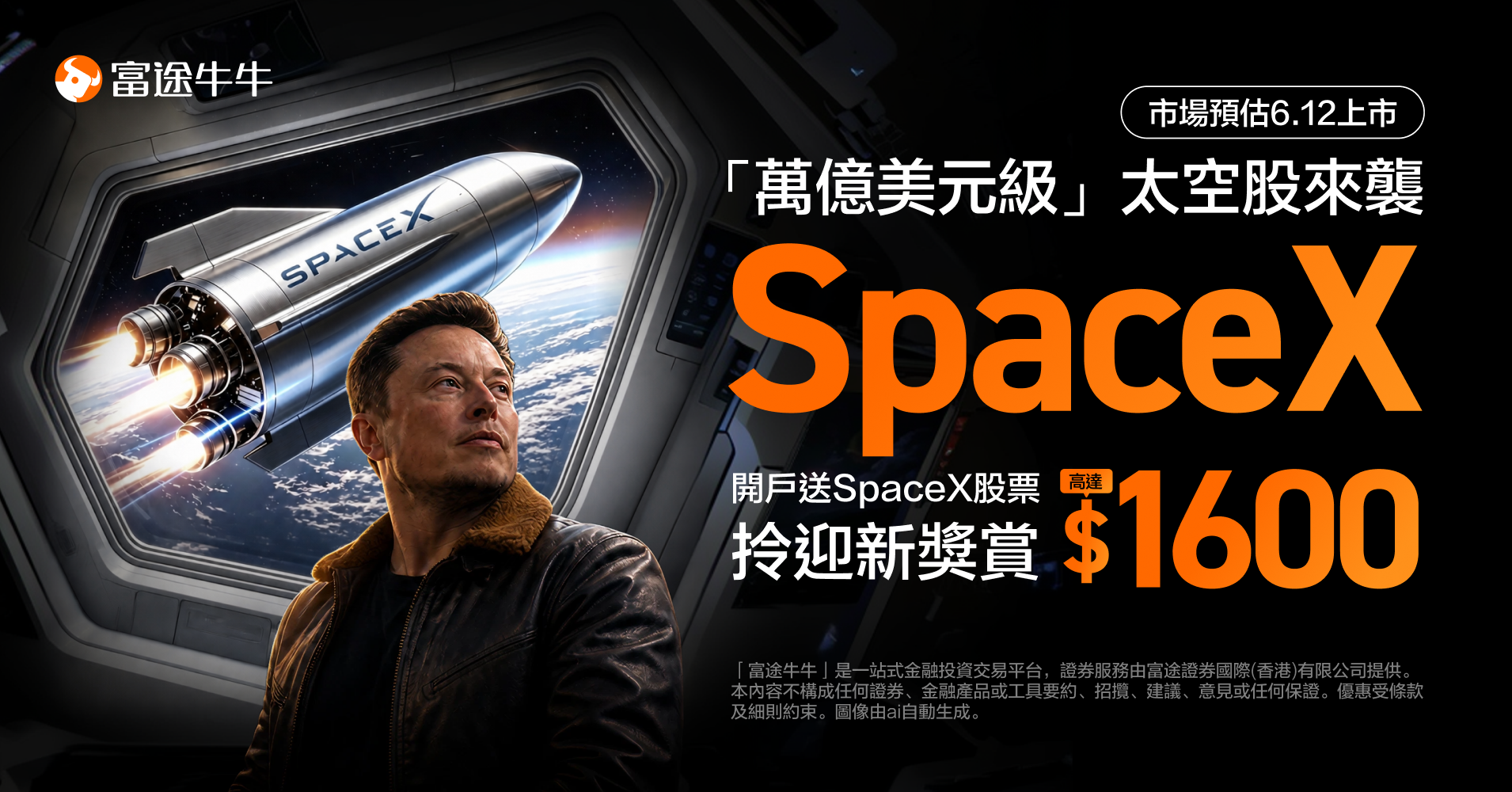
Direct participation: Join in trading SpaceX U.S. stocks. For a limited time, open a Futu U.S. stock account and receive up to $1,600 worth of SpaceX shares—be among the first to become shareholders.
Concept stock layout: Analyze the synergy between concept stocks EchoStar (SATS), partner Planet Labs, and potential competitor Rocket Lab.
Industry ETFs: Diversify your portfolio through ETFs, while remaining vigilant about the risk of "valuation compression" in certain sectors following an IPO.
This guide will provide an in-depth analysis, from a financial perspective, of SpaceX's investment appeal, the progress of its IPO, and the strategic allocation options currently available to Hong Kong investors.
Latest Updates on SpaceX's IPO
According to CNBC,, SpaceX plans to conduct its IPO at a fixed price of $135 per share, valuing the company at $1.77 trillion. This valuation would make Musk's company the seventh-largest in the United States, surpassing Tesla, which has a market cap of approximately $1.6 trillion.
According to Reuters,, sources revealed that SpaceX plans to go public as early as June 12 and has chosen the Nasdaq as its trading venue, with the ticker symbol "SPCX."

Why Should Hong Kong Investors Pay Attention to SpaceX?
SpaceX is a U.S.-based private aerospace and artificial intelligence company headquartered in Starbase, Cameron County, Texas. Founded in 2002 by entrepreneur Elon Musk, the company aims to reduce the cost of space transportation and ultimately establish a human presence on Mars. To date, SpaceX has developed the reusable Falcon launch vehicle family and the Dragon spacecraft, and is currently working on the Starship and Starlink programs.
Elon Musk's "Holding Empire"
$Tesla (TSLA.US)$Together with SpaceX, Tesla is the "twin star" of Musk's business empire. In a previous interview, Musk hinted at launching a new initiative called "Galaxy Mind," aimed at integrating the core capabilities of SpaceX, Tesla, and xAI to deploy solar-powered AI satellites into deep space. Specifically, the realization of this blueprint depends on clear division of labor and collaboration among the three companies:
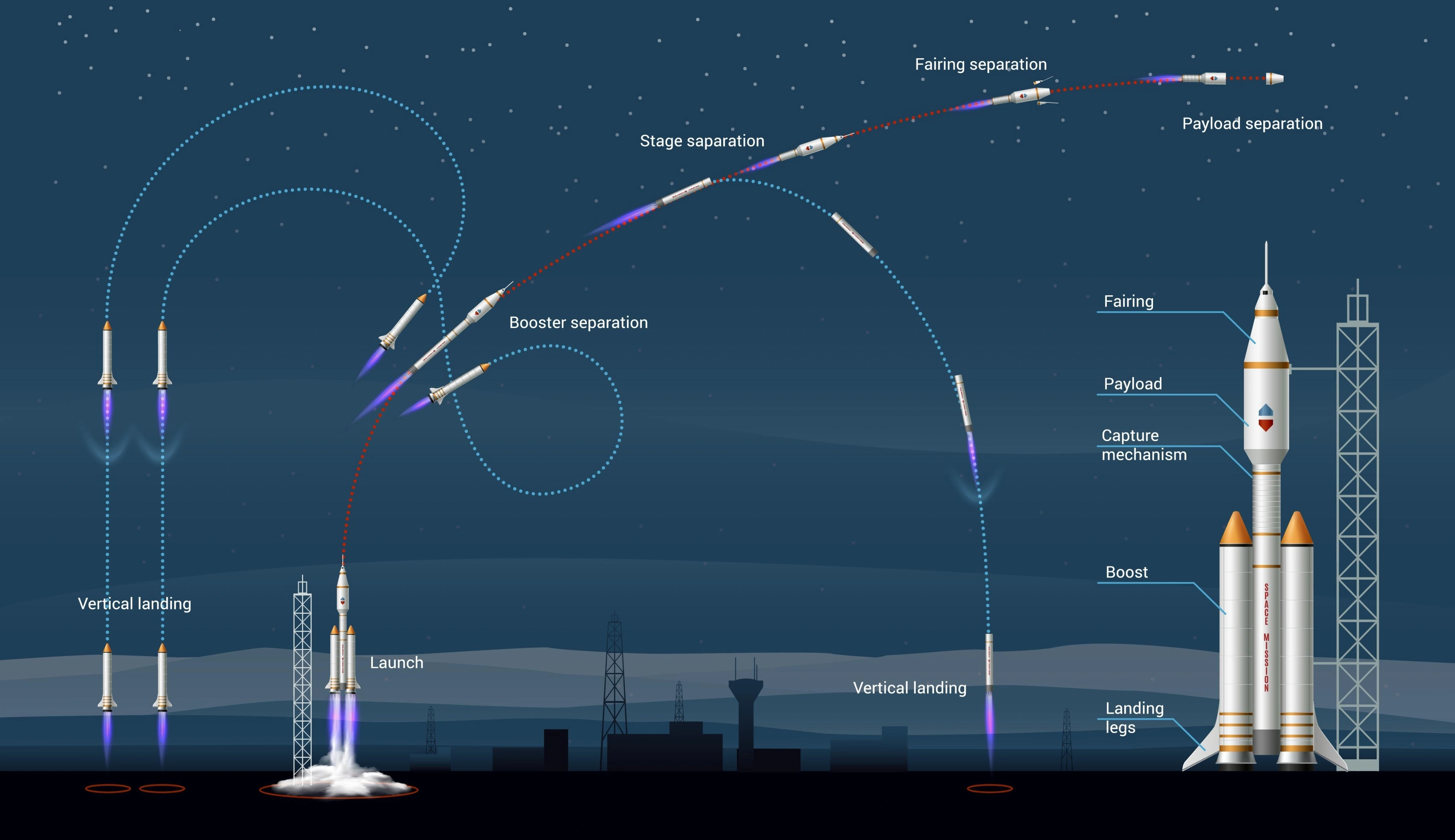
SpaceX: Provides mature rocket launch and spacecraft manufacturing capabilities, responsible for deploying AI satellites into deep-space orbits. Tesla: Leveraging its expertise in solar and battery technologies, it offers efficient and long-lasting energy solutions for satellites. xAI: Is responsible for developing cutting-edge artificial intelligence models that can run at scale on satellites.
Space Economy Investment
In the past, investors who wanted to participate in the space economy often had no choice but to opt for relatively small launch service providers like Rocket Lab or satellite communication companies upstream and downstream in the supply chain. SpaceX's IPO will directly provide the secondary market with a "space dominant player" worth trillions. With the monopolistic launch capability of the Falcon 9, the future potential of Starship, and the robust cash flow generated by Starlink, SpaceX's listing is bound to trigger a global revaluation of the entire space industry chain.
SpaceX Investment Strategy
Since SpaceX has not yet been officially listed on the NASDAQ or NYSE, it is currently not possible to directly purchase its shares through Futu. However, if Hong Kong investors are optimistic about SpaceX, they can make early arrangements through the following three methods:
Strategy One: Directly Participate in Trading SpaceX U.S. Stocks
This is the most direct path to capturing the maximum potential upside. Once Musk announces SpaceX's IPO, investors should be ready without delay.
Reward | Specified conditions |
A big reward | |
Equivalent to HK$600 in SpaceX stock* | Complete your first fund deposit by 23:59 on June 30, 2026, and opt in to the promotion. During the promotional period, maintain a cumulative net deposit of HK$10,000 or more, and ensure that your account holds an average daily asset balance of HK$10,000 or more for 60 consecutive days starting from the day after the deposit. |
Double Prize | |
Equivalent to HK$1,000 SpaceX stock* | Complete your first deposit by 23:59 on June 30, 2026, and opt in to the promotion. During the promotional period, maintain a cumulative net deposit of HK$80,000 or more, and ensure that your account's daily average assets remain at HK$80,000 or above for 60 days starting from the day following the deposit. |
*Specific activity rules shall be subject toFutu New Account Reward | June 2026 Account Opening OfferFor reference | |
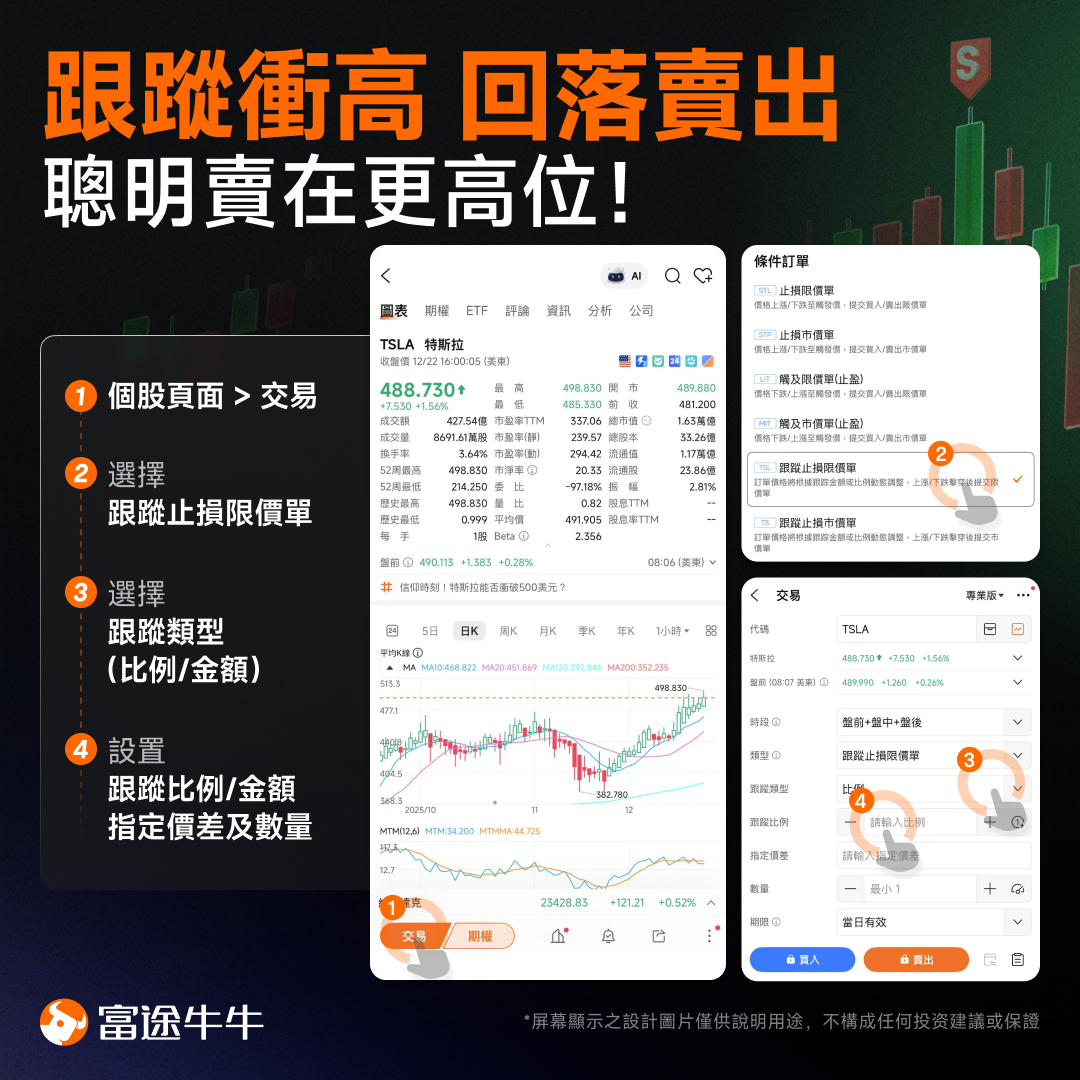
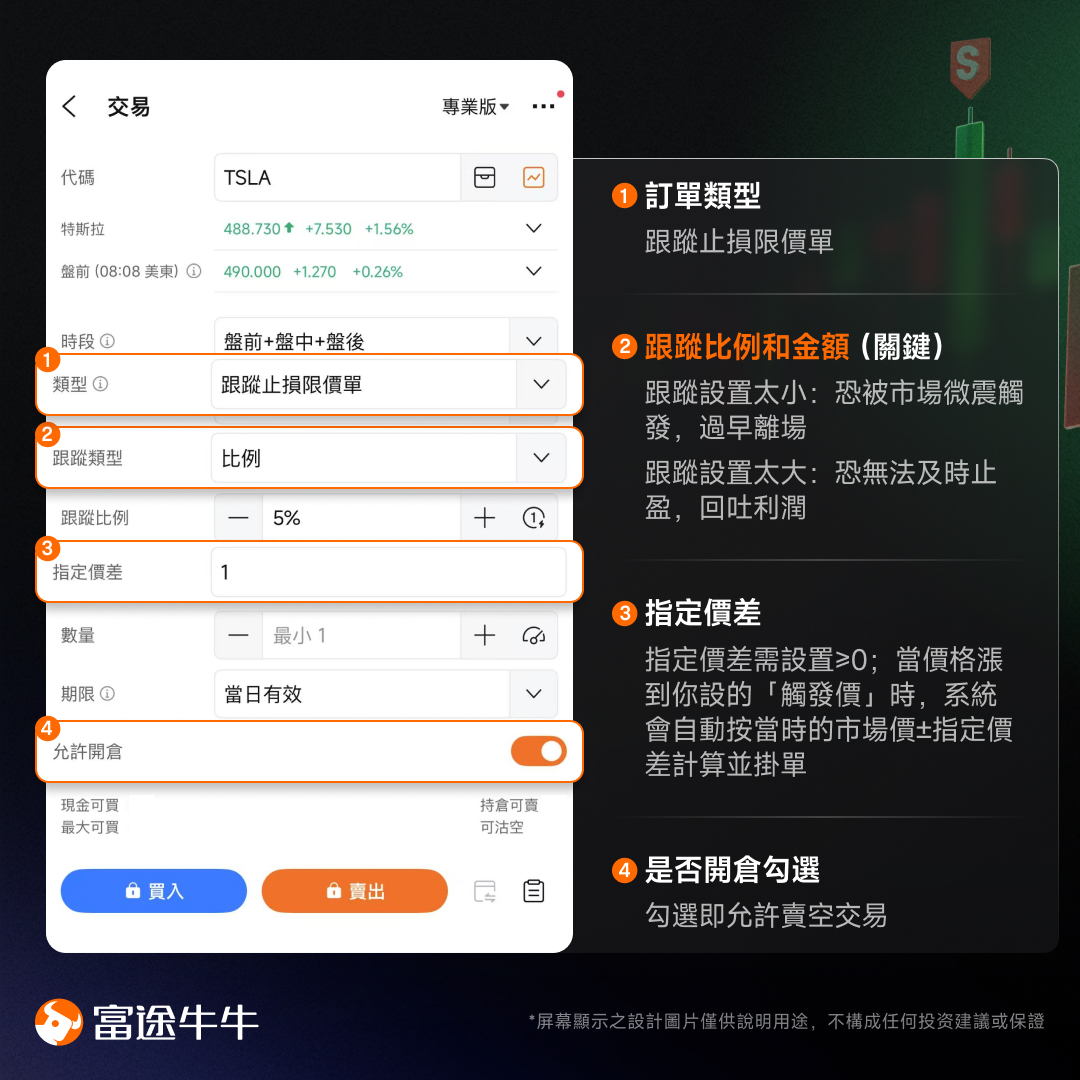
Suppose the IPO stock X is priced at $80, and on its first day of trading it surges 25% to $100, exhibiting strong upward momentum with an uncertain pullback timing. In this scenario, we can place a trailing stop-limit order with a trailing amount of $5 and a trigger price spread of $1.
Scenario 1: When the stock price rises to $110, the stop-loss level will automatically move up to $105, effectively locking in a floating profit of $105 – $80 = $25. If the stock price subsequently falls back to $105, the system will automatically submit a limit sell order at $104 ($105 minus the specified spread of $1), thereby preventing the realization of the floating profit.
Scenario 2: If the stock price continues to rise to $120, the stop-loss level will automatically adjust upward to $115, continuously locking in more gains. The entire process requires no manual intervention, effectively mitigating the risk of "selling too early" while reasonably capping potential downside losses.
Strategy Two: Allocate to "SpaceX Concept Stocks"
Partners: SpaceX's IPO is a "shot in the arm" for its partners, meaning they will have more cash on hand and stronger履约 capabilities.
$EchoStar(SATS.US)$: In September 2025, SpaceX acquired EchoStar Communications' AWS-4 and H-band spectrum licenses for satellite and mobile communications. The payment structure of this deal was unique, involving up to US$8.5 billion in cash and US$8.5 billion worth of SpaceX stock. At the time, with SpaceX valued at approximately US$400 billion, this equity stake represented about 2% of SpaceX's total shares. In addition, SpaceX agreed to assume approximately US$2 billion in debt interest owed by EchoStar Communications through November 2027.
$Planet Labs PBC(PL.US)$: The relationship between Planet Labs and SpaceX can be summed up in one phrase: "a long-term, deeply embedded partnership—like that of a passenger and a driver." Planet Labs operates the world's largest constellation of Earth-observation satellites, comprising hundreds of spacecraft, each with a relatively short operational lifespan of about 3 to 5 years, necessitating frequent replenishment and on-orbit upgrades. As one of SpaceX's most loyal commercial launch customers, Planet Labs' business continuity is heavily reliant on the timely launches of SpaceX rockets.
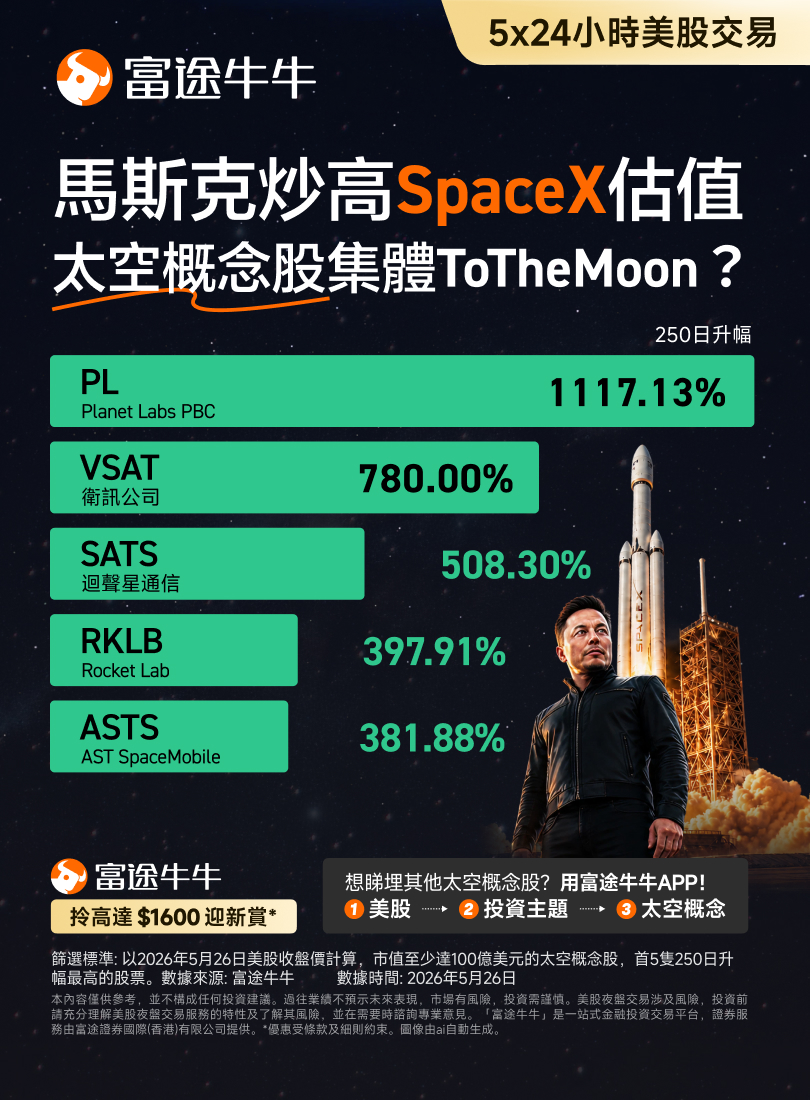
Key competitors: As SpaceX's valuation rises, its rivals may benefit from the "industry hype"; however, in the medium to long term, the scarcity of these companies could also diminish. If SpaceX goes public, capital may shift away fromRocket Lab (RKLB.US)andAST SpaceMobile (ASTS.US)Withdrew from China and turned to embrace SpaceX.
$Rocket Lab(RKLB.US)$: Widely regarded by the market as "the little SpaceX" and affectionately dubbed "the little rocket" by investors, it is currently one of only two private aerospace companies worldwide capable of conducting routine, high-frequency successful launches. Leveraging the exceptional reliability of its small Electron launch vehicle, the company has not only established a solid foothold but has also successfully transformed itself into an end-to-end provider spanning satellite manufacturing, software development, and launch services through its "Space Systems" business. It is the sole U.S.-listed space leader with consistently strong financial performance and the most稀缺 "SpaceX substitute" status. Its under-development medium-lift, reusable Neutron rocket is seen as the key trump card that could eventually break SpaceX's monopoly on the Falcon 9.
$AST SpaceMobile(ASTS.US)$: Seen by the market as the "space AT&T" or the leader in the "direct-to-cell satellite" sector, its core vision is to build the world's first space-based cellular broadband network, using mega low-Earth-orbit satellites as "space base stations" so that ordinary terrestrial smartphones can connect directly to satellite signals without hardware modifications or the need to purchase dedicated equipment (such as dish antennas). Despite fierce competition from SpaceX's Starlink, thanks to its deep partnerships with industry giants like AT&T, Verizon, Vodafone, and Google, as well as its patent barriers, it has become the most explosive—and also the most volatile—pure-play stock on the U.S. stock market for betting on the trillion-dollar communications transformation of "eliminating signal dead zones."
Strategy Three: Invest in a Space Industry ETF
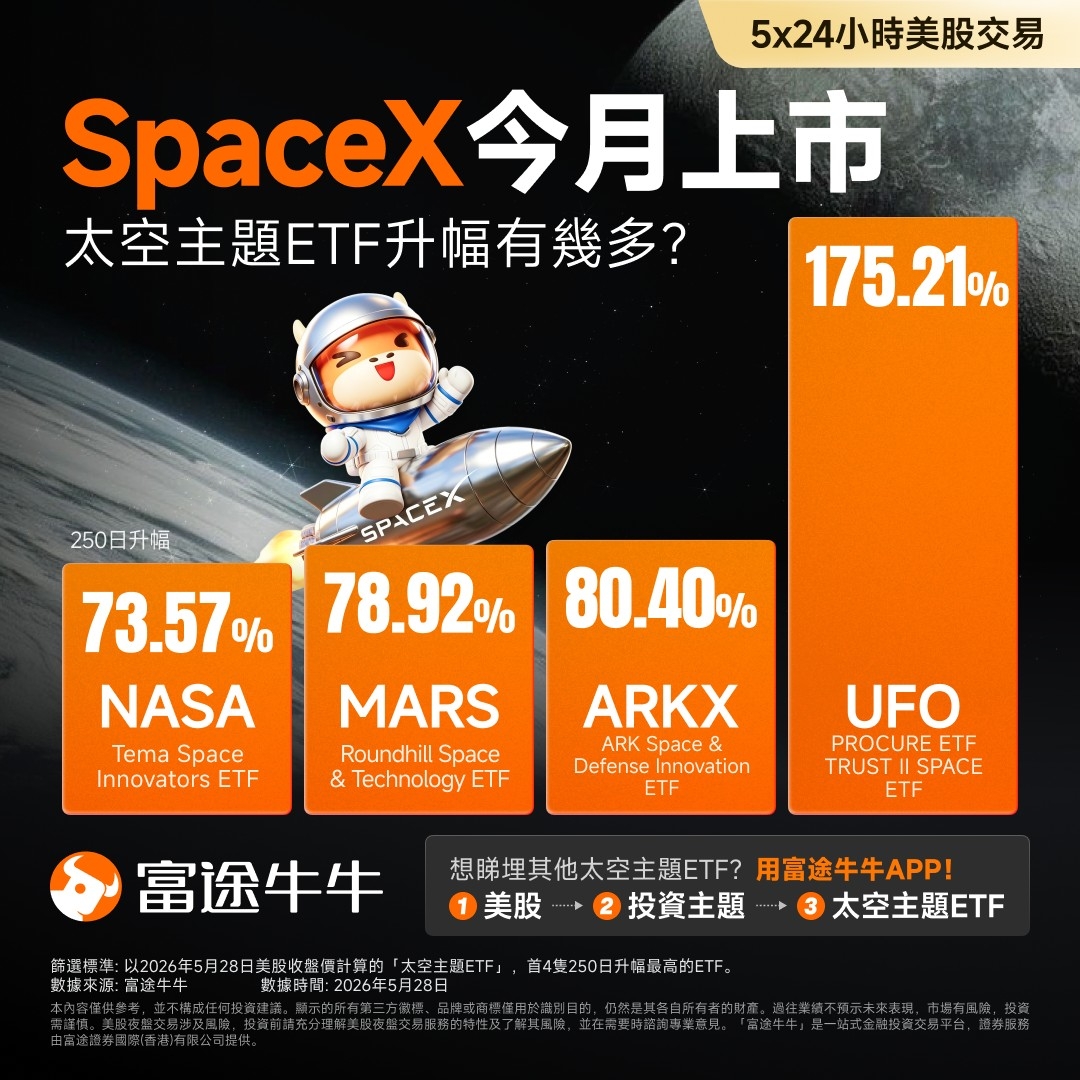
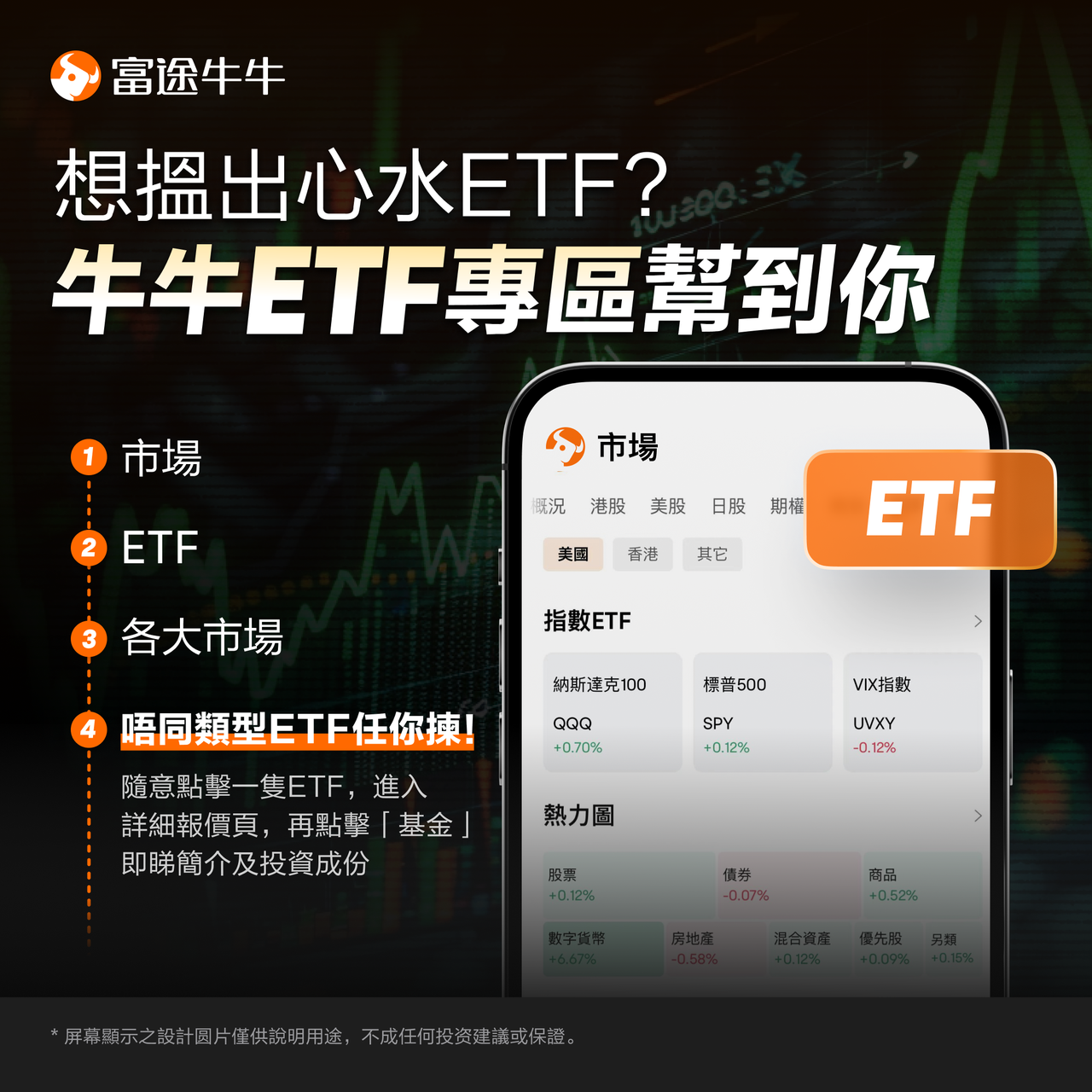
Gain exposure to the growth of the space economy through ETFs while reducing single‑stock risk. Some ETFs hold substantial SpaceX private‑equity stakes over the long term, or own shares in a combined SpaceX/xAI entity, enabling indirect participation in SpaceX investments:
SpaceX's IPO is undoubtedly one of the most anticipated financial events of our generation, yet its timeline remains shrouded in Elon Musk's vision for Mars. For the broader investing community, the best strategy right now is to exercise patience and keep a close eye on the company's progress—particularly the rollout of its Starlink business and its profitability.
Rather than anxiously awaiting an uncertain launch date, use this time to do your homework: gain a deep understanding of the potential of the space economy, assess your own risk tolerance, and develop a clear investment plan. Whether you're preparing for SpaceX's IPO itself or choosing to invest in its suppliers or related ETFs, getting ahead now will give you a competitive edge in the investment wave of the space age. Remember: opportunity always favors the prepared.
