Futu Research | ETF Investment Research
[Silver ETF] An Analysis of the Investment Logic for Silver in the U.S. Stock Market
Recently, commodities—led by precious metals—have exhibited remarkably strong momentum. Accordingly, related silver ETFs have also risen in tandem.
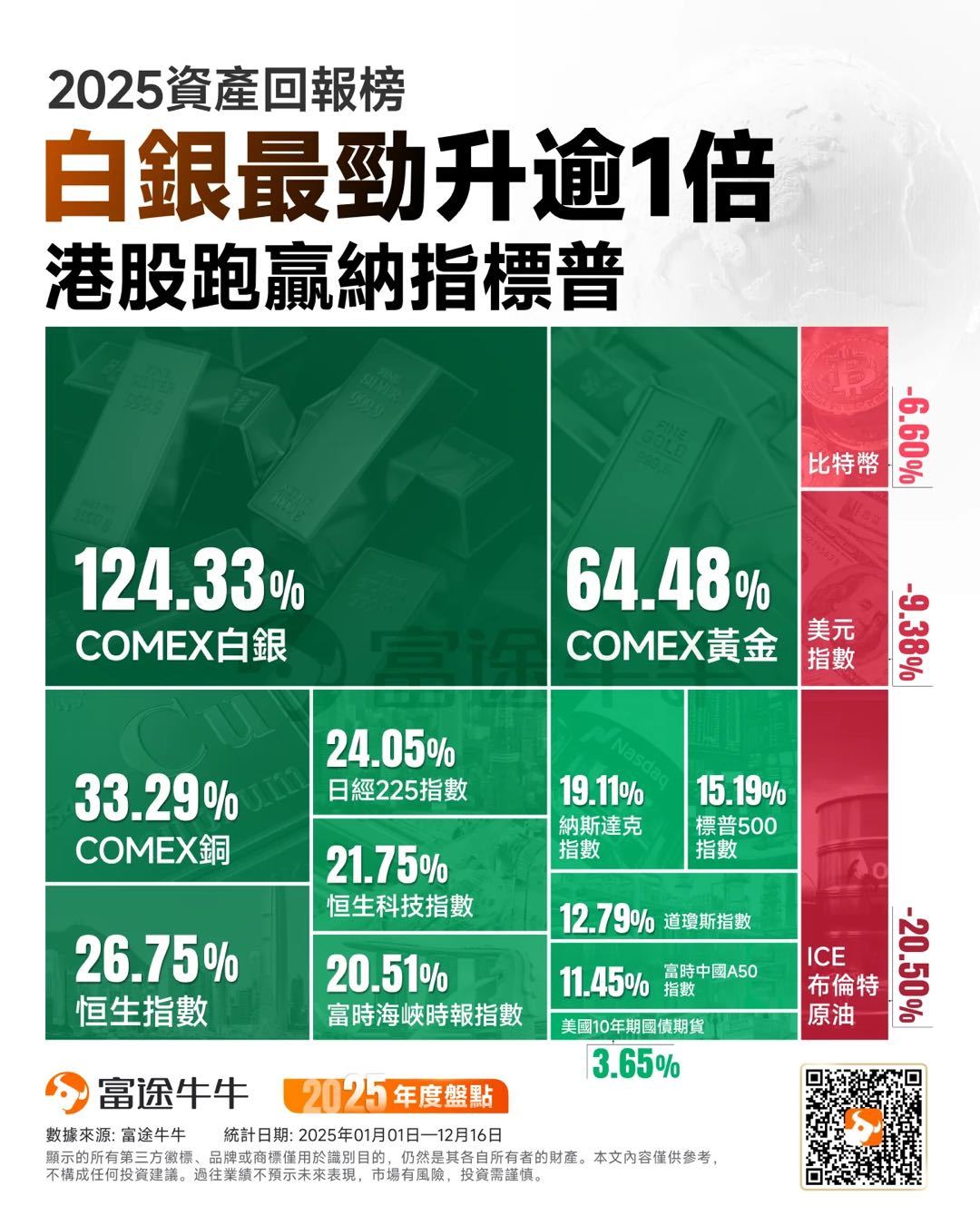
Why are commodities worth paying attention to?
As an alternative investment, commodities can play a unique role in portfolio diversification.
First, commodity price volatility typically exhibits little correlation with traditional asset classes such as equities and bonds, thereby helping to reduce overall portfolio risk. Second, rising commodity prices can serve as a hedge against inflation, preserving the real value of the portfolio. Furthermore, supply-and-demand dynamics exert a significant influence on commodity prices, enabling investors to identify opportunities by closely monitoring market conditions.
Why Choose to Invest in a Silver ETF?
Commodities primarily include crude oil logistics, energy, and precious metals. Among these, precious metals and energy have delivered particularly strong performance recently. This article focuses on the investment rationale for silver within the precious metals category. Investing in silverETFThe reason it is favored by numerous investors is:
It can achieve risk diversification by combining multiple asset classes, while maintaining high liquidity and low entry barriers in exchange‑traded markets.
Compared with direct investment in futures or derivatives, ETFs entail lower management and transaction costs and are managed by professional teams, sparing investors the need to handle complex issues such as contract rollovers and warehousing and logistics.
In addition, ETF holdings are disclosed transparently on a daily basis, enabling investors to stay informed and make well‑informed investment decisions. Meanwhile, many commodity ETFs closely track various commodity indices, allowing investors to gain broad exposure to the overall performance of the commodities market rather than being confined to the price movements of a single commodity.
In short, ETFs inherently offer diversification, helping to mitigate the risks associated with investing in commodity futures, options, or equities. With their convenience, transparency, liquidity, and relatively low costs, ETFs have become an attractive investment vehicle for gaining exposure to the silver market.
How to invest in silver ETFs?
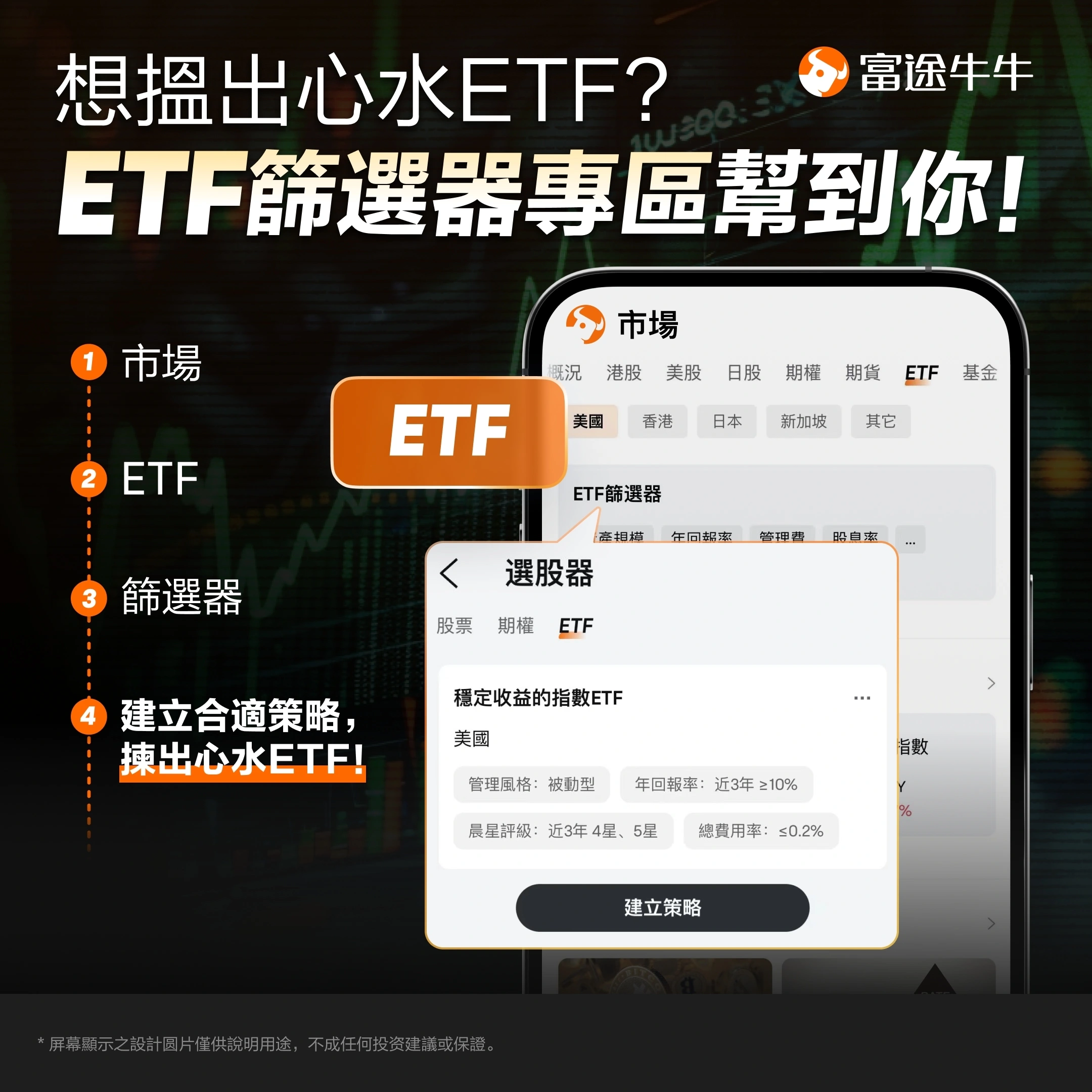
Before investing in a silver ETF, you must first open a securities (stock) account—just as you need to open a bank account before depositing money.
What are the options for silver ETFs?
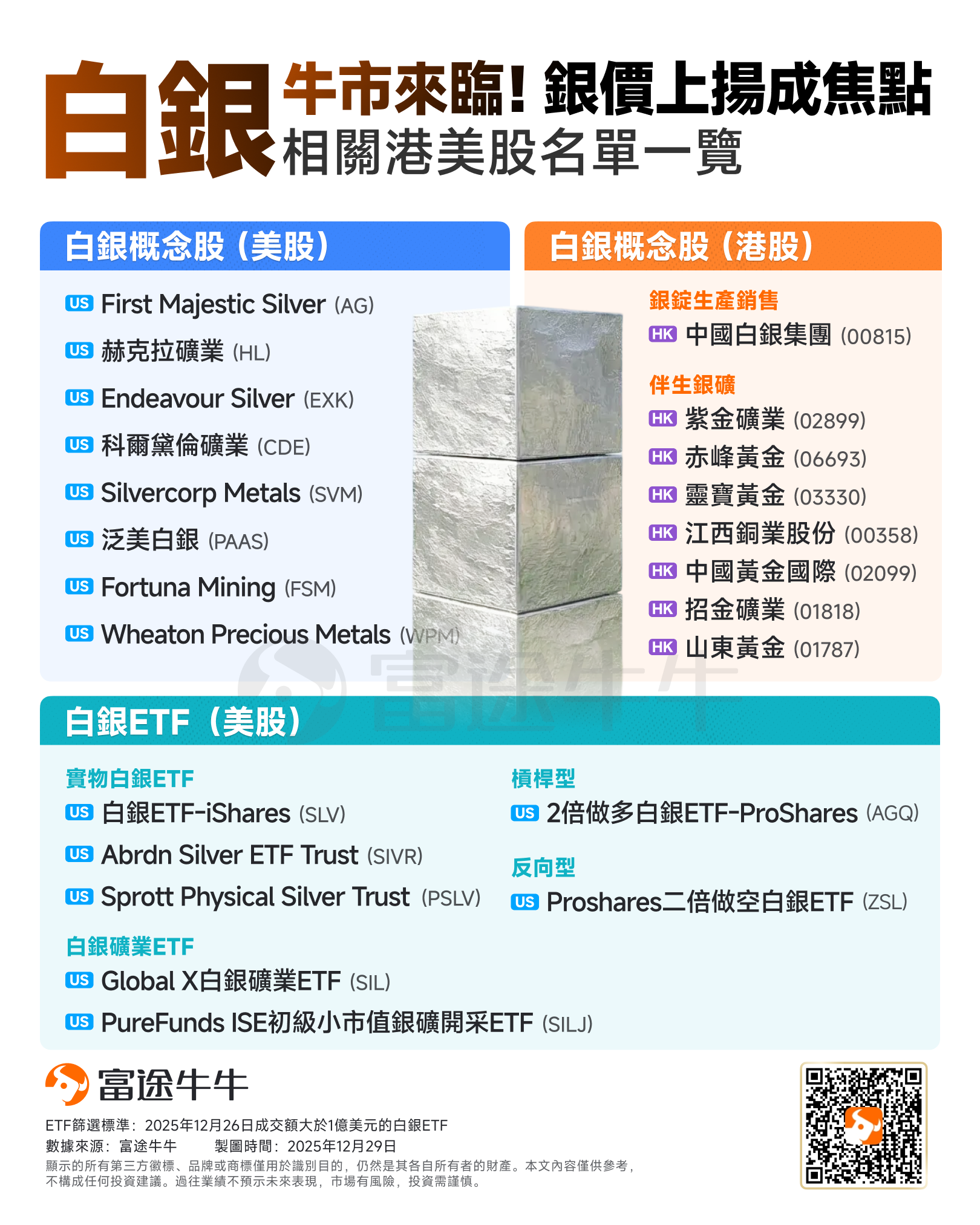
In this article, we will focus on introducing the three silver ETFs with the highest trading volumes:
SLV iShares Silver ETF
$iShares Silver Trust(SLV.US)$: Officially known as the iShares Silver Trust, it is a silver‑backed ETF. Its objective is to generate investment returns by tracking the price of silver. The ETF invests in silver futures contracts and mirrors the price movements of silver in the London market. SLV is a highly liquid ETF, making it easy to buy and sell. However, it carries a relatively high expense ratio of 0.50%.
Advantages: As the largest silver ETF in terms of assets under management, it offers investors strong liquidity.
Drawbacks: The management expense ratio is relatively high (0.50%), and long-term holding may result in some cost accumulation.
PSLV
$Sprott Physical Silver Trust(PSLV.US)$: Officially known as the Sprott Physical Silver Trust, it is a silver‑backed ETF. Unlike SLV, PSLV holds physical silver bars rather than silver futures contracts. When investors purchase shares of PSLV, they effectively acquire ownership of physical silver bars. The fund's portfolio consists entirely of physical silver, enabling investors to participate directly in the physical silver market. However, because holding physical silver requires storage and custody, PSLV incurs higher costs, with an expense ratio of 0.45%.
SIVR
$Abrdn Silver ETF Trust(SIVR.US)$: Its full name is the Aberdeen Standard Physical Silver Shares ETF, and it is another silver‑based ETF that holds physical silver bars. SIVR's portfolio consists of physical silver bars, allowing investors to directly hold ownership of these bars. SIVR has a relatively low expense ratio of 0.30%. However, because storing and safeguarding physical silver bars incurs additional costs, SIVR's operating expenses may be higher.
Advantages: Compared with SLV, it has a lower expense ratio (0.30%), enabling savings on transaction costs.
Weakness: Relatively small asset size and low liquidity.
In summary, SLV, PSLV, and SIVR are all silver‑based ETFs, but their investment strategies and portfolios differ. SLV invests in silver futures contracts, while PSLV and SIVR hold physical silver bars. Investors can choose the ETF that best suits their investment preferences and risk tolerance.
Things to watch out for when investing in silver ETFs
For ETFs that use futures contracts as their underlying assets, performance may diverge somewhat from the price of the underlying asset. Futures prices incorporate costs such as storage expenses, which can cause them to trade at a premium to spot prices. Consequently, the value of a futures‑based ETF is influenced not only by the asset's price but also by additional factors, including the time value of the contract and the costs associated with rolling over futures positions.
If the futures contract price already incorporates the anticipated rise in the spot price, then even if the spot price does indeed increase, ETF holders may still fail to capture the gains from that price appreciation.
Silver ETFs that use physical silver as their underlying asset tend to perform more reliably. Therefore, if you wish to avoid risks stemming from other factors, investing in a physical‑silver ETF may offer greater stability and better value for money.
