Futu Research | ETF Investment Research
What is an ETF? A Must-Read ETF Investment Guide for Hong Kong Investors
In recent years, shifts in global tariff policies and geopolitical tensions have intensified market volatility, making exchange-traded funds (ETFs) a popular choice for Hong Kong investors seeking to diversify risk. You may also have heard of leveraged and inverse ETFs—both track broad market indices, but how do they differ? And what exactly is an ETF? How can you invest in ETFs in Hong Kong? Learn the basics of ETFs and investment strategies now to seize opportunities in the market!
ETF Basics: What Is an ETF?
ETF stands for Exchange Traded Funds. The way ETFs work is quite straightforward: they function like an "investment basket," allowing you to hold a diversified portfolio that tracks a specific index, sector, or asset class, while trading on exchanges just like individual stocks. This structure combines the benefits of risk diversification with the flexibility of stock trading, enabling investors to gain exposure to various markets more easily—without having to spend time selecting individual securities or monitoring the market continuously.
What's the difference between investing in individual stocks and investing in ETFs?
In fact, compared with investing in a single stock, ETFs offer numerous advantages:
1. Diversify risk
Diversifying risk is essentially diversifying investments—avoiding the practice of putting all your capital into a single stock or sector to reduce the likelihood of substantial losses. At its core, an ETF is a type of fund; by purchasing and holding an ETF, you are indirectly gaining exposure to a basket of underlying assets. For investors, this approach offers convenient trading, significantly reducing the time and effort required for stock selection, making it an ideal strategy for those seeking both simplicity and diversified investing.
2. Low entry barrier
If you were to buy every well-known stock, how much capital would that require? Taking HSBC (0005.HK) on the Hong Kong stock market as an example, one lot consists of 400 shares; at the closing price of HKD 141.70 on May 21, 2026, this already amounts to HKD 56,680. For U.S. stocks, consider Microsoft (MSFT): even purchasing just one share requires USD 419.09. By comparison, ETFs offer a cost-effective way to hold a basket of popular stocks.
3. Wide variety
ETFs track a remarkably diverse range of asset classes. In addition to equities, you can find ETFs on bonds, commodities, foreign exchange, digital currencies, and market volatility.
For example, if you believe now is a good time to invest in gold, you don't need to buy gold futures or physical gold—simply by opening a brokerage account, you can flexibly capitalize on the potential upside of gold prices through a gold ETF.
Of course, investing in ETFs also comes with certain relative drawbacks that warrant careful consideration before you invest. The main ones are the following two points:
1. Tracking Error
In practice, it is easy to observe that an ETF's performance does not perfectly track its underlying index. Why does this happen? Because every ETF incurs tracking error. The larger the tracking error, the greater the divergence between the ETF's performance and that of its benchmark index or asset.
There are many factors that contribute to tracking error, including trading rules, ETF management expense ratios, and margin‑financing and securities‑lending activities. In most cases, the higher an ETF's management expense ratio, the greater its tracking error is likely to be.
2. Pay the management fee
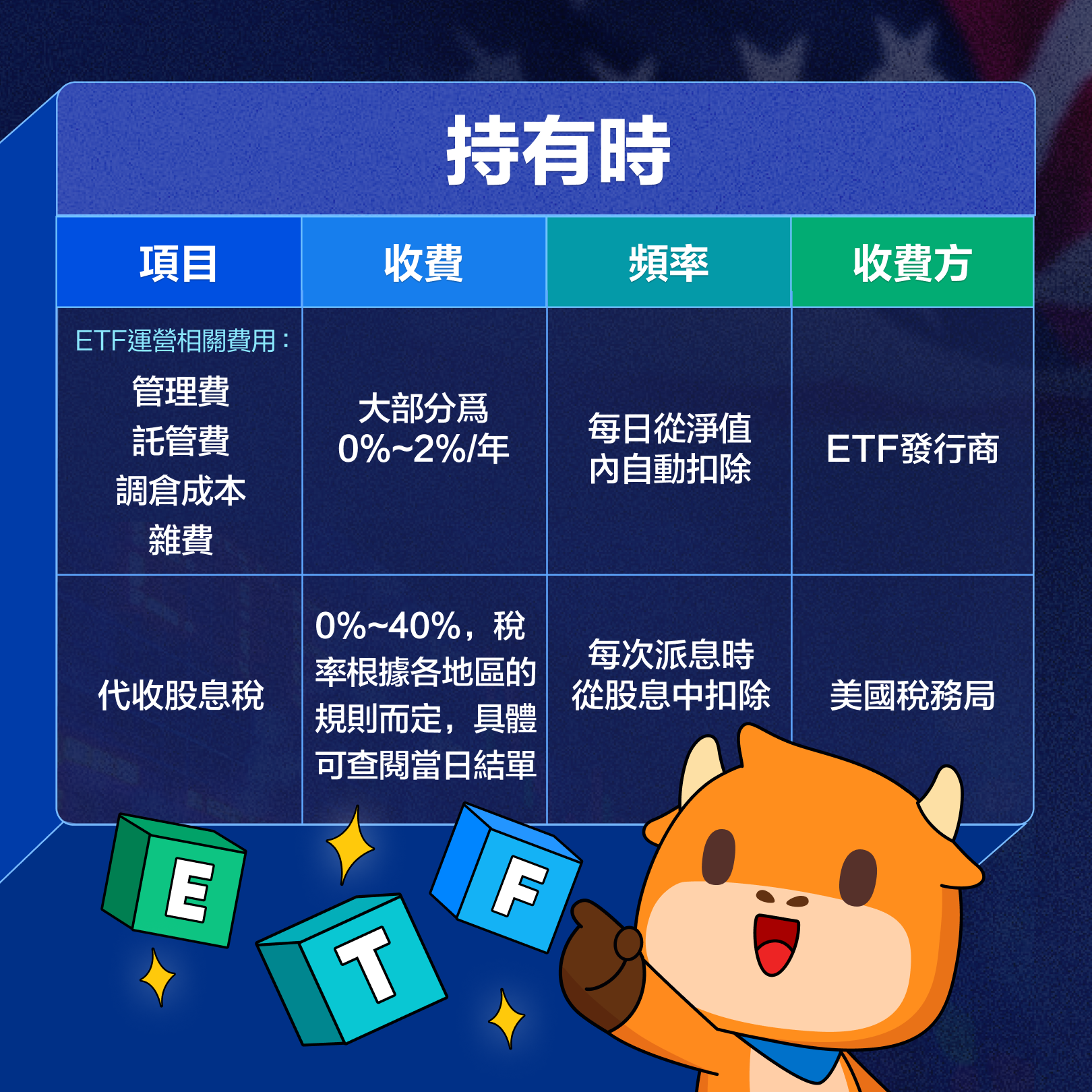
ETF trading fees are generally comparable to those of stocks, though ETFs also charge an additional management fee. For example, if you hold $10,000 worth of an ETF with a 0.1% expense ratio, you would pay $10 in annual management fees. This fee is not deducted as a lump sum at year-end; instead, it is prorated and deducted from the fund's net asset value each day you hold the ETF.
The longer the investment horizon, the more critical it is to pay close attention to expense ratios, as these costs compound over time; even small differences can lead to substantial disparities in final returns.
What are the different types of ETFs?
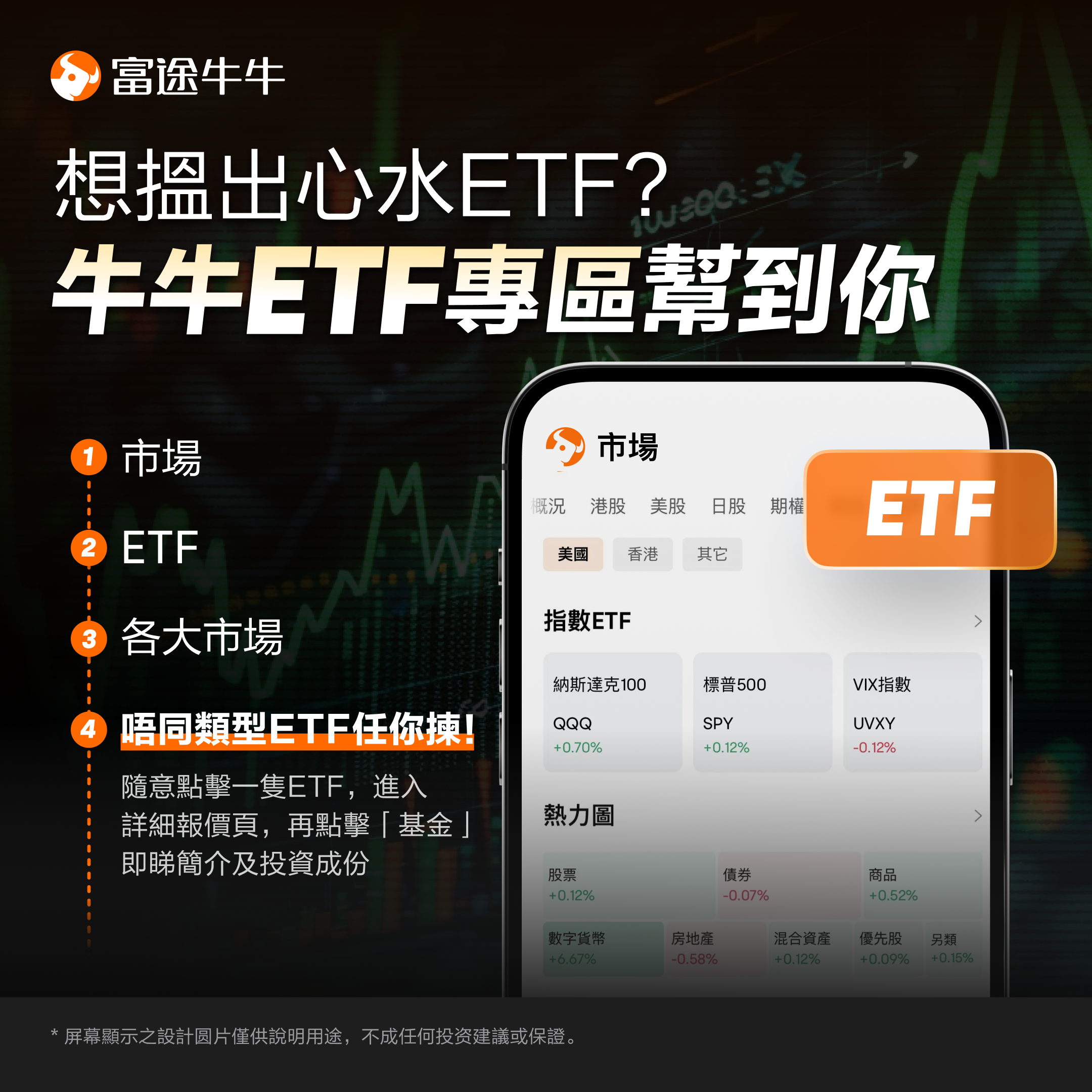
There are many ways to classify ETFs. Common classification methods include:
By asset class, they can be categorized into equities, bonds, commodities, foreign exchange, and others.
Based on investment style, they can be categorized as: active and passive.
Based on their leverage multiples, they can be categorized as: leveraged ETFs, inverse ETFs, and regular ETFs.
The first step to lazy investing: Open an ETF account with Futu and set up long-term investments.
Don't worry about midlife financial management or value appreciation for the young affluent! Futu is your top choice for long-term investing—open an ETF account online in just 3 minutes and quickly kickstart your personalized wealth-management plan:
How should you choose an ETF?
How do you determine which type of ETF is right for you? You need to clarify two key questions:
What is your purpose for investing in ETFs?
What is your risk tolerance?
Based on your investment objectives and risk tolerance, you can roughly determine which types of ETFs are suitable for you. Below are several common investor profiles for your reference:
With a low risk appetite, hold ETFs for the long term to achieve steady returns.
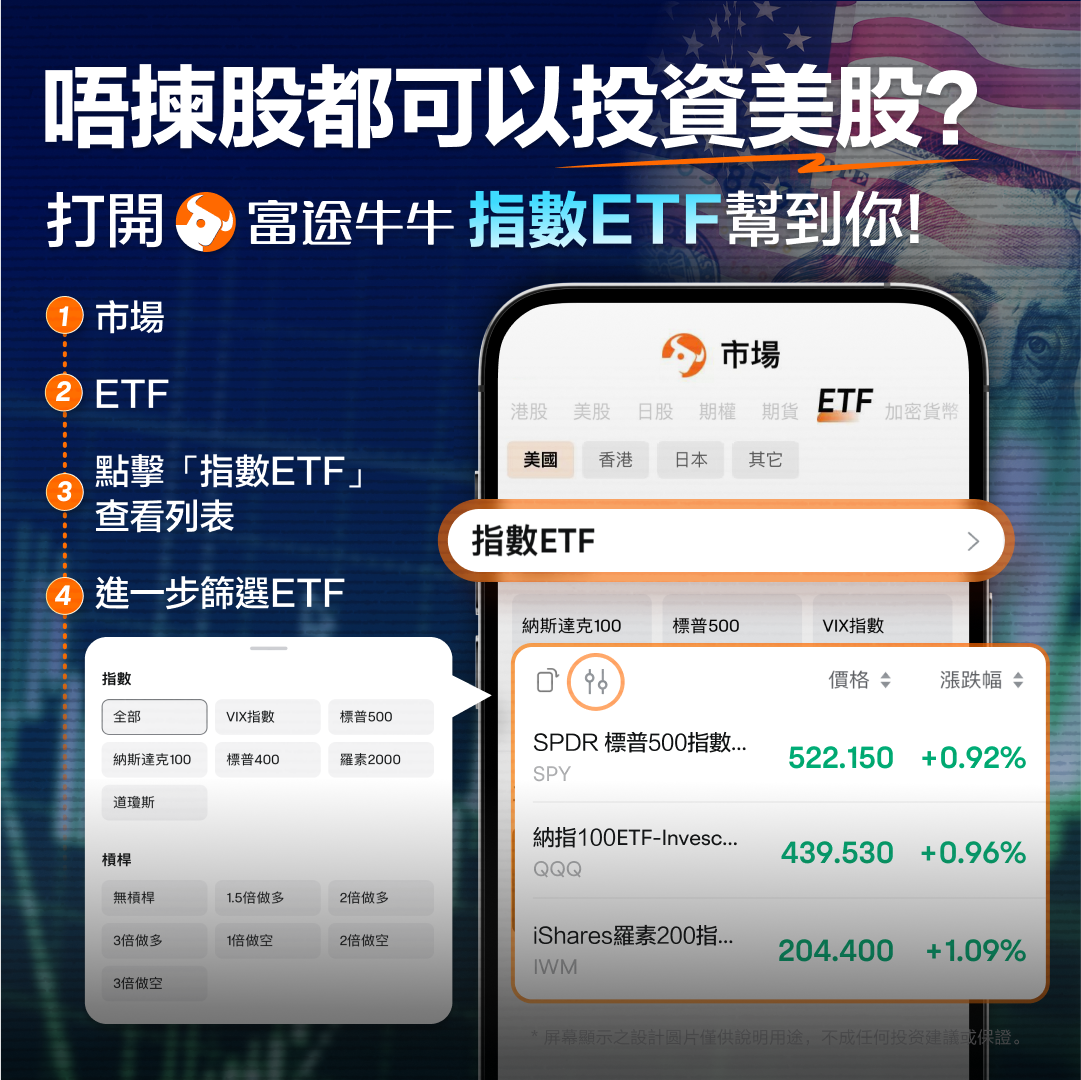
Stock Index ETF
Stock Index ETFIt aims to track the performance of a specific index (such as the S&P 500, Nasdaq 100, Hang Seng Index, etc.) by holding the constituent stocks of the index, thereby achieving returns similar to those of the index. The investment guru Warren Buffett has repeatedly recommended to the public trackingS&P 500 ETFBecause investing in this type of ETF is equivalent to indirectly investing in the U.S. stock market, it virtually eliminates the risk of underperforming the broader market.
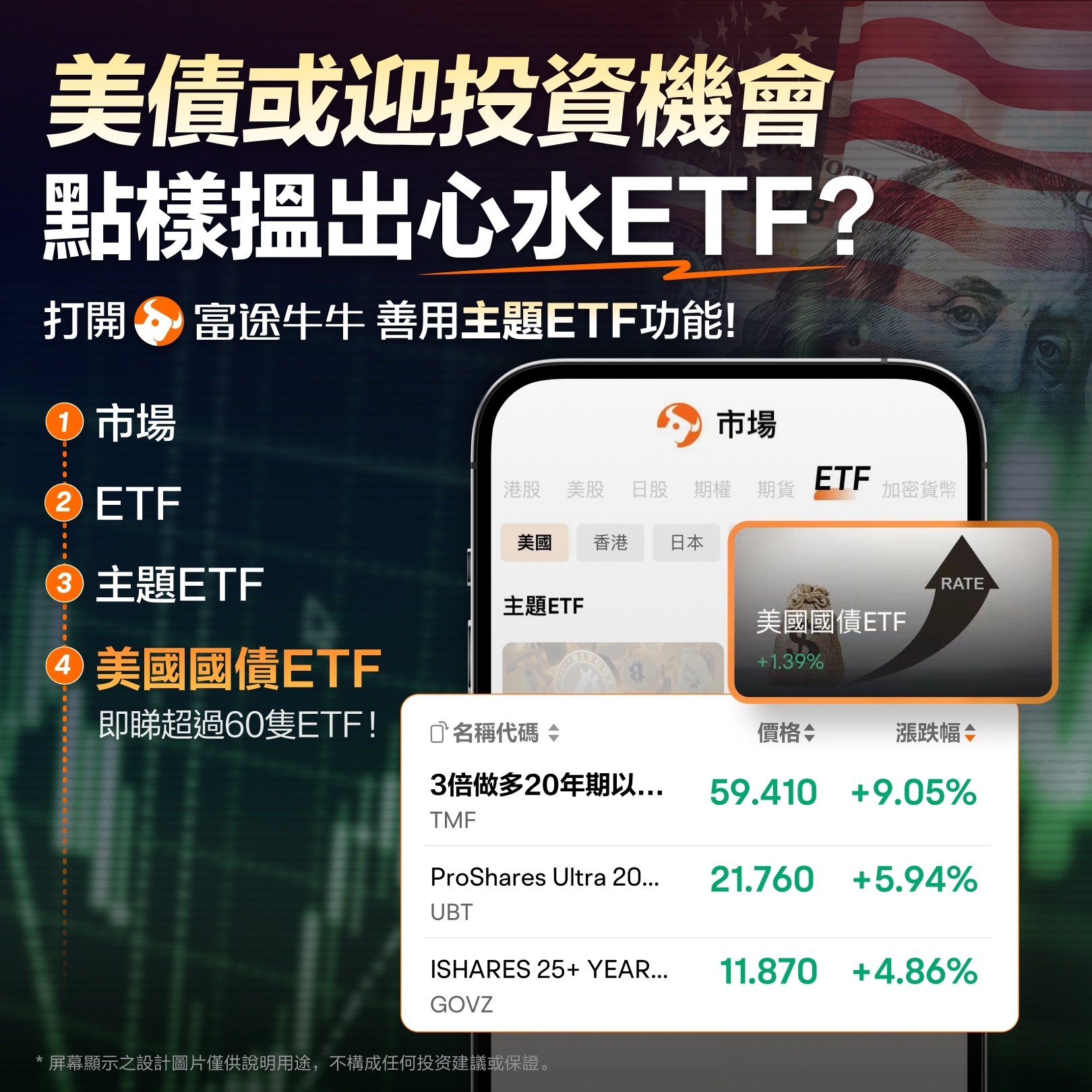
U.S. Treasury ETF
U.S. Treasury ETFBonds are classified into different risk tiers based on the issuer and default risk. Among all bonds, U.S. Treasury securities carry the highest rating and are regarded as one of the lowest‑risk investments. Consequently, many seasoned investors include U.S. Treasuries or related ETFs in their portfolios to hedge against potential declines in their equity holdings.
High-Yield ETF
Many relatively conservative investors prefer to invest in high-yield stocks to generate stable returns. Among all equity ETFs,High-Yield ETFIt primarily invests in high-yield stocks and distributes dividends to investors on a quarterly or monthly basis. However, for investments…U.S. stock market high-dividend ETFsHong Kong investors need to pay close attention."Withholding tax on dividends"We will provide a detailed explanation in the pricing section later.
Gold ETF
Gold ETFThis provides a risk‑hedging tool for conservative investors. Gold ETFs track gold prices directly, allowing investors to participate in the gold market in a simpler manner without having to purchase physical gold. Gold typically performs well during periods of economic uncertainty or inflation, making it an effective hedge against market risks and thus a suitable balancing component in an investment portfolio. Investors can, based on their own risk tolerance, consider whether to allocate a portion of their capital to this type of asset.Safe-haven assetAbove. Apart from gold,Energy ETFandSilver ETFAs commodities can play their unique role in diversified investment portfolios, commodity ETFs have also gained favor among a wide range of investors.
Comparison of ETF Fees on Hong Kong's Major Platforms
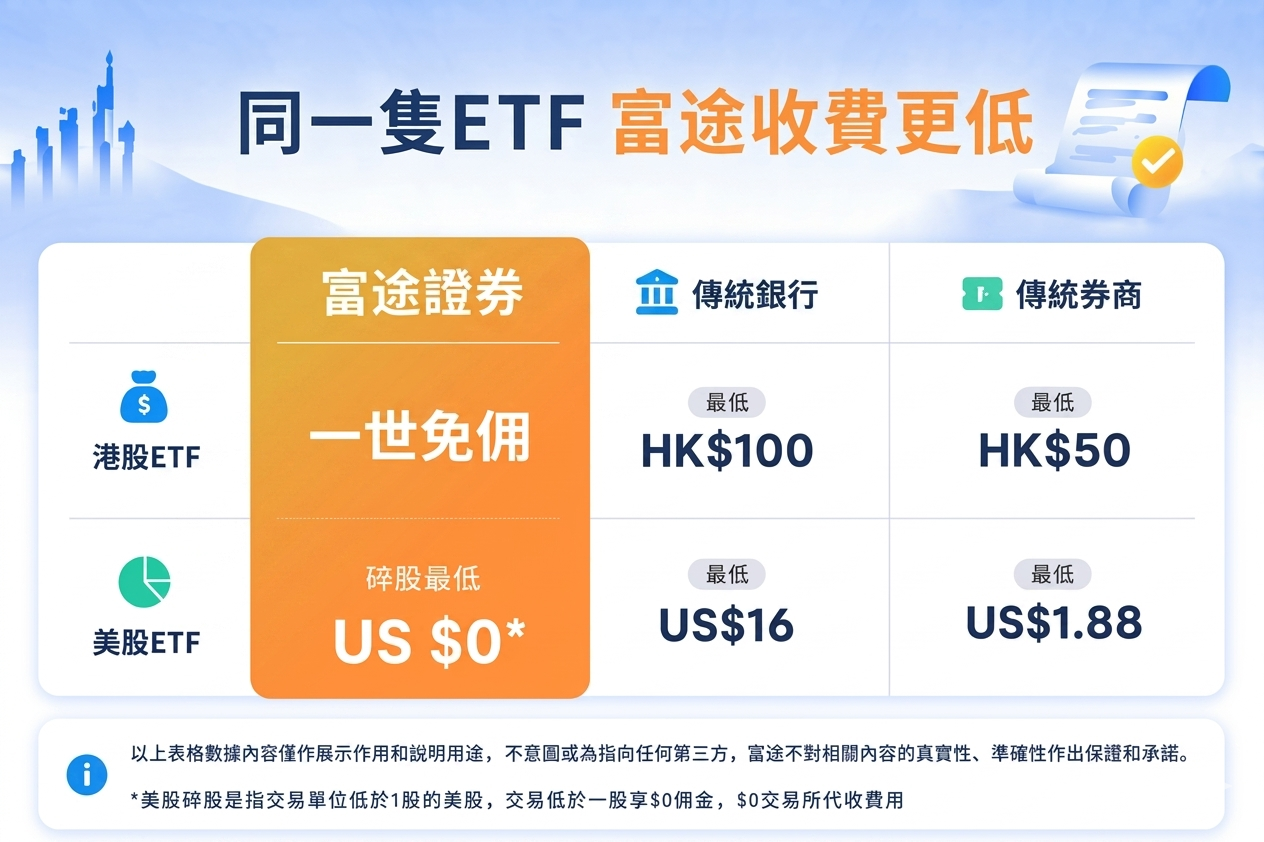
For details on fees, please visit the official website.
High risk appetite; prefers short-term sector trading.
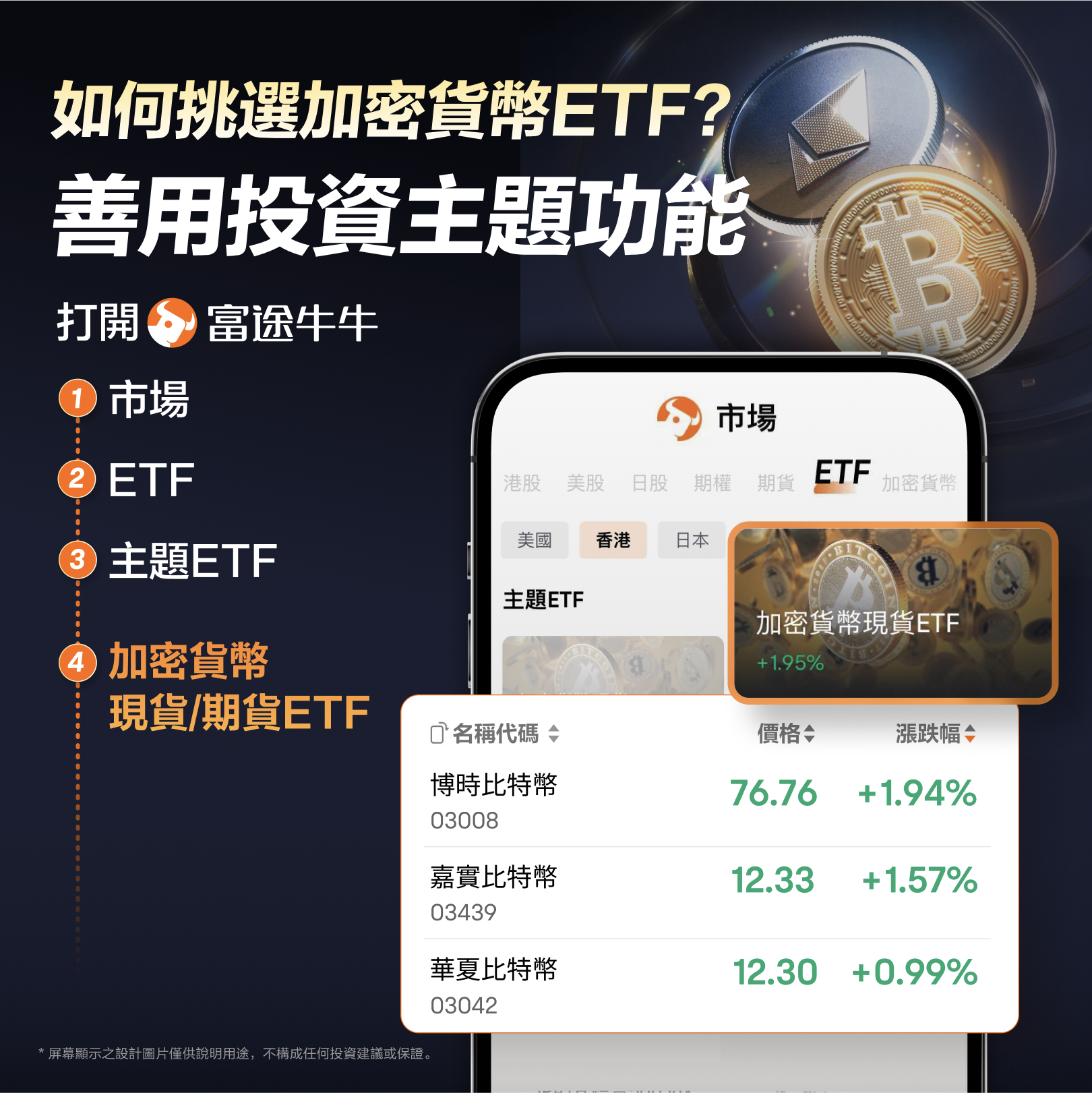
Bitcoin ETF
Bitcoin is currently the digital currency with the largest market capitalization and the most active trading. However, its price is highly volatile, and the threshold and risks of directly purchasing Bitcoin are relatively high, deterring some investors.Bitcoin ETFIt is an investment vehicle listed directly on a stock exchange, tracking the market price of Bitcoin and backed by actual Bitcoin holdings as reserve assets, allowing investors to gain indirect exposure to Bitcoin without having to purchase it directly. In contrast, it has lower entry barriers and risks.
Hong Kong has a total of 3 Bitcoin spot ETFs and 2 Bitcoin futures ETFs. As of the Hong Kong stock market's closing price on May 23, 2025, the entry fee for Hong Kong Bitcoin ETFs is as low as HK$861.5! Meanwhile, the U.S. Securities and Exchange Commission (SEC) has currently approved the listing of 11 Bitcoin spot ETFs, available for trading by professional investors.
Emerging Markets ETF
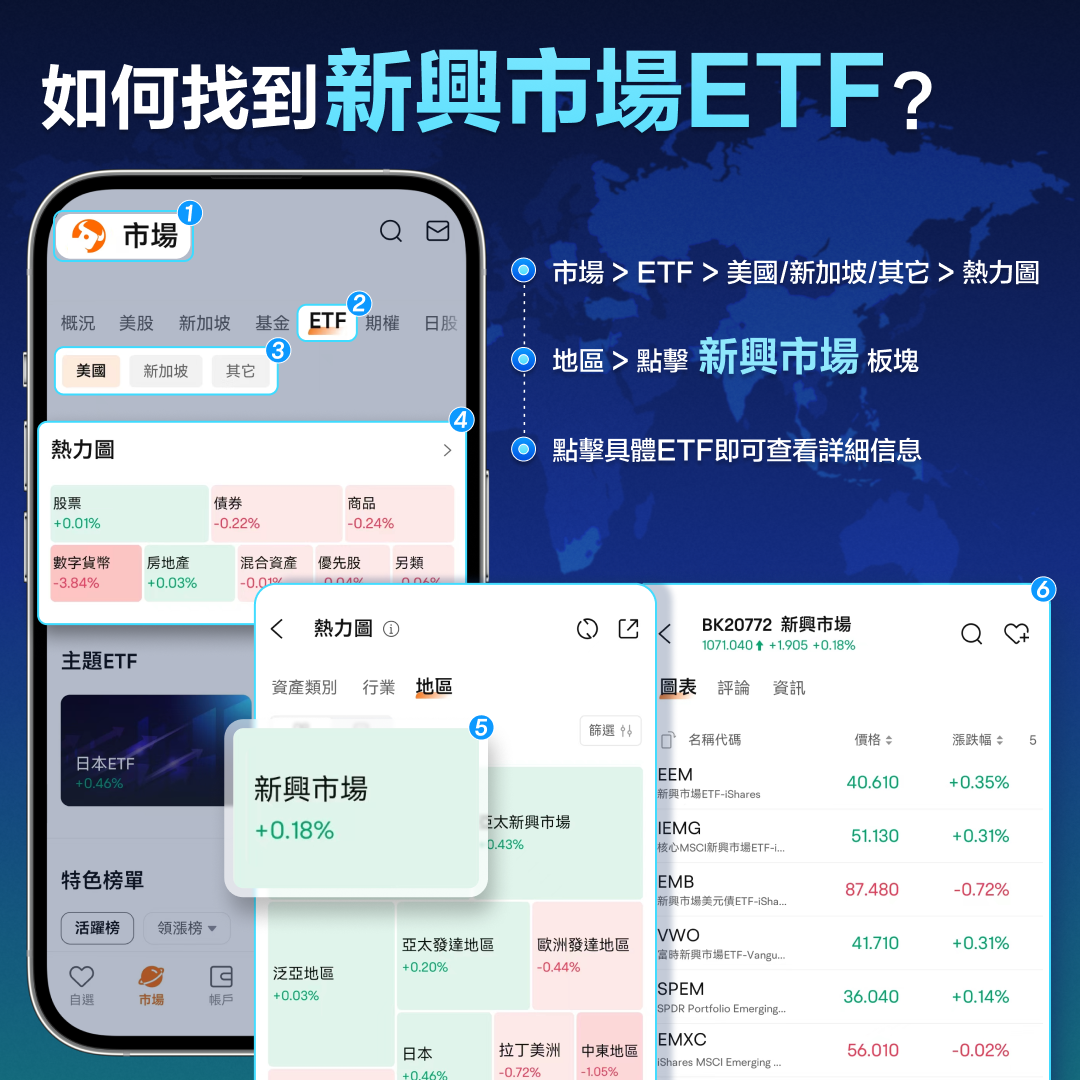
Emerging markets refer to economies that are less developed than mature markets but are experiencing rapid growth. Compared with mature markets, these economies are still in a nascent stage, carrying higher risks, yet they also offer substantial room for expansion. Ordinary investors may not have a comprehensive understanding of emerging markets, find it challenging to access timely market information, or identify suitable channels for investing in equities within these markets. And…Emerging Markets ETFIt thus provides a highly convenient investment channel, enabling investors to promptly seize investment opportunities in this market.
Japanese stock market ETF
Ignoring the depreciation of the yen, Japan's stock market has staged a remarkably robust bull run. Moreover, we have an ample array of tools at our disposal for trading.Japanese stock ETFAs a convenient investment vehicle, it offers investors a simple and efficient way to gain exposure to the performance of the Japanese stock market. Of course, investors may also consider direct investment.Japanese ETFs, directly generated from Japanese stock market trading.
Crude Oil ETF
As a critical energy source, crude oil plays a pivotal role in the global economy and is a commodity with significant investment potential. However, individual investors typically lack the ability to directly purchase and store large quantities of crude oil as major oil companies do. To address this gap, crude oil exchange-traded funds (ETFs) have emerged, offering retail investors a convenient way to participate in the oil market.
This investment vehicle enables ordinary investors to participate in the investment opportunities arising from crude oil price fluctuations without actually holding physical crude oil. By…Crude Oil ETF, investors can flexibly implement crude oil‑related investment strategies without having to contend with the logistical challenges of physical storage and transportation.
Leveraged or Inverse Single-Stock ETFs
In the U.S. stock market, in addition to traditional ETFs that track a basket of assets, there is also a special type…Leveraged/Inverse Single-Stock ETF, enabling investors to go long or short on specific individual stocks without needing margin financing. These ETFs typically offer 2x or 3x leverage or inverse exposure. However, it's important to note that such products track only a single stock and do not provide diversification; coupled with leverage, they exhibit sharp price swings, offering potentially high returns but also amplifying downside risk, making them suitable for very short-term trading rather than long-term holding.
Further Reading:"Leveraging Single-Stock Leveraged ETFs to Capture Short-Term Volatility During Earnings Season"
How to Invest in Sector or Industry Opportunities Through ETFs
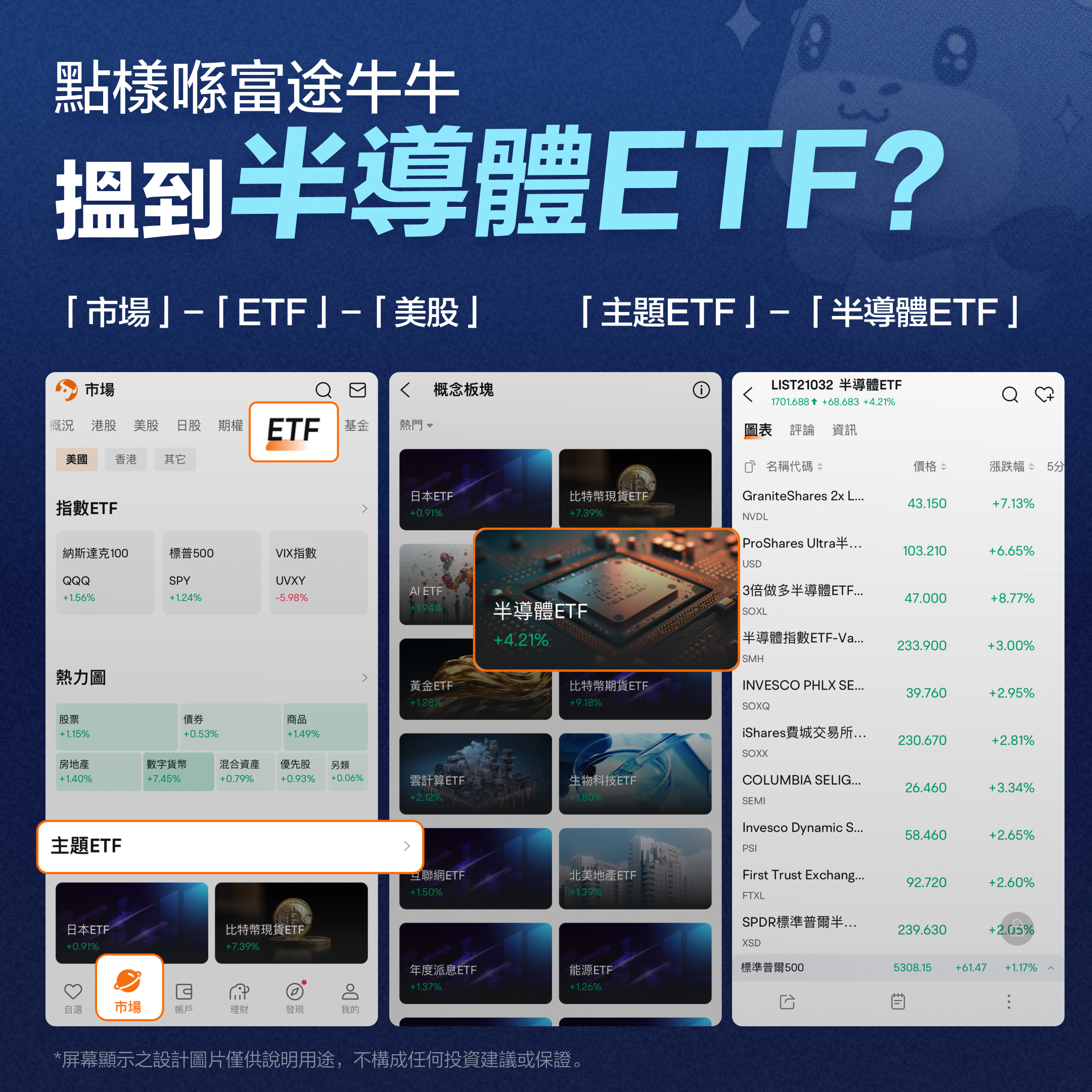
Of course, you can also choose different thematic ETFs based on the latest investment opportunities. Simply open Futubull, select [Market] in the bottom navigation bar, and tap [ETF] at the top. On this page, you'll find more ETF investment options. Scroll down to the [Thematic ETFs] section to view a list of ETFs related to popular themes.
For example, suppose you want to view a list of ETFs related to semiconductors; you can do so as follows:
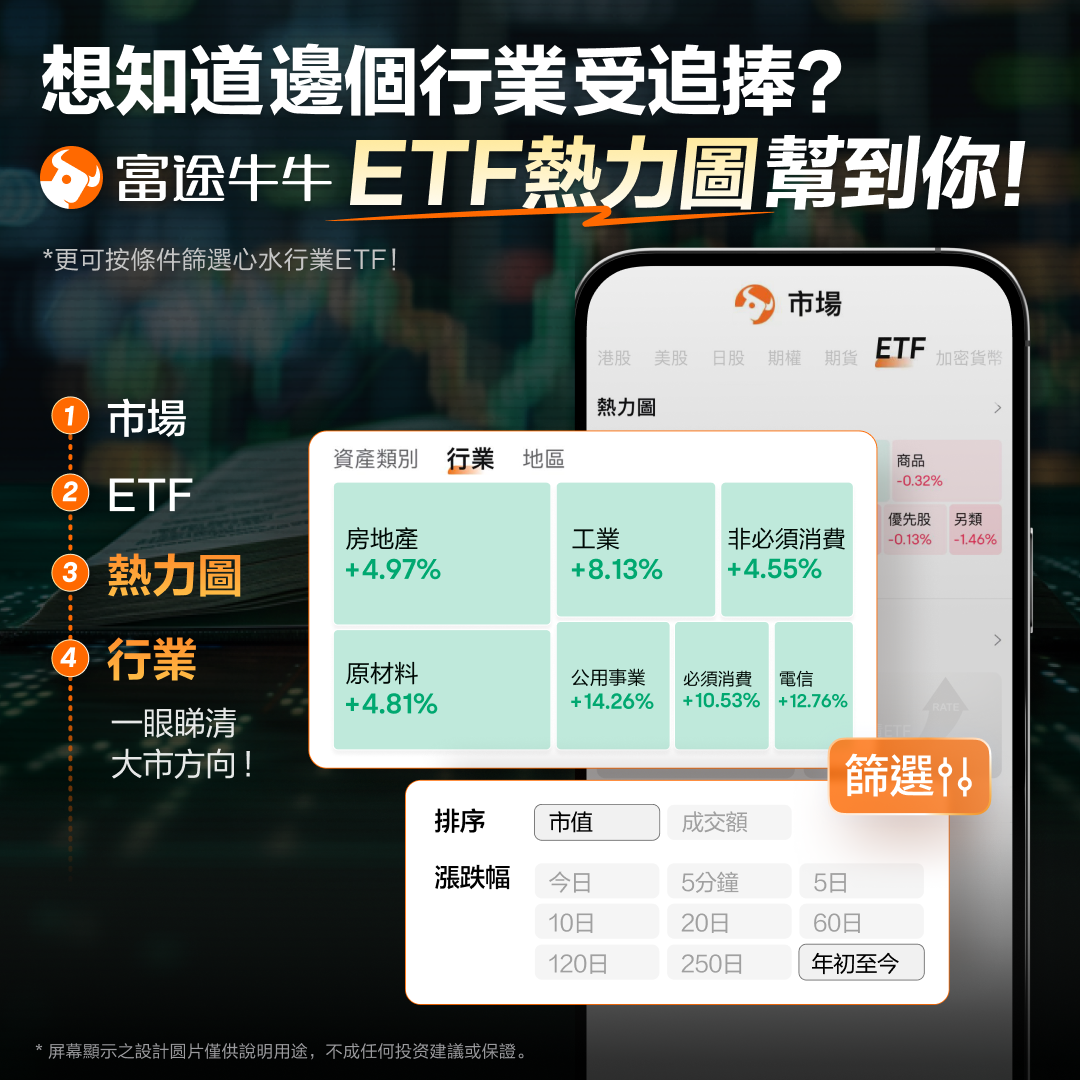
Alternatively, if you want to know which sector is currently the most popular, you can use the ETF heat map to identify it at a glance!
Trading fees for U.S. equity ETFs
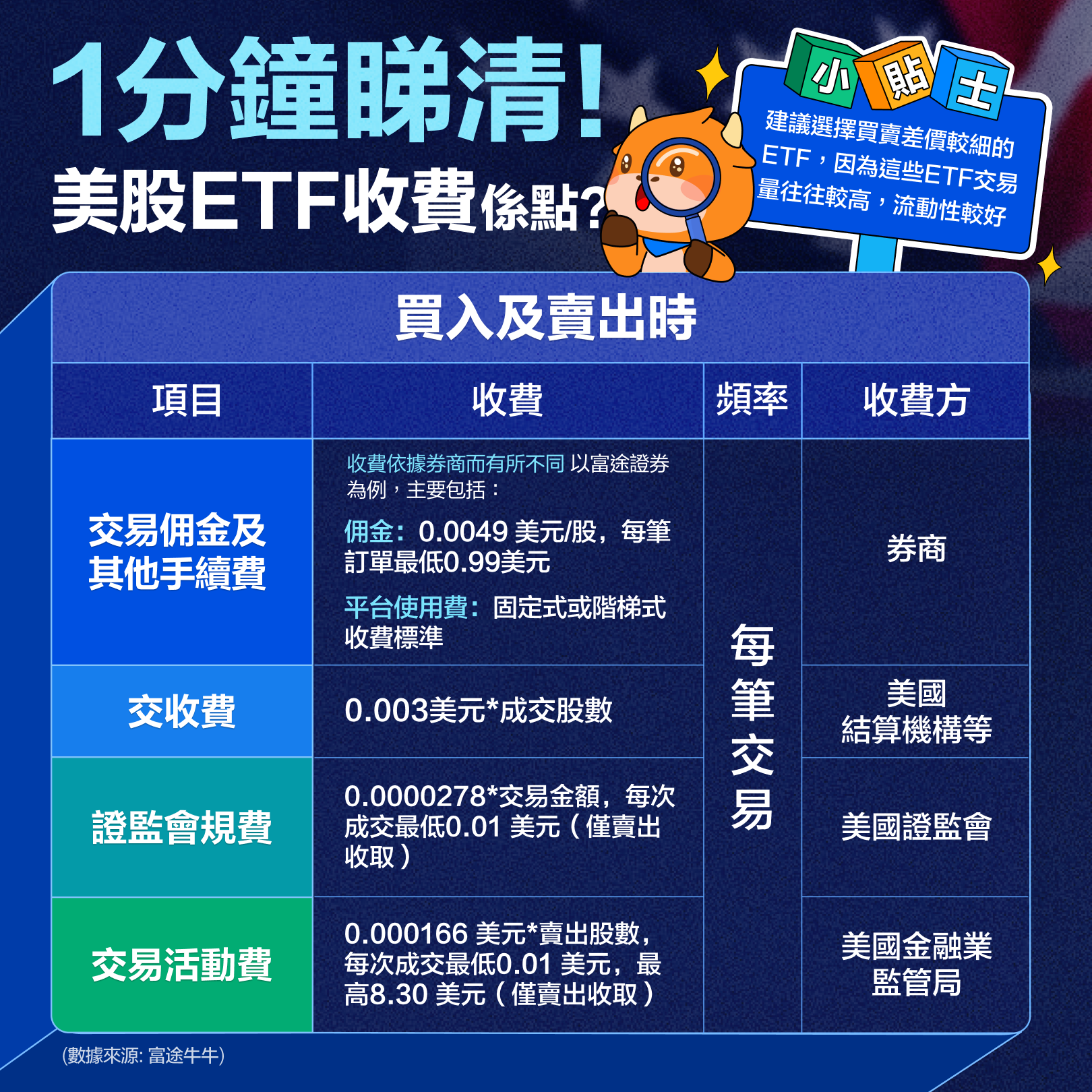
The primary transaction costs and fees for Hong Kong investors trading U.S. equity ETFs are as follows.>>Learn about Futu Securities' detailed fees<<
When trading ETFs, it's also important to pay attention to the bid‑ask spread. This often-overlooked factor can significantly impact your net returns. A wide spread may prevent limit orders from being filled or force you to sell at a discount. The size of the spread varies across ETFs, with lower‑liquidity ETFs typically exhibiting wider spreads.
How to invest in ETFs through Futu?
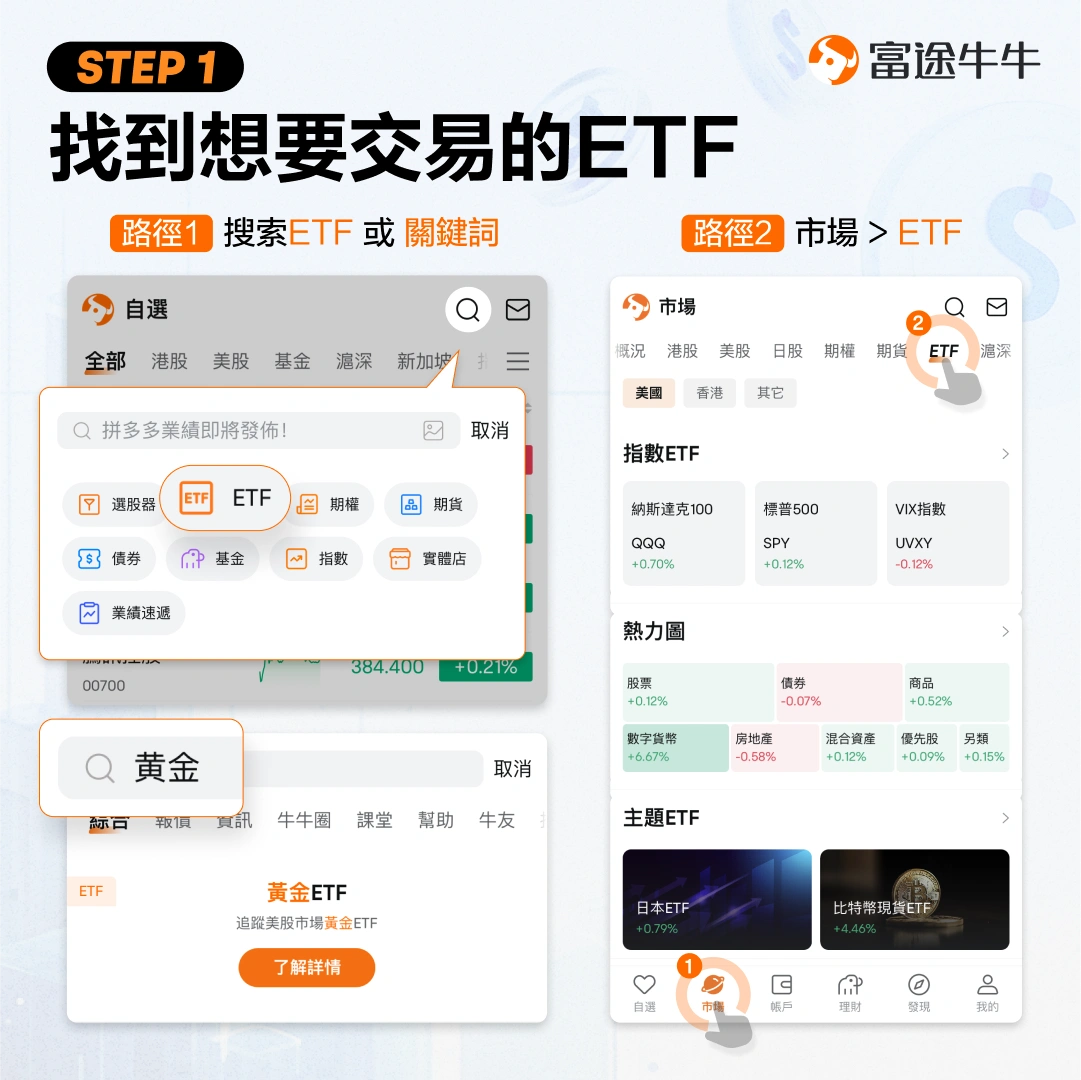
1. Locate the ETF you wish to trade: Method 1: Search by ETF name or keyword; Method 2: Go to Market > ETF.
 ETF." style="width:692px;height:691px;" loading="lazy" data-description="1. 找到想要交易的ETF:路徑1:搜索ETF或者關鍵詞,路徑2:市場>ETF">
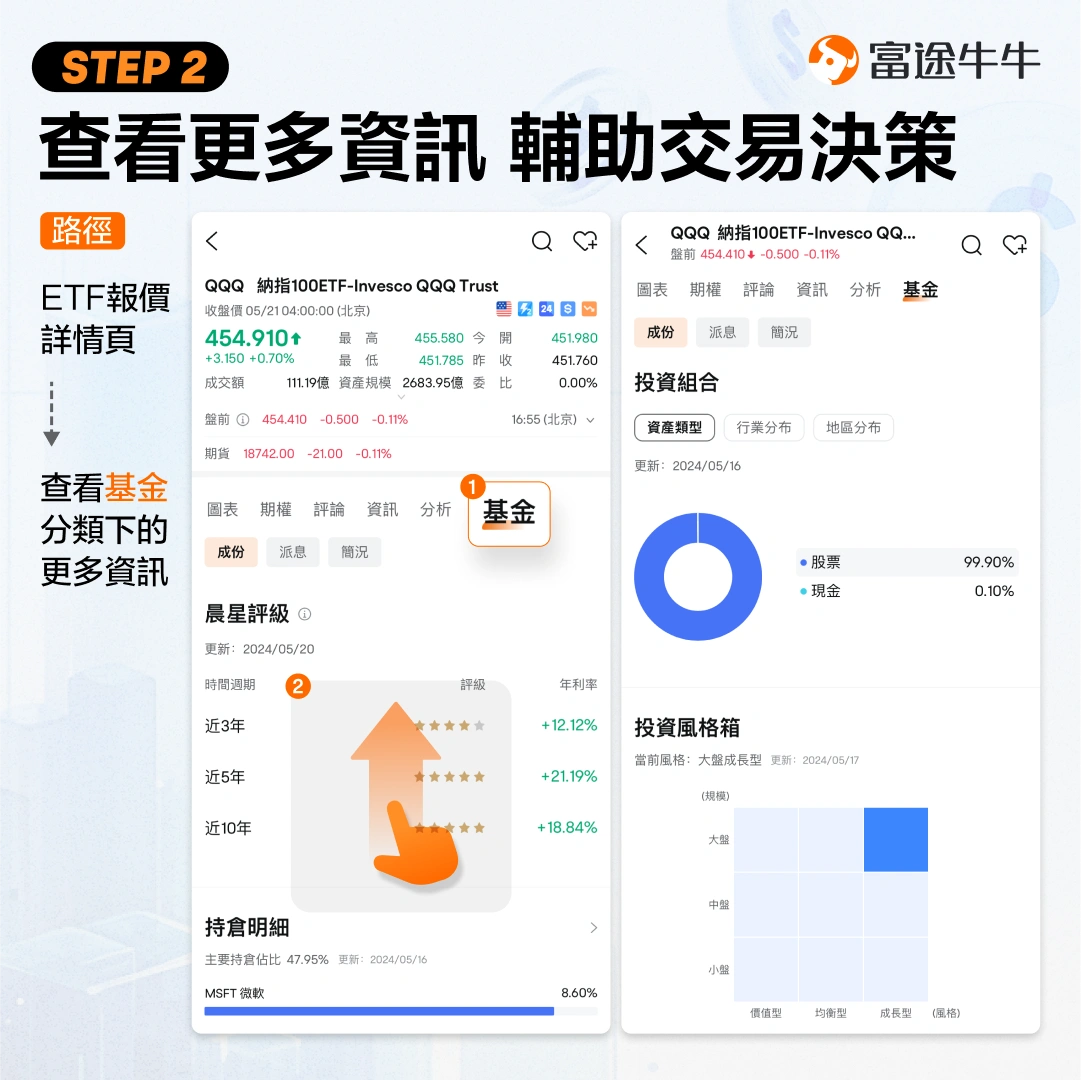
2. View more information: ETF Quote Details Page > View More Information Under Fund Categories
 View More Information Under Fund Categories" style="width:692px;height:691px;" loading="lazy" data-description="2. 查看更多資訊:ETF報價詳情頁>查看基金分類下更多資訊">
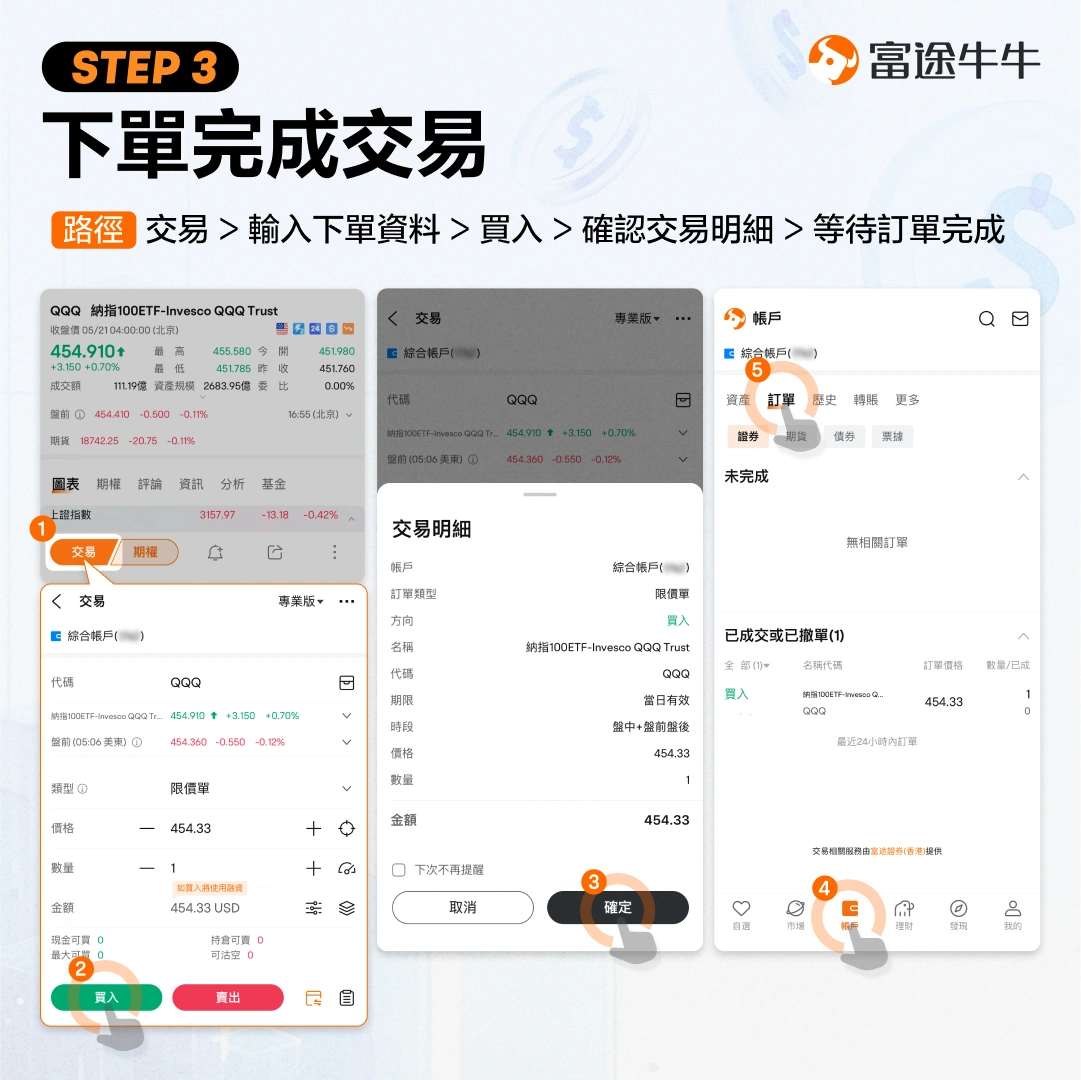
3. Place the order and complete the transaction: Transactions > Enter order details > Buy > Confirm transaction details > Wait for the order to be completed.
 Enter order details > Buy > Confirm transaction details > Wait for the order to be completed." style="width:692px;height:691px;" loading="lazy" data-description="3.下單完成交易:交易>輸入下單資料>買入>確認交易明細>等待訂單完成">
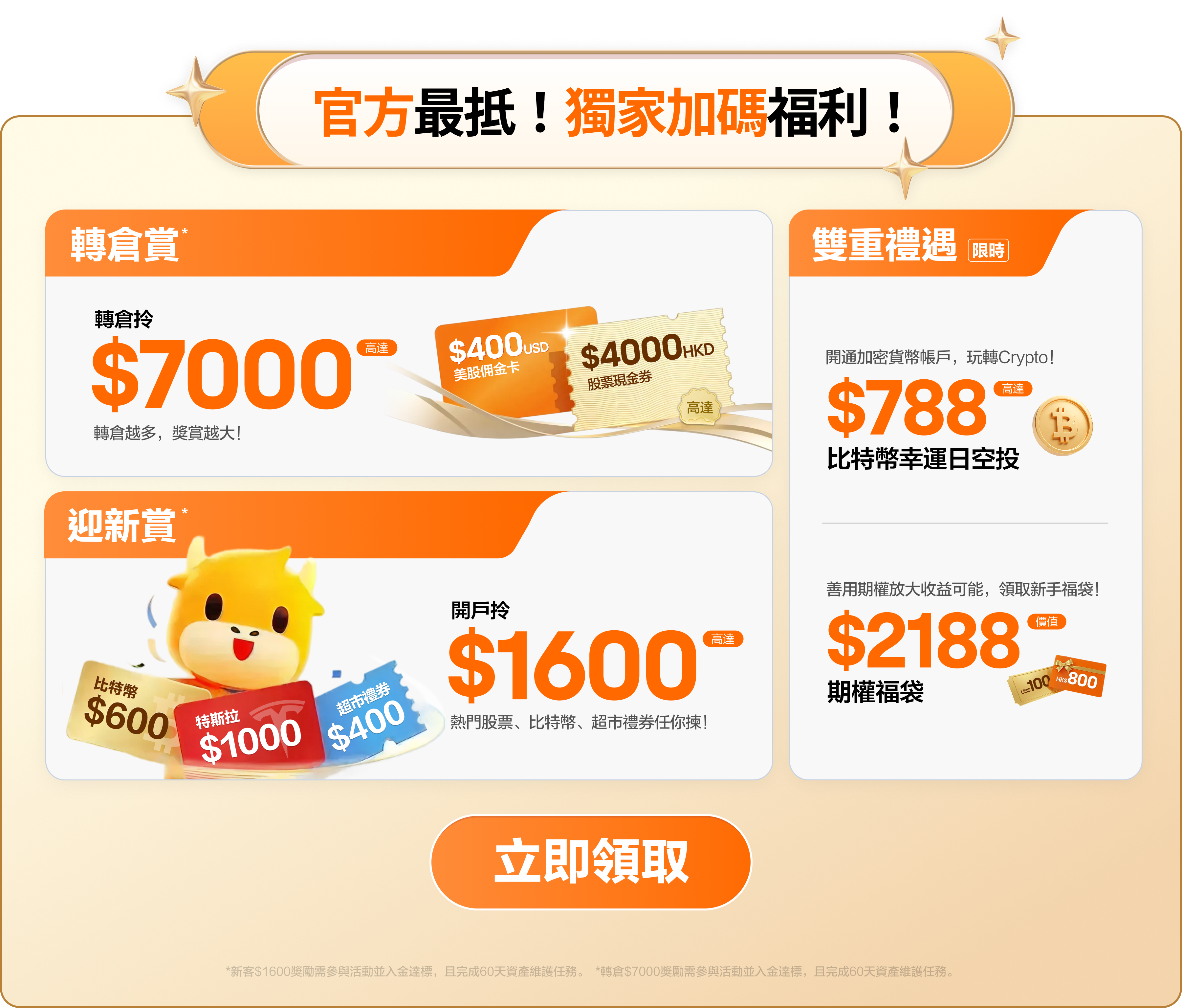
What account-opening promotions does Futu offer?

Opening an account with Futu takes as little as 3 minutes, and the entire process is handled online! [New Customer Offer] Currently, opening an account with Futu entitles you to welcome rewards of over a thousand!
