Futu Research | ETF Investment Research
[Bitcoin ETF] How to Buy a Bitcoin ETF and the Trading Process
What is a Bitcoin ETF?
A Bitcoin ETF is an exchange-traded fund whose price closely tracks the market price of Bitcoin, mirroring its fluctuations. Investors can trade it like a stock, gaining exposure to Bitcoin without having to hold or manage the cryptocurrency directly.
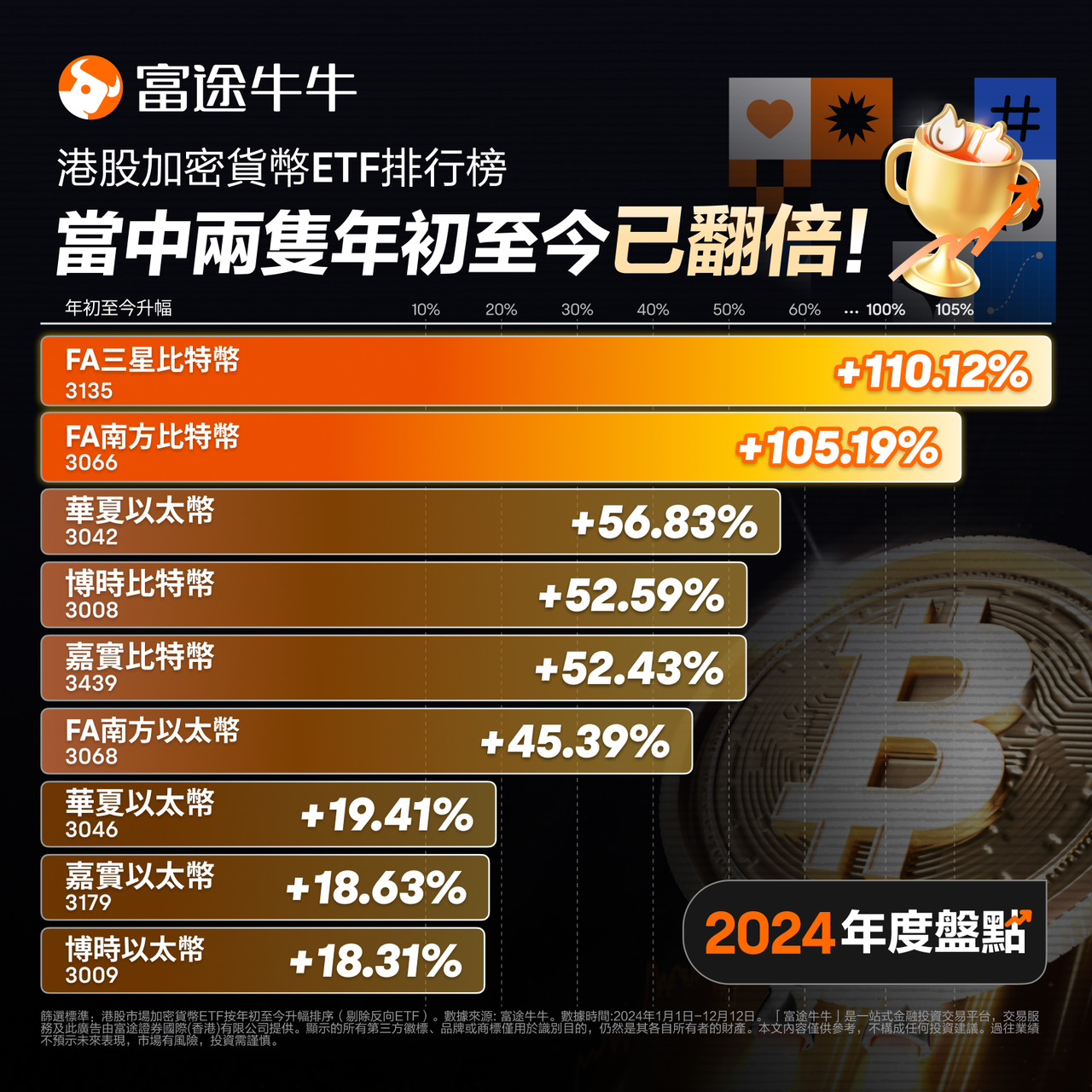
Bitcoin ETF investment threshold: low-cost entry into Bitcoin
Want to get in but feel deterred by the high entry cost? At this point, some investors choose to turn their attention to the cryptocurrency ETF market. Taking the Hong Kong‑listed Bitcoin ETF as an example, based on the closing price on May 23, 2026, the entry fee is as low as HK$861.5! Meanwhile, you can also consider monthly Bitcoin investments.ETF, which helps investors enter the market on a scheduled, fixed‑amount basis, thereby reducing market risk.
Hong Kong Bitcoin ETFs have entry fees as low as HK$861.5!
Hong Kong Stock Market Bitcoin Spot ETF | Closing price | One-time entry fee | Number of shares per lot |
5.94 | $594 | 100 shares | |
9.43 | $943 | 100 shares | |
9.51 | $951 | 100 shares | |
Hong Kong-listed Bitcoin futures ETF | Closing price | One-time entry fee | Number of shares per lot |
25.18 | $1,259 | 50 shares | |
24.78 | $2,478 | 100 shares |
Display conditions: All Hong Kong Bitcoin spot and futures ETFs available on the Futu platform. Data time: Calculated based on the closing prices of Hong Kong stocks as of May 23, 2026.
How to buy a Bitcoin ETF: Futu offers trading in cryptocurrency spot ETFs and futures ETFs.
Futu offers a variety of popular virtual assets, including cryptocurrency spot trading, cryptocurrency spot ETFs, futures ETFs, and related concept stocks. Futu has been licensed by the Hong Kong Securities and Futures Commission to provide virtual asset trading services and is subject to the Commission's stringent regulations and operational standards, ensuring that investors can trade virtual assets in a secure and protected environment. Trading works just like trading ordinary stocks or ETFs—simply place orders using ticker symbols in your securities account.
Bitcoin ETF account opening process
Step 1: Go to the official Futubull website and register a new account.(Register Now)
Step 2: Open a securities account based on your Futu account.(Open an account now)
How to find all Bitcoin ETFs?
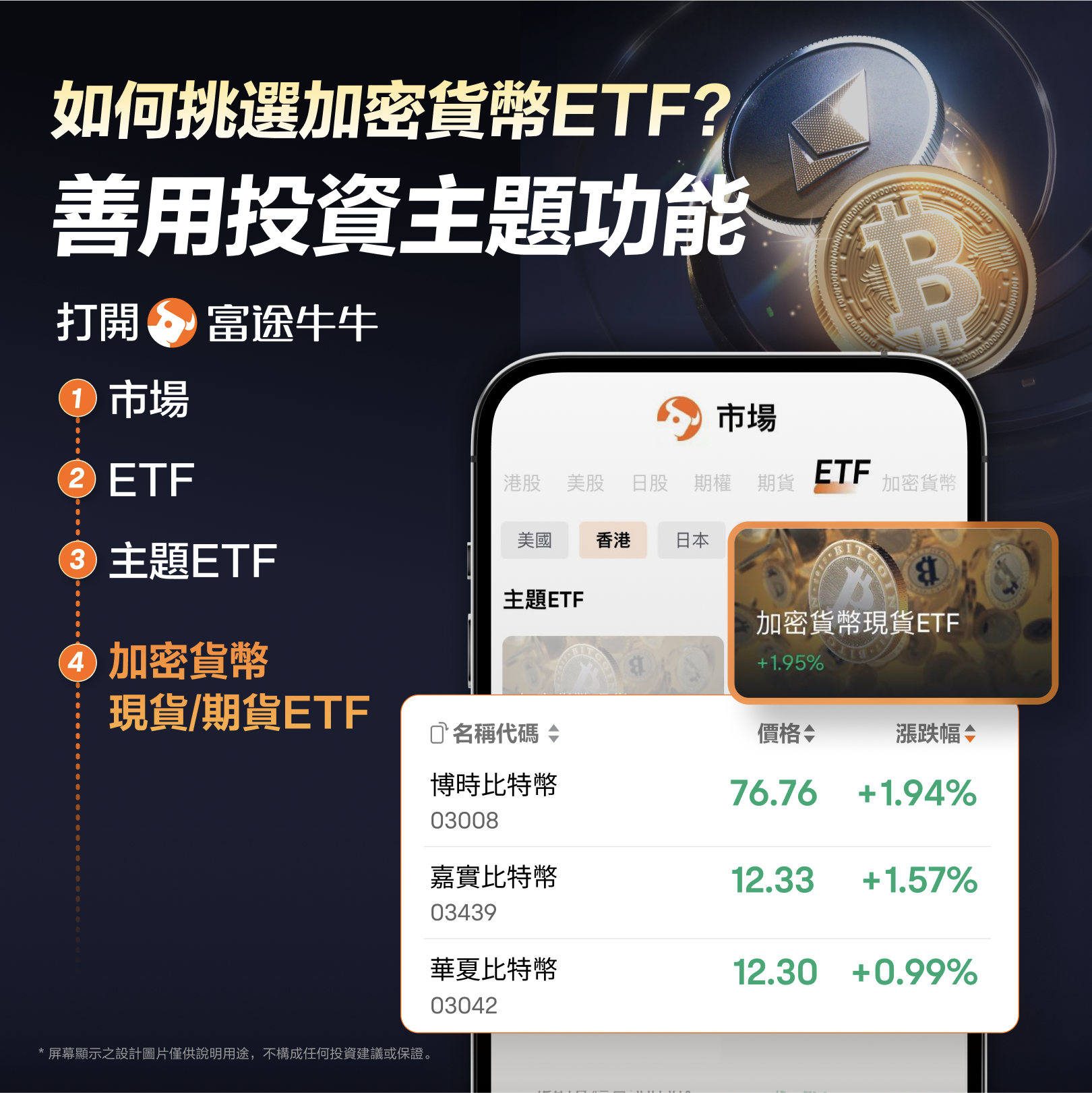
If you're interested in investing in a Bitcoin ETF, you can search for [Crypto] in the search bar, or go to the ETF page, open [Thematic ETFs], and look for [Bitcoin Spot ETFs] to identify high-performing ETFs as a reference for your investment decisions.
U.S. Bitcoin spot ETF
The 11 spot Bitcoin ETFs* that were approved for the first time by the U.S. Securities and Exchange Commission (SEC) have performed exceptionally well since their launch. In addition, markets such as Canada have long offered related spot ETFs for trading, and numerous Bitcoin futures ETFs also entered the market earlier on.
*For subscription by professional investors (PI) only
What are the U.S. Bitcoin spot ETFs? Take, for example, the top two spot ETFs that listed at the beginning of 2024 in terms of trading volume.
Introduction to the IBIT ETF
$iShares Bitcoin Trust(IBIT.US)$It is a Bitcoin exchange-traded fund that allows investors to gain indirect exposure to the Bitcoin market by purchasing fund shares. IBIT is directly linked to the price of Bitcoin, providing investors with a convenient way to access Bitcoin assets without having to hold or manage cryptocurrencies themselves.
Advantages: High regulatory compliance; investors can buy and sell IBIT shares at any time during regular trading hours, resulting in relatively high liquidity.
Disadvantage: As a Bitcoin-related financial product, IBIT's performance may be affected by tracking error, meaning the fund's net asset value may not fully track the spot market price of Bitcoin.
GBTC
$Grayscale Bitcoin Trust(GBTC.US)$It is a closed-end investment vehicle that allows investors to hold Bitcoin indirectly. It is issued and managed by Grayscale Investments, but it is not an exchange-traded fund (ETF). GBTC's net asset value is based on the value of the Bitcoin it holds.
Advantages: Similar to IBIT, GBTC is a good choice for institutions and individual investors seeking compliant channels to invest in Bitcoin and enjoy high liquidity.
Drawback: Compared with other investment products, GBTC's management fees are relatively high, which may erode investment returns.
Other markets Bitcoin spot ETF
BTCC
$Purpose Bitcoin ETF Currency Hedged Units(BTCC.CA)$Features: As the world's first approved Bitcoin spot ETF, BTCC holds actual Bitcoin directly, tracking the market price of Bitcoin more closely.
EBIT
$Evolve Bitcoin ETF(EBIT.CA)$Features: Similar to BTCC, EBIT directly holds Bitcoin, providing investors with investment returns highly correlated to the price of Bitcoin.
BTCQ
$3IQ CORP. BITCOIN ETF (CAD)(BTCQ.CA)$Features: Launched in partnership between 3iQ and CoinShares, BTCQ directly holds and stores Bitcoin, providing investors with exposure to the Bitcoin market. At the same time, it relies on professional institutions for the management and custody of Bitcoin, alleviating investors' security concerns about holding Bitcoin directly.
BTCX
$CI INVESTMENTS INC GALAXY BITCOIN ETF(BTCX.B.CA)$Features: BTCX also holds Bitcoin directly, providing investors with a convenient way to invest in Bitcoin on the Canadian market. This ETF offers direct access to the Bitcoin spot market and enjoys a certain level of transparency and regulatory oversight. At the same time, since it is currently listed only in Canada, global investors may be subject to regional investment restrictions.
U.S. Bitcoin Futures ETF
In addition to spot ETFs, there are also Bitcoin futures ETFs.
BITO
$ProShares Bitcoin ETF(BITO.US)$Features: As the first Bitcoin futures ETF listed in the United States, BITO tracks the performance of Bitcoin futures contracts rather than holding Bitcoin directly. Through this ETF, investors can indirectly participate in Bitcoin market volatility without having to purchase or store the cryptocurrency themselves.
Advantages: For traditional investors, this ETF offers a more familiar, regulatory‑compliant investment channel; it can be bought and sold at any time during trading hours, providing relatively high liquidity.
Disadvantages: Due to tracking futures contracts, there may be roll costs (rollover fees) and basis risk (the difference between futures prices and spot prices), and it cannot fully reflect the performance of the Bitcoin spot market.
BTF
$CoinShares Bitcoin and Ether ETF(BTF.US)$Features: Similar to BITO, BTF also invests in Bitcoin futures contracts, providing investors with a compliant way to gain exposure to Bitcoin.
Advantages: It also offers regulatory compliance and is suitable for investors who wish to gain exposure to Bitcoin without bearing the risks of directly holding it.
Disadvantages: It likewise faces issues such as futures contract roll-over costs and basis risk.
The difference between Bitcoin spot ETFs and futures ETFs
A digital currency spot ETF (such as a Bitcoin spot ETF) is like a basket that directly holds actual digital currencies, such as Bitcoin itself, and its value closely tracks fluctuations in the Bitcoin market price.
Meanwhile, digital currency futures ETFs are more like a basket containing "contracts to purchase digital currencies," which stipulate the right to buy or sell Bitcoin at a specified price at some future date. Their value is influenced not only by the price of Bitcoin but also by additional factors such as the time value of futures contracts and rollover costs.
Therefore, spot ETFs directly track the current market price, whereas futures ETFs may deviate from the spot price and are also subject to roll‑over costs and other inefficiencies.
If you wish to avoid the costs associated with monthly rebalancing, spot ETFs offer better investment value.