Futu Research | ETF Investment Research
[S&P 500 ETF] Warren Buffett's enduring conviction: the S&P 500 index ETF is the top choice for investing.
Investment guru Warren Buffett has repeatedly emphasized at Berkshire Hathaway's annual meetings:
"I believe that, for most people, the best approach is to hold an S&P 500 index fund."
"People spend vast sums of money on stock-picking advice, yet they don't really need it. If you bet on the U.S. and hold that position for decades, your returns will far outpace those of Treasury bills—and far surpass the performance of investors who follow stock-picking recommendations."
Over a 25-year period from 1993 to 2018, he recommended the S&P 500 on 14 occasions, and even stipulated in his will that 90% of his personal estate be invested in the S&P 500, underscoring his strong confidence in the index's long-term, stable returns.
So why has this simple index earned such steadfast and enduring endorsement from Warren Buffett?
What is the S&P 500?
The S&P 500 Index, often referred to as the "thermometer" of the U.S. stock market, is compiled by Standard & Poor's and tracks the performance of shares from 500 of the most influential publicly traded companies in the United States. These companies represent industry leaders across a wide range of sectors, with their weighting in the index determined by market capitalization.
Globally popularThe Magnificent 7 tech stocks, that is,$Apple(AAPL.US)$ 、 $Amazon(AMZN.US)$ 、 $Alphabet-A(GOOGL.US)$ 、 $Meta Platforms(META.US)$ 、 $Microsoft(MSFT.US)$ 、 $Tesla(TSLA.US)$and$NVIDIA(NVDA.US)$They rank among the top performers, and these companies accounted for 76% of the S&P 500's more than 20% gain in 2023.
The S&P 500's gains and losses provide a clear snapshot of the overall U.S. stock market trend. In practice, investing in the S&P 500 means allocating capital to a portfolio that is closely tied to the broader performance of the U.S. economy. Thus, investing in the S&P 500 can be seen as placing a bet on the U.S. economy's growth potential and long-term prosperity.
>>Learn more about the S&P 500 Index and S&P 500 Index Futures.
How has the S&P 500 performed?
Buffett once said, "People would rather hold a lottery ticket that might win them a big prize next week than seize an opportunity to build wealth gradually."
Over the past 5, 10, and even 20 years, the S&P 500 has delivered outstanding returns across a wide range of global asset classes, outpacing not only European and Asian equity markets but also emerging-market stocks.
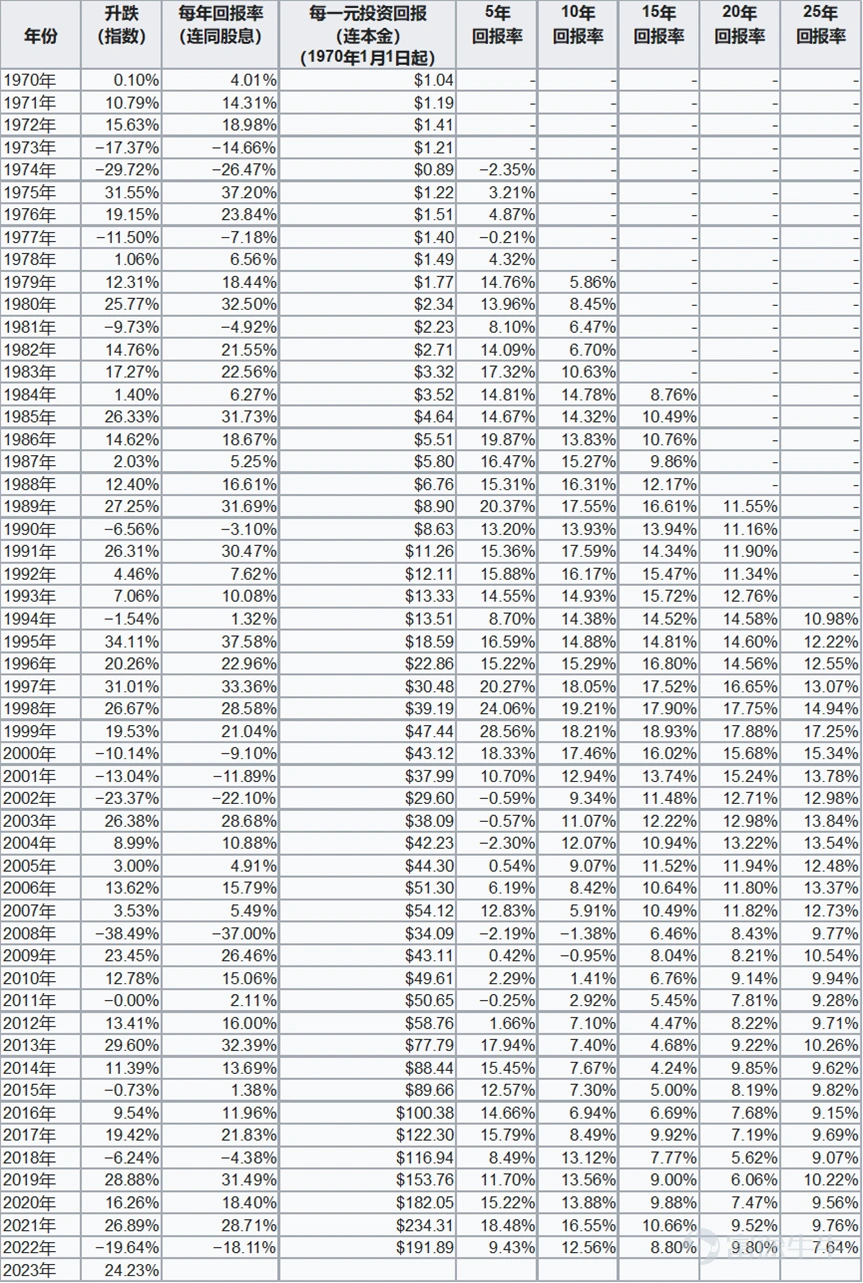
Historically, the S&P 500 has posted positive returns every 20-year period. Its 20-year average minimum return stands at 5.62%, while the 25-year average minimum return is 9.07%, and actual returns tend to converge toward these averages as the investment horizon lengthens. From January 1928 to December 2023, over a total of 1,152 months, positive returns were recorded in 682 months.
Based on a real-world example, if $1 had been invested in the S&P 500 on January 1, 1970, by the end of 2020 the total return—including dividends—would have amounted to approximately $191.89, yielding an annual compound return of 10.43%.
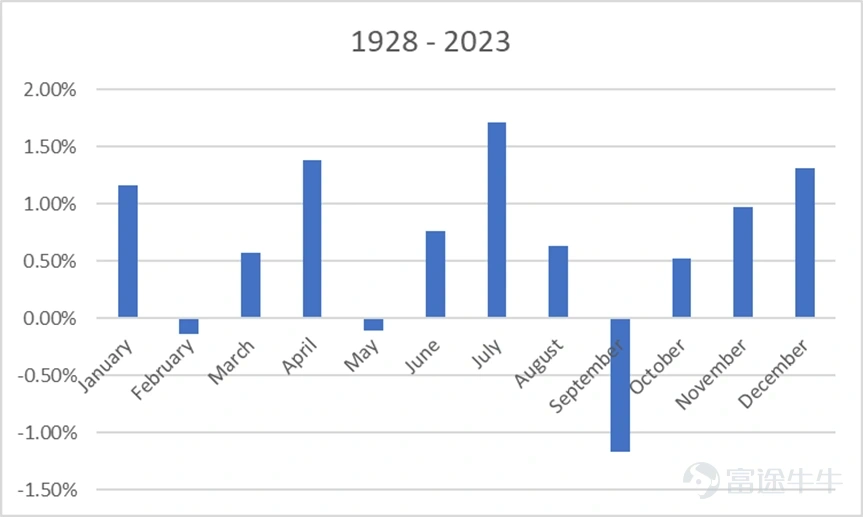
On a monthly basis, the S&P 500 has historically delivered positive returns in most months of the year. Despite the widely held belief that summer tends to be a slow period and that investors should sell in May, the index typically maintains strong upward momentum throughout the summer.
On the other hand, the "September effect" is indeed real: the S&P 500 often experiences a notable decline in September. However, the months that follow typically see a strong rebound, potentially fueled by factors such as holiday‑season spending. Accordingly, understanding this seasonal pattern can help investors make informed decisions in September—such as holding cash to take advantage of lower prices when buying stocks.
What S&P 500 ETF products are available?
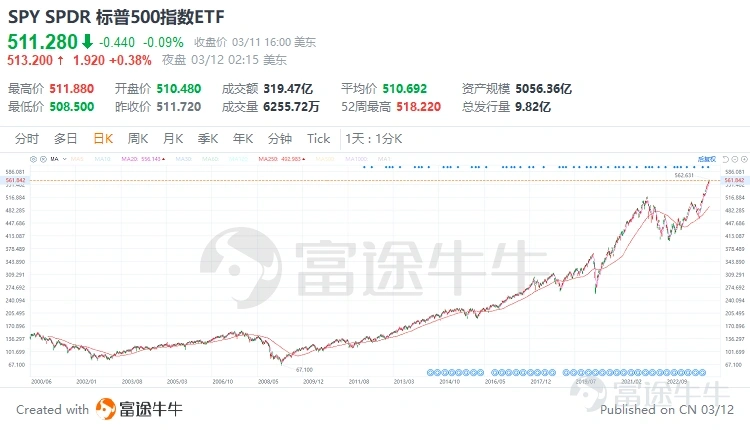
Linked to the S&P 500ETFIndex equity funds (such as the S&P 500 ETF) offer a one-stop, low-cost solution. Take SPY as an example: its expense ratio is just 0.09%, significantly lower than stock trading commissions or the 1–2% fees charged by mutual funds, making it exceptionally cost-effective.
Buffett believes this passive investment approach is well-suited for the average investor, as it not only saves time on individual stock research but may even deliver higher returns, making it ideal for those looking to adopt a long-term strategy in U.S. equities.
I often recommend low-cost S&P 500 index funds, but only a very few modest investors actually take my advice. Virtually no ultra‑wealthy investors, fund managers, or pension funds truly follow my recommendation; they politely thank me, only to be swayed shortly thereafter by asset managers charging hefty management fees and opting for alternative investment strategies.
The well-known S&P 500 ETF on the U.S. market (S&P 500 ETF)
SPY S&P 500 Index ETF
$SPDR S&P 500 ETF(SPY.US)$Commonly known as the "Spider," it is one of the first—and most well‑known—S&P 500 index ETFs on the market. Managed by State Street Global Advisors and launched in 1993, it is not only one of the world's largest exchange‑traded funds but has also long been a widely used investment vehicle for U.S. large‑cap stocks. SPY boasts exceptionally high liquidity, with substantial daily trading volumes, enabling investors to buy or sell with ease, while its bid‑ask spreads are typically very narrow—making it particularly advantageous for large‑scale traders.
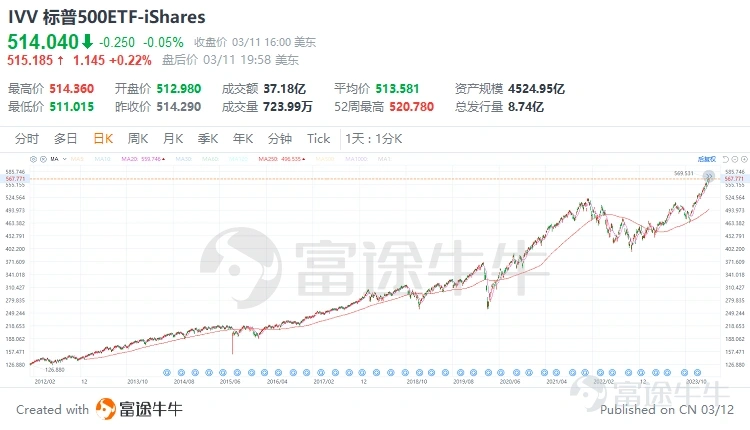
IVV S&P 500 ETF - iShares
$iShares Core S&P 500 ETF(IVV.US)$IVV is an ETF issued by iShares, a subsidiary of BlackRock, and it likewise seeks to track the performance of the S&P 500 Index. IVV's expense ratio is lower than SPY's, hovering around 0.03%. Although IVV's liquidity is not as high as SPY's, its average daily trading volume remains sufficient to meet the needs of most investors.
VOO S&P 500 ETF
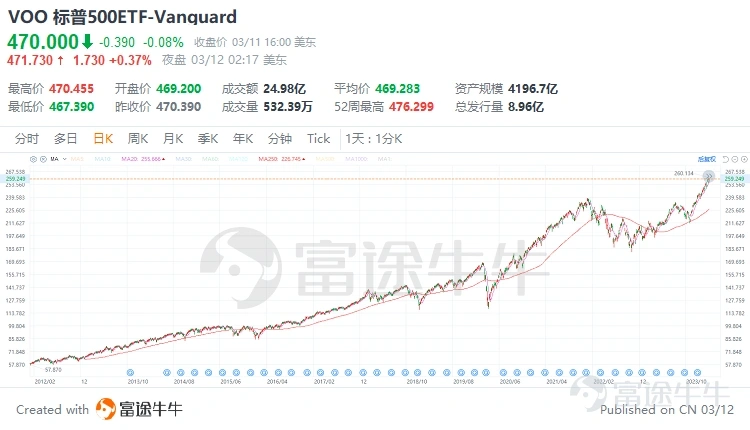
$Vanguard S&P 500 ETF(VOO.US)$VOO is an ETF managed by the renowned low-cost fund provider, Vanguard Group, and it closely tracks the S&P 500 Index. VOO's expense ratio typically hovers around 0.03%, reflecting Vanguard's longstanding commitment to low-cost investing.
NOBL ProShare S&P 500 Dividend Aristocrats ETF
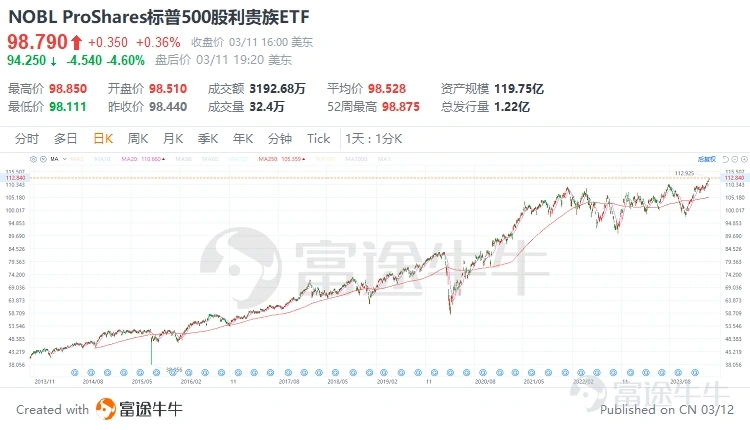
In addition to the three ETFs mentioned above that track the S&P 500 index, you may also want to keep an eye on…$Proshares Trust S&P 500 Divid Aristocrats Etf(NOBL.US)$This is an ETF that selects "Dividend Aristocrats" (companies that have increased their dividends for 25 consecutive years) as its constituents from the S&P 500 Index.
S&P 500 ETF Summary
"In the short term, the stock market is a voting machine, but over the long run, it's more like a weighing machine." From a long-term investment perspective, the S&P 500 offers an exceptionally attractive risk‑return profile, and for investors seeking to build wealth, it's hard to find an asset class that can match it.
Accordingly, when constructing a portfolio, S&P 500–related products can be an ideal choice for most investors, particularly as a complementary or core allocation tool alongside direct investments in individual stocks.
"Only when the tide goes out do we discover who's been swimming naked." No matter how volatile the market may be, maintaining rational analysis and independent thinking, and staying true to the principles of value investing, is the key to advancing steadily in any market environment.
Want to learn more about Buffett's investment secrets? Download the Futubull app now to check the stock god's holdings!

How can I trade S&P 500 ETFs through Futu?
Before investing in ETFs, you must first open a securities (stock) account—just as you need to open a bank account before depositing money.
Securities (Stock) Account Opening Procedure
Step 1: Go to the official Futubull website and register a new account.(Register Now)
Step 2: Open a securities account based on your Futu account.(Open an account now)