How to play virtual currencies?
How to play with Bitcoin? Learn what Bitcoin is and how to buy it in 5 minutes!
Bitcoin is a decentralized digital currency regarded as “digital gold,” an asset with store-of-value and investment potential. Its core value stems from four key characteristics: limited total supply (with a cap of 21 million coins), anonymous yet transparent transactions, global circulation, and high security. You can purchase Bitcoin spot directly in Hong Kong dollars or U.S. dollars through licensed brokerage firms like Futu—safe, reliable, and eligible for zero‑commission benefits.
What is Bitcoin?
BitcoinIt is a virtual asset founded by Satoshi Nakamoto and officially launched in 2009. To date, Bitcoin is one of the most well-known and widely used cryptocurrencies in the world. Bitcoin has four major characteristics:
Decentralization: Primarily maintained and operated through peer-to-peer networks and computing power, eliminating the need for third-party intermediaries such as government agencies or banks. Currency circulates more freely, enhancing transaction efficiency.
Scarcity: Bitcoin has a limited supply, creating scarcity and preventing devaluation due to inflation. The maximum supply of Bitcoin is 21 million coins.
Security (Anonymity + Public Transparency): Bitcoin is based on blockchain technology; transaction records are public, transparent, and tamper‑proof. Each transaction is recorded and published in the blockchain using a unique identifier, while the trader’s name is never disclosed—completely anonymous—effectively safeguarding the traders.
Globalization + Wide Application: Various countries have gradually legalized Bitcoin, enabling it to progressively expand into a globally accepted currency. At the same time, Bitcoin is programmable; as long as there are smart contracts for Bitcoin, they can be utilized, broadening its scope of application.
Overall, these four characteristics not only endow Bitcoin with the status of a valuable virtual asset, but also continuously drive up its investment value.
Another analyst stated that,Under the interest rate cut cycle, the value of “Bitcoin” has matched that of “Gold.”But is that really how things stand? Let’s wait and see!
How does Bitcoin work?
To doLearn about BitcoinTo understand how it works, one must recognize that the blockchain plays a crucial role. The blockchain is a decentralized public ledger that records every Bitcoin transaction and cannot be tampered with; all transaction history is fully visible, publicly and transparently recorded on the shared blockchain.

In addition, it also includes the following elements and mechanisms:
Precision Technology + High-Fault-Tolerance System
Bitcoin employs complex cryptographic encryption techniques, making transaction records and ledgers difficult to tamper with.
The system itself is highly fault‑tolerant and will not fail due to a single point of failure.
Limited supply
The total supply of Bitcoin is capped at 21 million coins, preventing it from losing value due to inflation. This limited and predictable issuance mechanism gives Bitcoin its store-of-value function.
Through “mining,” new Bitcoins are gradually released into the market. Initially, 50 Bitcoins were generated for each block successfully verified. However, to maintain its scarcity, a “Bitcoin halving” mechanism was introduced: every 210,000 blocks (approximately 4 years), the reward is halved once.
Mining and Consensus Mechanisms
Mining is generated through transaction verification. Those responsible for executing the verification process are generally called miners; in the process, they use computer processing power to solve complex mathematical problems—known as “Proof-of-Work”; upon completion of verification, they receive newly issued Bitcoins as a reward.
The Proof-of-Work consensus algorithm ensures network security and transaction reliability.
Overall, the Bitcoin mining and operation process is:
⮕ First, miners collect pending Bitcoin transaction data and consolidate it into a data block called a “block.” Roughly every 10 minutes, a new block appears on the network.
⮕ Miners perform “Proof of Work,” using computational power to solve complex mathematical problems one by one.
⮕ Successfully solving the problem means successfully verifying the transaction, and the miner can receive a certain amount of newly generated Bitcoin as a reward.
⮕ The blocks that have been cracked will be added to the end of the entire Bitcoin blockchain.
4 Major Myths About Bitcoin
Is Bitcoin a bubble?
Although Bitcoin prices can sometimes fluctuate significantly, and some people use it for speculative investments to reap substantial returns—or even face “margin calls” due to excessive leverage—this does not mean that Bitcoin is a bubble.
Bubbles all share one characteristic: their value cannot be sustained—and in many cases, they have no value at all, such as use value or exchange value.
When assets are suddenly subject to speculative trading, causing their prices to surge in the short term and diverge from fundamental values, new participants rush in “following the crowd,” further driving up prices. Once the market overheats, the bubble can burst at any time, leading to a sharp drop in prices and massive losses. A famous example of a “bubble” is the “Tulip Mania” of the 17th century, during which speculators drove up the prices of certain tulip bulbs to astronomical levels—soaring by as much as 26 times in just six months—before the bubble finally burst and vanished without a trace.
However, Bitcoin has gone through multiple price cycles over the past 12 years, and each time it has recovered to a certain level or even reached new highs. In addition, Bitcoin has gradually gained recognition and legalization in various countries; some places have even designated Bitcoin as legal tender, while regulatory frameworks are becoming increasingly comprehensive and sophisticated.
Does Bitcoin have any real value?
Although Bitcoin may not be backed by tangible assets like gold, in fact, since the official end of the Bretton Woods Agreement in 1973—when the U.S. dollar was no longer pegged to the price of gold—almost no fiat currency has been backed by tangible assets anymore.
The total supply of Bitcoin is limited to 21 million coins and is governed by open-source code—no single individual can alter it. This scarcity helps ward off inflation and ensures its value; in contrast, when fiat currencies are produced in large quantities, inflation occurs, leading to devaluation.
This feature makes Bitcoin a potential substitute or complementary asset to traditional financial assets.
Is investing in Bitcoin safe?
The security of Bitcoin is primarily attributable to its “decentralized” nature; every transaction occurring on the Bitcoin network is completely transparent, and the following conditions make it extremely difficult to forge or create false transactions:
1. Blockchain Technology
Bitcoin employs a decentralized and encrypted blockchain system; every transaction is recorded in a block and linked together in a chain, making it extremely difficult to alter or delete transaction data. This high degree of transparency and traceability ensures that suspicious transactions cannot go unnoticed, allowing investors to trade with peace of mind.
2. Consensus Mechanism
The consensus mechanism requires miners to verify transactions by solving random and complex mathematical problems, making transactions more secure and enabling Bitcoin to become the first virtual currency to solve the “double‑spending” problem.
3. Cross‑border and massive computing power
A massive amount of computing power can ensure network security, and the miners supporting the network are spread across the globe, its…The nodes cover 100 countries/regions.This means that there will be no single point of failure.
Of course, investors still need to pay attention to safeguarding the security of the accounts they use for trading. For example, if you use a private key, you must never disclose it to anyone else.
Is Bitcoin legal?
The JPEX incident may have cast a shadow over public perception of trading Bitcoin and other virtual assets, leading some to believe that virtual assets are a scam or illegal. In fact, the legality of Bitcoin depends on the jurisdiction of different countries and regions.
Some regions completely prohibit Bitcoin, largely because real identities within the Bitcoin network are anonymously concealed and lack central bank oversight—for example, Nepal, Pakistan, Bolivia, and Ecuador; meanwhile, Egypt’s national legislative body has ruled that Bitcoin violates religious laws.
However, in Hong Kong, trading virtual assets is legal. To protect investors, the government has established a licensing system for Virtual Asset Service Providers (VASPs) and subject them to stringent regulatory requirements. Therefore, if investors wish to invest in Bitcoin and other virtual assets, they must choose licensed and legally compliant virtual asset trading platforms for greater security.
In addition, in most regions, especially Western countries, Bitcoin has become legal tender in certain transactions. Among them, the United States, the United Kingdom, Taiwan, and all EU member states accept Bitcoin as a valid form of currency in peer-to‑peer transactions. Their Bitcoin regulations allow two voluntary participants to use virtual cryptocurrency in a transaction—specifically, one party is willing to use Bitcoin to purchase products, while the other party is willing to accept Bitcoin as a means of payment.
Factors Affecting the Price of Bitcoin
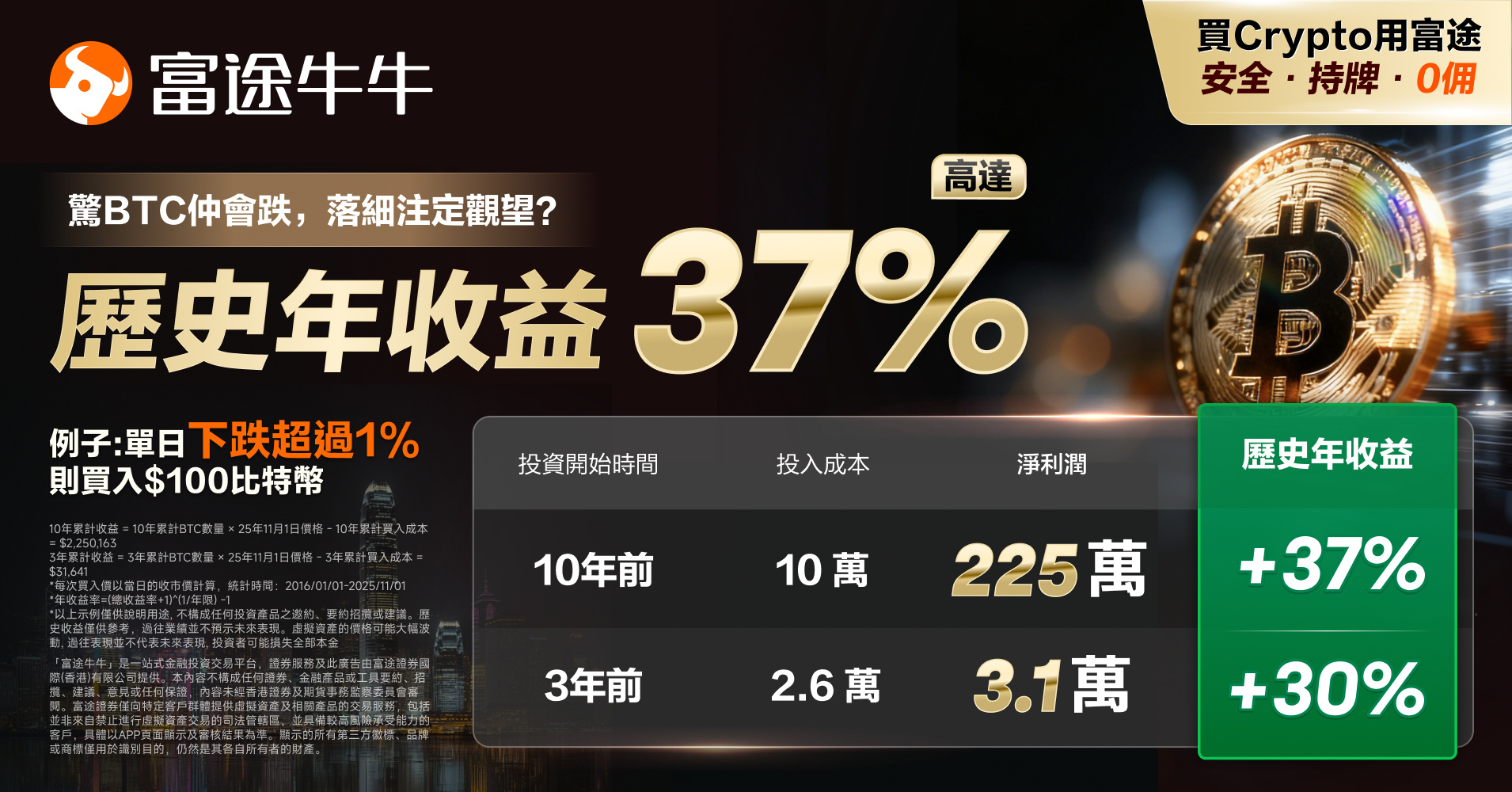
In 2025, the price of Bitcoin experienced significant volatility. At the beginning of the year, it surged from around USD 110,000 to over USD 126,000, hitting a new all-time high—leading major banks to become even more optimistic that Bitcoin could reach USD 200,000! At the start of the year, driven by global capital inflows and expectations of interest rate cuts, coupled with the continued advancement of blockchain technology, the price of Bitcoin rose rapidly; however, geopolitical instability and tariff wars also heightened risk aversion, causing the price to experience multiple short-term corrections.
There are numerous factors that influence the price of Bitcoin, mainly:
1. Scarcity: The total supply of Bitcoin is capped at 21 million coins; as supply becomes scarce while demand increases, the price will rise. The “Bitcoin halving” event, which occurs every four years, reduces the supply of Bitcoin, thereby driving up its price.
2. Regulatory Policies: When the U.S. government’s stance clearly shifts toward greater openness toward cryptocurrencies, the price of Bitcoin will also rise accordingly. For example, when the U.S. Congress deliberated on the CLARITY Act and other bills that explicitly defined regulatory standards for digital assets, market confidence increased.
3. Macroeconomic Environment: Bitcoin plays a dual role in times of economic turmoil. When the global economy is shrouded in uncertainty or geopolitical conflicts erupt, its status as “digital gold” becomes prominent; however, market panic may also increase, leading to sell-offs. On the other hand, as expectations of interest rate cuts rise and the U.S. dollar weakens, market liquidity increases, prompting capital to flow into the Bitcoin market.
4. Capital Inflows: When institutions continuously buy Bitcoin as reserve assets and spot ETFs experience significant capital inflows, increased demand will also drive prices higher.
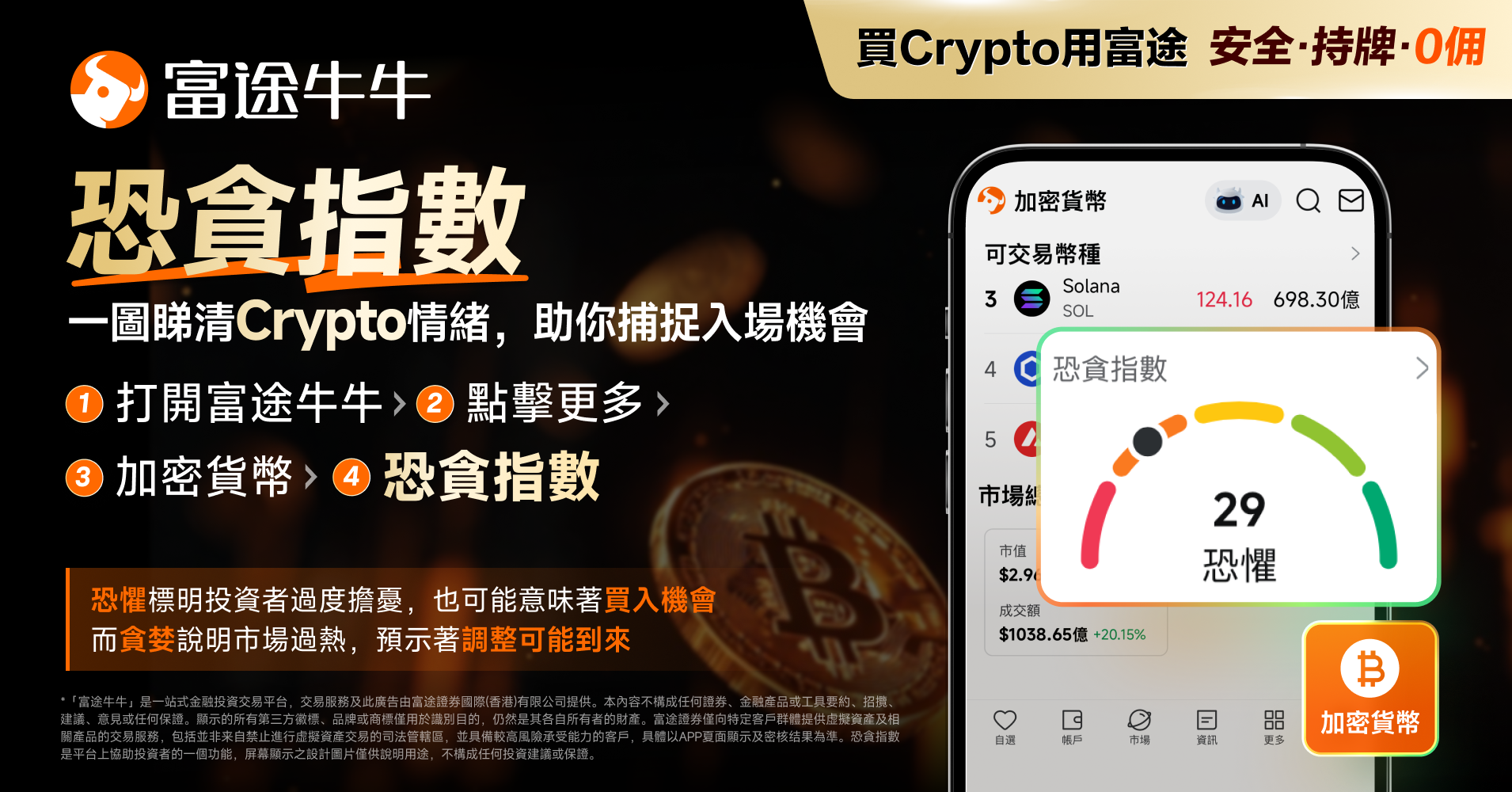
In the cryptocurrency market, price fluctuations are extremely volatile, and investor sentiment swings dramatically like a roller coaster. As a beginner, you may often hear the advice to “be greedy when others are fearful, and be fearful when others are greedy,” but how do you actually determine whether the market is in a state of “fear” or “greed”? Futubull’s cryptocurrency “Fear & Greed Index” is precisely a practical reference tool.
What is the Fear and Greed Index? Simply put, it’s an indicator that measures the overall sentiment of the cryptocurrency market, specifically designed for the crypto market.
Take the indices provided by Futu as an example, with a value range from 0 to 100:
0 represents “extreme fear,” with market confidence at a low ebb and widespread expectations that prices will fall further.
100 represents “extreme greed,” with market sentiment running high and investors rushing to buy, fearing they’ll miss out on the rally.
Based on index levels, market sentiment can be broadly divided into the following ranges:
– 0–20: Extreme Fear (the market may be oversold, or it could be a potential buying opportunity)
– 20–40: Fear (investors tend to be cautious, and prices may be at low levels)
– 40–60: Neutral (emotions are not clearly oriented; prices may fluctuate within a range).
– 60–80: Greed (market sentiment is optimistic, and prices are generally trending upward)
– 80–100: Extremely Greedy (the market may be overheated; be mindful of the risk of a correction)
Referencing this metric helps avoid chasing prices in a panic due to FOMO, or recklessly reducing positions out of fear; it makes investing more rational and reduces the gambling element of placing bets based solely on gut feelings.
What is a Bitcoin halving?
The relationship between “Bitcoin halving” and “mining” is very close; Bitcoin is generated through the process of “mining.” Every time a miner successfully verifies transactions and submits a block to the Bitcoin blockchain, they receive a specific amount of Bitcoin as a reward. Here, “Bitcoin halving” refers to the fact that the reward for mining Bitcoin (the newly issued supply of Bitcoin) is periodically cut in half.
The initial Bitcoin reward was 50 Bitcoins per block, and under the halving mechanism, for every 210,000 new blocks added, miners’ Bitcoin rewards are reduced by 50%. This halving occurs approximately once every four years.
The purpose of the halving is to control the total supply of Bitcoin, maintain its scarcity, and preserve its value.
As of 2024, the Bitcoin halving schedule is:
Bitcoin Halving Schedule | ||
Number of times | Year | Reward Amount (per Block) |
The 1st time | November 2012 | 50 → 25 |
Second time | July 2016 | 25 → 12.5 |
Third time | May 2020 | 12.5 → 6.25 |
4th time | April 2024 | 6.25 → 3.125 |
The next halving is expected to occur in April 2028*, at which point the block height will reach 1.05 million. The market anticipates that all Bitcoins will be fully mined by 2140, totaling 21 million coins.
*Source: CoinGecko
The Impact of the Bitcoin Halving
With the halving event slowing down the rate of new Bitcoin mining, the supply of Bitcoin will become increasingly scarce. While rising demand and falling supply can curb inflation, they can also lead to a situation of supply shortage, driving up the price of Bitcoin.
Each halving sparks market attention and discussion, as it affects the supply of new Bitcoins and the profitability of mining. Halvings are often regarded as one of the catalysts for rising Bitcoin prices.

Ways to Obtain Bitcoin
To obtain Bitcoin, in addition to mining, you can also:
Accepting Donations: Friends, family, or others can directly transfer Bitcoin as a gift to the user.
Using Bitcoin as a transaction currency: Individuals or businesses can accept Bitcoin from the other party in exchange for goods or services.
Bitcoin airdrops: Some institutions or organizations host Bitcoin airdrop events, distributing a specified amount of Bitcoin for free. Participants generally only need to register an account or complete simple tasks to receive the tokens.
Buying Bitcoin: Users can purchase Bitcoin through securities firms or exchanges that are licensed to provide virtual asset trading services. Use fiat currencies (such as US dollars, Hong Kong dollars, etc.) to trade and buy Bitcoin.
How to play with Bitcoin?
After acquiring spot Bitcoin, you can directly buy and sell on a cryptocurrency exchange. Spot trading is one way to invest in Bitcoin; in addition, you can also participate in Bitcoin investments through the following channels, according to your investment level:
Bitcoin ETF
Due to Bitcoin’s large price fluctuations and relatively high risks, the entry barrier for investing in Bitcoin is often quite high.
Bitcoin ETFCan be divided into Bitcoin spot ETFs and Bitcoin futures ETFs.
Bitcoin spot ETFs track “Bitcoin prices”; Bitcoin futures ETFs, on the other hand, track “Bitcoin futures contract prices,” investing in a basket of spot and futures contracts to help diversify risk.
Relatively suitable for beginners.
Bitcoin-related concept stocks
Besides investing in Bitcoin itself, you can also start with its underlying concept, which is relatively easy to get into. Concept stocks related to Bitcoin include the following six major categories:
Bitcoin mining companies: Manufacturers of specialized equipment that provides computing power for the Bitcoin network, or large-scale mining farm operators, etc. The more they can help with mining, the greater their potential value.
Bitcoin exchange: A company that provides Bitcoin trading services. Its revenue comes from transaction fees and custody services. In other words, the more people who use the exchange to buy and sell, or the more positively it impacts its stock value.
Blockchain technology companies: Enterprises that develop and apply blockchain technology to provide customers with blockchain‑based solutions.
Payment Tools/Financial Companies: Traditional financial payment companies that offer Bitcoin payments, providing customers with services such as Bitcoin payments and investments. The more prosperous the business development, the better the investment potential may be.
Hardware equipment companies: Companies that manufacture and sell Bitcoin mining equipment. The better the business performs, the higher the demand becomes, creating opportunities to boost its value!
Fund management companies: Asset management companies that issue Bitcoin ETFs and funds.
Bitcoin-related derivatives
Investing in Bitcoin-related derivatives, such as futures and options, can be used for hedging risks or speculation. However, for beginners, the risks and returns of derivative investments are relatively difficult to predict.
How to buy Bitcoin?
Futu Securities is a licensed institution under the Hong Kong SFC, offering virtual asset trading services that enable one-stop trading of cryptocurrencies, cryptocurrency spot ETFs, futures ETFs, and related concept stocks. Futu currently supports Bitcoin and Ethereum trading. More popular cryptocurrencies will be added successively—please stay tuned.
*Offers are subject to terms and conditions.
With Futu, you can trade cryptocurrencies in just 4 steps:
Step 1: Enable Crypto Trading Features
After opening your account, enable the Crypto trading feature. Go to the [Account] page, tap [Cash Comprehensive Account], then open [Account Management] under [More], and immediately [Activate Trading Instruments]. Next, under [Not Activated], select [Cryptocurrencies].
Step 2: Assessment Testing
Before you can activate a cryptocurrency account, you must complete a “Virtual Asset Risk Assessment, Virtual Asset Holding Limit Assessment, and Virtual Asset Knowledge Test,” as well as undergo identity verification. After submitting your application, activation typically takes about 5 minutes; once successfully activated, you will receive a system notification and an email.
Step 3: Deposit Funds into Your Cryptocurrency Account
Before trading cryptocurrencies, please take the time to transfer funds to your cryptocurrency account. Go to the [Account] page, click on [Cash Comprehensive Account – Cryptocurrency], select either [Fund Transfer] or [Deposit Funds], then choose the currency type and enter the amount; once the funds are credited, you can start trading.
Step 4: Transaction
Go to [Market] - [Cryptocurrencies], select [Bitcoin/Ethereum], click “Trade” in the lower left corner, and you can start trading.How to Trade Cryptocurrencies on Futubull) If you intend to invest in Bitcoin ETFs: You can search for 【Cryptocurrency ETFs】 in the search box to track different Bitcoin ETFs. You can also visit the ETF fund pages to learn about each ETF’s asset size and basic information, such as management fees and dividend policies, for reference in your investment decisions.
![Click any cash account, go to [Account Management], and select “Start Trading” under [Cryptocurrencies].](https://blogimg.futunn.com/1724319156480.jpeg?imageMogr2/quality/100/ignore-error/1)


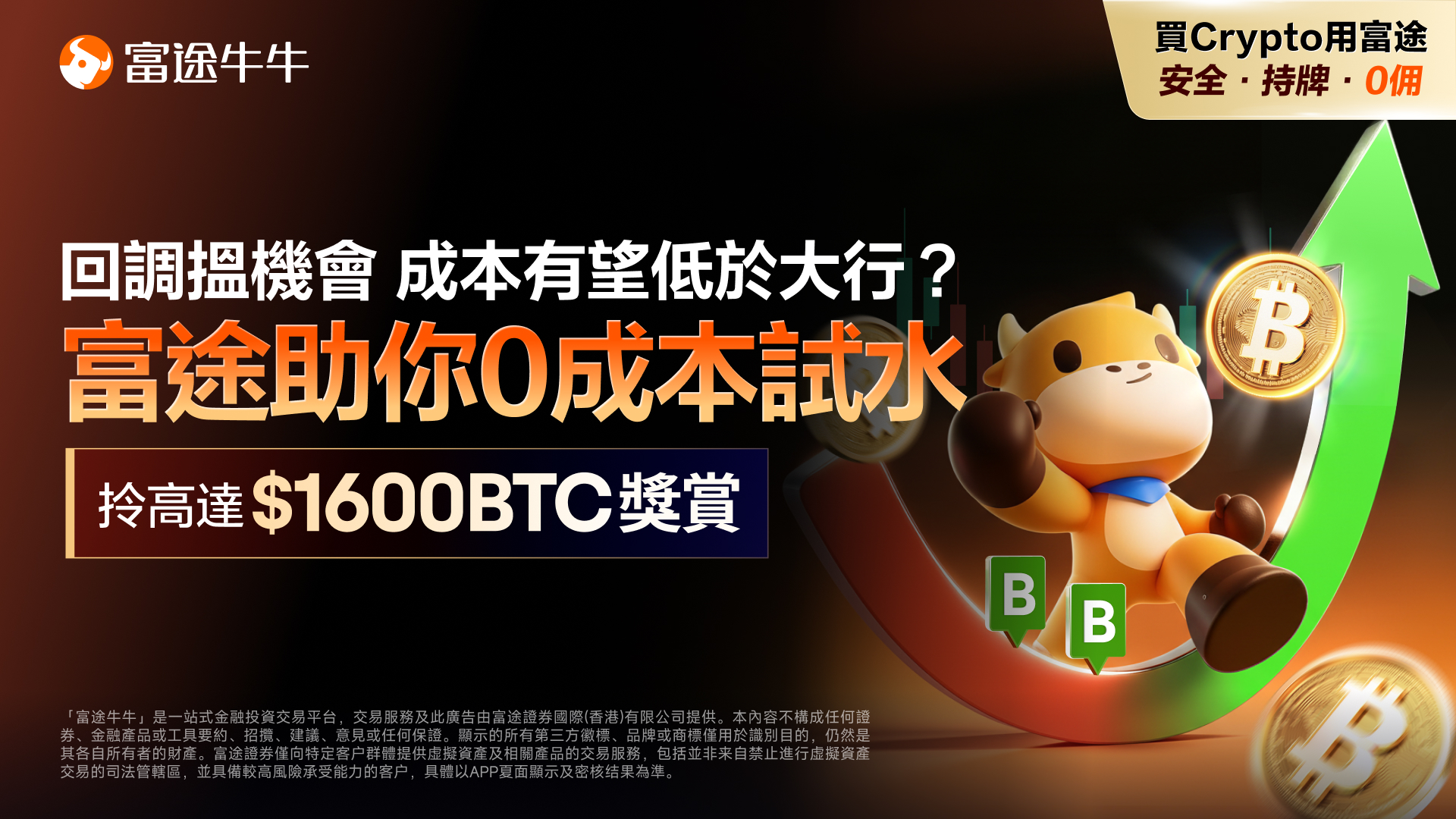
For beginners venturing into Bitcoin investment, a secure and reliable trading platform is especially important! Futu is securely licensed—feel free to embark on your cryptocurrency investment journey here, while also enjoying a 0‑commission promotion!
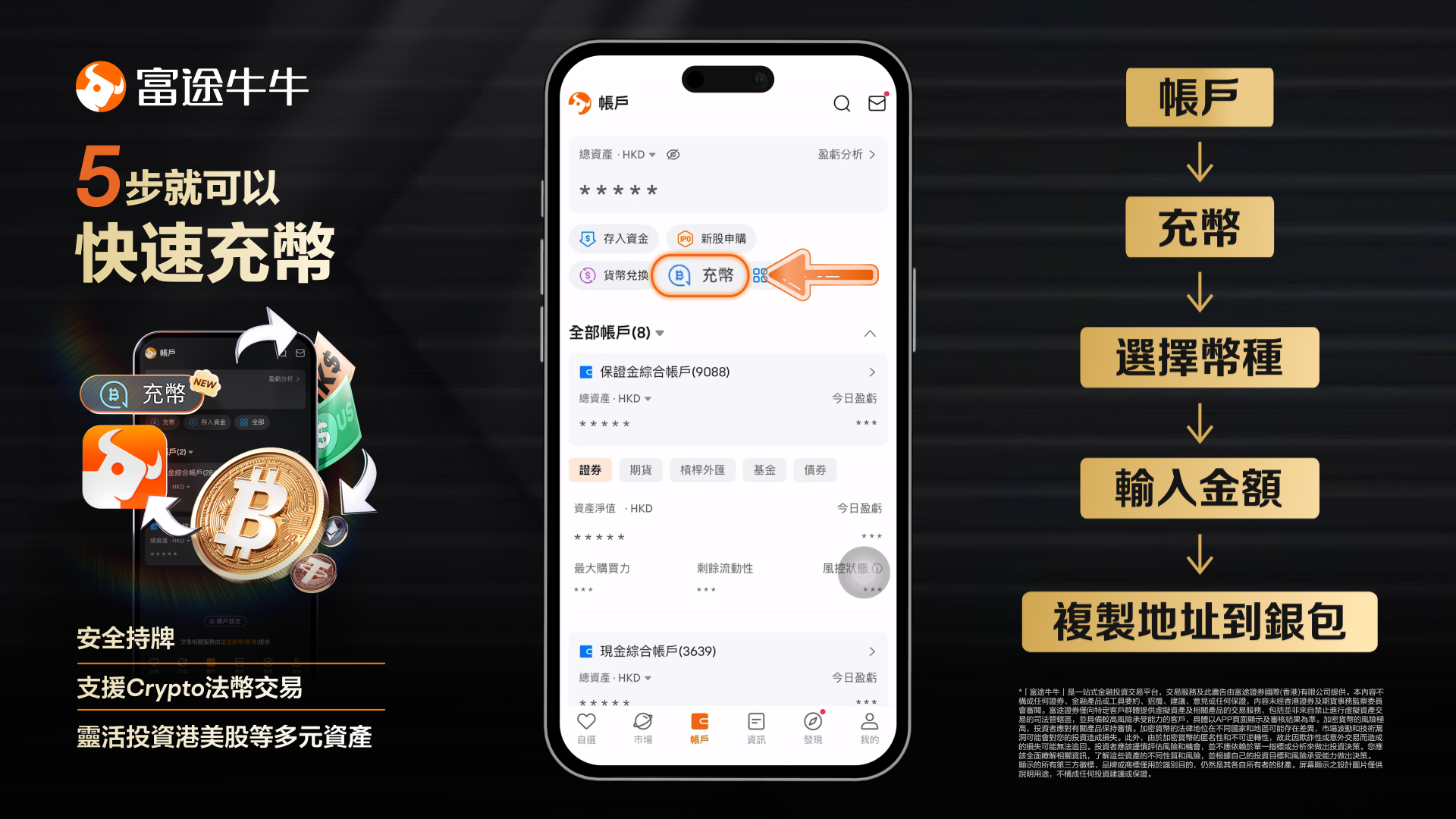
Futu launches BTC, ETH, and USDT deposit features.

Futu has officially launched deposit services for Bitcoin (BTC), Ethereum (ETH), and Tether (USDT)*. Eligible investors can complete deposit and trade cryptocurrencies (“Crypto”) via the one-stop trading platform Futubull, access funds, and then invest in more asset classes or withdraw funds securely. Investors can manage Crypto+TradFi assets (traditional financial assets, including Hong Kong, U.S., and Japanese stocks, options, ETFs, funds, bonds, and other diversified assets) through a single app, swiftly switching between virtual and traditional asset markets, selecting the most suitable investment products to navigate market volatility and ride both bull and bear markets.
*For professional investors (PI) only.
How do I top up with cryptocurrency?
Click on “Account,” then select “All – Cryptocurrency – Deposit.” Follow the system‑displayed total deposit amount and the deposit address generated by the system, and use your existing personal cryptocurrency wallet to transfer funds and complete verification via “Deposit Verification.” Funds typically arrive within 24 hours.