Fund Investment Encyclopedia | How to Invest Funds in Hong Kong
How to Buy Funds New Hand? Start Investing in Your First Funds from Futu
When we want to try investing, the goal is to expect capital income other than our daily salary. But in fact, investing is not so simple as buying and selling, except that you need to choose investment categories and investment criteria, but also buy and sell them at the right time. It takes a wealth of expertise and a wealth of trading experience to grow into a mature investor.
For lack of investment experience, and there is not so much focus on learning investment methods and getting market information new hand, how to start investing in the first place with respect to low cost and low risk? Or allow professional investment Institutions to try to wire money transfers to trustworthy investment institutions, such as Funds Investments.
What are Funds?
Funds are a top investment tool, issued and managed by professional Investment Institutions that are prepared for quality. After Investors Buy Fund Funds, Fund Managers Fund Funds Managers Fund Funds Investment Strategies Divided into Different Asset Assets Assets, Including: Above, Including: Stock Stocks, Bonds, Bonds, Bonds, · Dai Dai Commodities CSICommodityEquityIndex, CSIcomodityIndex, etc. That is, investors buying Fund Funds, that is, buying a basket of Asset Assets behind a basket of Funds Funds.
What are the advantages of fund investing? What do you need to pay attention to?
Advantages of Fund Investing
Low Entry Level: Buying a fund does not involve a stock exchange rate. For example, Futu has a low entry threshold of HK$0.01/USD. For example, investors can hold a set of assets through the fund and enter the market lower.
DIVERSIFIED RISK: INVESTING IN A SINGLE STOCK IS MORE SUSCEPTIBLE TO ECONOMIC, MARKET AND OTHER FACTORS. As a result, fund managers typically allocate funds across multiple assets, and even some funds create cross-regional, cross-asset class portfolios to reduce investment risk.
Save time: Buying a fund, which is equivalent to handing over funds managed by a fund company, without having to choose your own shares, and without frequent monitoring and trading operations, is a relatively stable potential return.
considerations
Fund Fees: Fund investment requires payment of management fees, application and redemption fees to fund companies, fund sales platforms; management fees are automatically deducted daily from the fund's net worth
Non-Profit and Investment Segment: Relative to Investment Segments, Dividend Income for Most Funds is relatively small, but the risk of loss is relatively low
Investors are driven: Funds are managed by fund managers, investors cannot independently adjust the configuration in the fund portfolio, active control is limited
What are the types of Funds? What are the characteristics of the division?
Types of Assets Invested by Funds
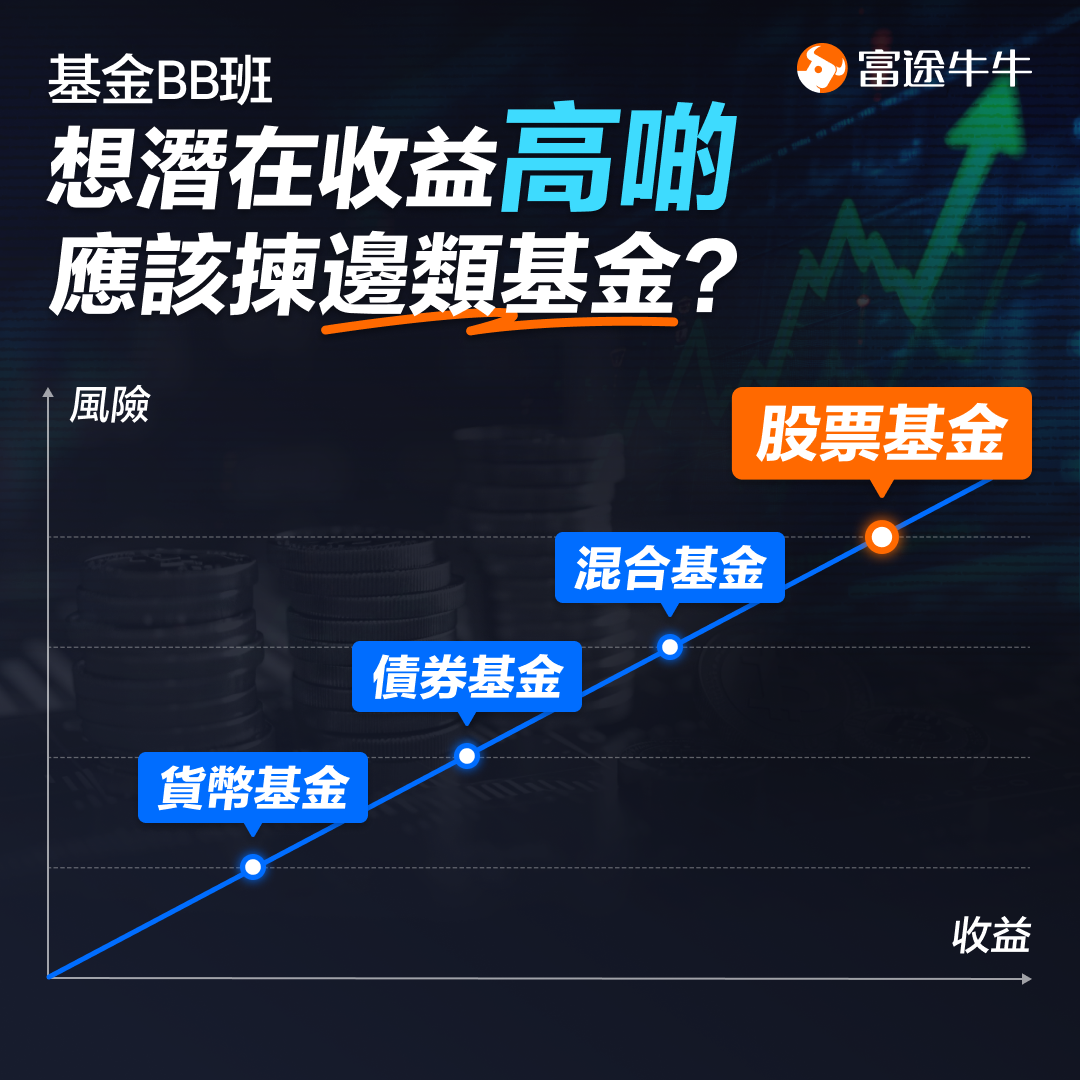
Currency Fund: These Funds mainly invest in short-term MMF market tools, such as Treasuries, Bank Deposits and Commercial Tickets. We are often seen as low-risk investments, offering consistently low returns for investors who need high mobility.
Bonds Funds: Major investments in various types of bonds, such as government bonds, corporate bonds and municipal bonds. Income from Bond Fund Funds is derived from interest income, risk and return on income from interest income, risk and feedback on money funds moneymarketfunds and and Stock Stock Funds.
Stocks FundsFunds: Mainly investing in the Stock Market, where profits are made through the value added of capital. Stocks fund funds have a higher risk, but are higher in the report, suitable for risk-averse investors.
Mixed Funds: Hybrid funds invest in stocks, bonds, and other asset classes to diversify assets by balancing risk and return. This type of fund is suitable for investors looking for stable growth and stable returns.
According to the Fund Redemption Method
Open-ended Funds: These funds allow investors to apply for and withdraw Fund Units at any time. Funds standards may change depending on the investor's application and return.
Closed-end Funds: Closed funds no longer accept new investments after they have raised funds, and investors generally cannot redeem the fund units at any time. Units of these funds are often traded on stock exchanges.
Purchase method based on Funds
On-Site Trade FundsFunds: Mainly exchange-traded funds (ETFs). ETFs are listed on stock exchanges and investors can buy and sell during trading hours, just like stocks. ETFs typically have high liquidity and transparency.
Offshore Funds: These Funds are not listed on Exchanges and investors need to sell through Fund Companies or Financial Institutions. The liquidity of offshore Funds is generally low.
According to the method of fund raising
Public Equity Fund: These Funds are developed for public investors, subject to high regulatory and disclosure requirements, and are suitable for general investors.
Private Equity Fund: Private equity funds typically raise funds privately from professional investors or institutional investors, with relatively little regulation and flexible investment strategies.
Other categories
HEDGE FUNDS: Use a diversified and complex investment strategy to address market risks, usually only open to professional investors.
Dividend Fund: Focuses on investing in stocks or bonds that offer stable dividends, suitable for investors who need a regular income.
Trust Funds: A fund set up in the form of a trust, managed by a trust company, and the proceeds are distributed to the beneficiaries, usually involving longer-term investment objectives.
Step 1: Identify your fund investment objectives and risk preferences
Investment Objectives
Short-term goals: For buying property, travel, or education funds, people tend to choose funds with higher liquidity and lower risk, such as currency funds or short-term bond funds.
Medium-term Targets: In the case of retiring savings or increasing the value of Assets, people will generally choose to take risks higher and dive into larger Stock Funds or Mixed or Mixed Funds.
Risk Preference
Protected investors: Beneficial capital guarantees, low risk underwriting, suitable for investment in Bond Funds or Money-MarketFunds.
Robust investors: Able to take certain risks and seek stable growth and consider hybrid funds.
Advanced investors: They can take on higher risks and aim for higher capital gains, and equity funds or industry/regional-focused funds may be suitable.
Step 2: Select Funds Based on Goals and Preferences
When choosing a fund, you need to pay attention to factors such as fund performance and fees, fund companies and fund managers, professional ratings to assist in the judgment.
Fund past performance, fees
For example, using Futubull, click on the Fund page to see the fund's historical performance, fees, and various valuation indicators.

Historical Rate of Return
Understanding how Funds perform in different market environments based on the Funds' historical ROI (e.g. 1 year, 3 years, 5 years, and 10 years) can be used to assess fund managers' ROI and metrics (such as biometrics or the average return ratio of similar funds). Power.
fees
The fund's management fees will directly affect your final return on investment, which requires a key comparison of this fee if you want to hold it over the long term. Prioritize funds with lower management fees when the rate of return is close to the same type of fund. You can also refer to the Expense Ratio to measure the fund's operating costs.
Common Fund Valuation Metrics
Asset Modeling: Larger Funds may have better asset allocation capabilities, while larger models may limit the viability of Funds.
Mobility: Assesses the liquidity of Funds so that they can be bought and sold as needed.
Sharpe Ratio: Measures the excess return obtained per unit of risk (volatility). The higher the Sharpe ratio indicates the better the return of the fund after risk adjustment.
Treynor Ratio: Similar to the Sharp ratio, but measures the performance of a fund based on systematic risk (Beta).
Information Ratio: Evaluates the ratio of the Funds' over-reporting and tracking error indicators. Higher information ratios indicate that Funds Managers have better choice.
Standard spread: Measures the volatility of fund returns. The higher the standard spread means that the more volatility of the fund and the higher the risk.
Alpha value: Measures the excess return capacity of a fund manager. A value of alpha greater than 1 indicates that the fund has outperformed the benchmark index, and the fund manager is excellent at choosing stocks; less than 1 is the opposite.
Beta value: Measures the market risk of the fund relative to the benchmark index. A Beta value greater than 1 indicates that the volatility of the fund is greater than the market, while a Beta value of less than 1 is the opposite.
Max Drawdown: Measures a fund's maximum loss from peak to trough over a given period of time, which helps to understand the fund's risk during market falls.
Extended Reading:Don't read the fund recruitment book? It's enough to look at these indicators

Fund Companies and Fund Managers
Since the fund is issued by the fund company and managed by the fund manager, the size and reputation of the issuer, as well as the experience and management style of the manager, can affect the performance of the fund. Novice investors can prioritize funds issued by larger, more well-known fund companies and managed by experienced managers.
Extended Reading:Choose direction only, see Funds Companies and Managers
Reference Professional Rating
The Risk Rating of Funds is assessed by Professional Institutions such as Morningstar. To put it simply, highly rated Funds are stable in terms of security and are suitable for risk-averse investors.
Risk rating removal can be found outside the third party website, and in the Futubull app, it is easy to see the risk rating of each fund.
Extended Reading:Can a few stars earn steadily? How to open the fund rating correctly


Step 3: Determine the Funds Investment Plan
When Buying Fund Funds, apply your own investment plan, for example: Is a one-time investment a fixed-term investment, such as: Is a one-time investment a fixed-term investment? What is a recurring investment? How many investments per investment?
One-time investment
The advantage of a one-time investment is that it is possible to invest all the funds profitably in one time under market conditions, and the profit can follow the market trend, and it can get a higher return on the relevant side. On the other hand, a single trade only requires a one-time transaction fee, making it easier to operate as a whole.
Buying after a fall requires a lot of loss of heart and logic pressure when you look at the wrong time. Invest all the funds in the short term, and the club leads itself to the ground of inertia, so that it does not return to the place of activity and make subsequent consequences.
Fixed-term investment (Monthly Funds)
The benefit of a monthly fund is that it is possible to gradually accumulate the invested capital by investing funds in batches. Buying when the market is falling can also gradually reduce the cost of holding positions, smoothing the risks of market volatility.
However, if the market is on a continuous unilateral upswing, the cost of holding positions and potential returns will be lower than a one-time investment. In addition, the transaction fees for monthly funds will be relatively higher.
How to Buy Funds for New Investors?
Choosing a suitable fund investment platform
Many banks and brokers support fund trading, but they each offer different services and fees. For a better investment experience, you should prioritize when choosing a platform: offering more premium fund products, more secure, clear and reasonable fees, high quality of service, powerful features and ease of operation. For example, selectFutu Tai Chi Wealth。
Futu Daishi Financial, a private equity fund company, established a partnership with 91 financial institutions around the world. SEE 6P PRINCIPLES, PERFORMANCE, INVESTMENT PHILOSOPHY, INVESTMENT MIX, MANAGEMENT TEAM, MANAGEMENT COMPANY AND INVESTMENT FLOW FOR A COMPREHENSIVE ANALYSIS OF FUNDS. A comprehensive assessment of the products that reach the top of the line can become the foundation of the platform.
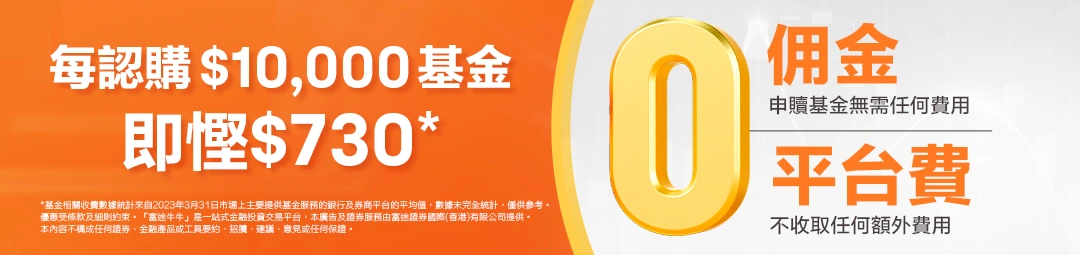
Open a Futu Funds Account Account, you can apply for 0$ immediately, 0, apply for 0$ immediately, 0$ for trading platform fee, 0.01 can be applied for now. Click on the below image to learn more
Read the Funds Brief before Buying
It is recommended that you read the fund manual carefully before buying a fund to verify that the fund's investment objectives and strategy meet your investment objectives and risk tolerance, understand the main risks the fund faces, and the specific fee structure of the fund.
Periodically view the performance of Funds
Regularly reviewing fund performance is an important part of ensuring that the portfolio is aligned with personal financial objectives.
Investors should establish a habit of reviewing fund performance quarterly or semi-annually and keeping a close eye on changes in the market and economic environment. By comparing a fund's performance against its benchmarks and similar funds, you can assess a fund manager's ability to manage and consider increasing or decreasing investments in a particular fund based on how you view results and your financial situation.
In addition, continuous learning of market knowledge and investment skills will help improve your investment decision-making skills and help you manage your fund investments more effectively to achieve long-term financial goals.
