Getting Started with Capital Investment
Is investing in gold a must for hedging against risk? What factors influence the price of gold?
Today's gold price
You can refer to today's latest gold prices.Hong Kong Gold and Silver Exchange WebsiteIt will display the day's latest gold transaction price.
Gold Price Trend Analysis
Macroeconomic and Policy Impacts:
U.S. Election Implications: Donald Trump's re-election has fueled market expectations of rising inflation, leading to a stronger U.S. dollar and higher Treasury yields—factors that are putting downward pressure on gold prices in the short term.
Federal Reserve Policy: The continuation of the rate-cut cycle should help support gold prices, but rising inflation could fuel expectations of rate hikes, putting downward pressure on gold.
Geopolitics and Safe-Haven Demand:
Russia-Ukraine Situation: Recent geopolitical tensions, such as the escalating conflict between Russia and Ukraine, have heightened market risk aversion and boosted demand for gold.
Global Central Bank Gold Purchases: Central banks in many countries continue to build up their gold reserves, particularly in Southeast Asia, which, over the long term, supports demand for gold.
Market capital is flowing into cryptocurrencies:
Gold funds have seen outflows, with some speculative capital shifting to cryptocurrencies; for instance, Bitcoin has risen sharply recently. Additionally, market expectations of looser cryptocurrency regulation have also drawn in some speculative demand for gold.
How to Invest in Gold
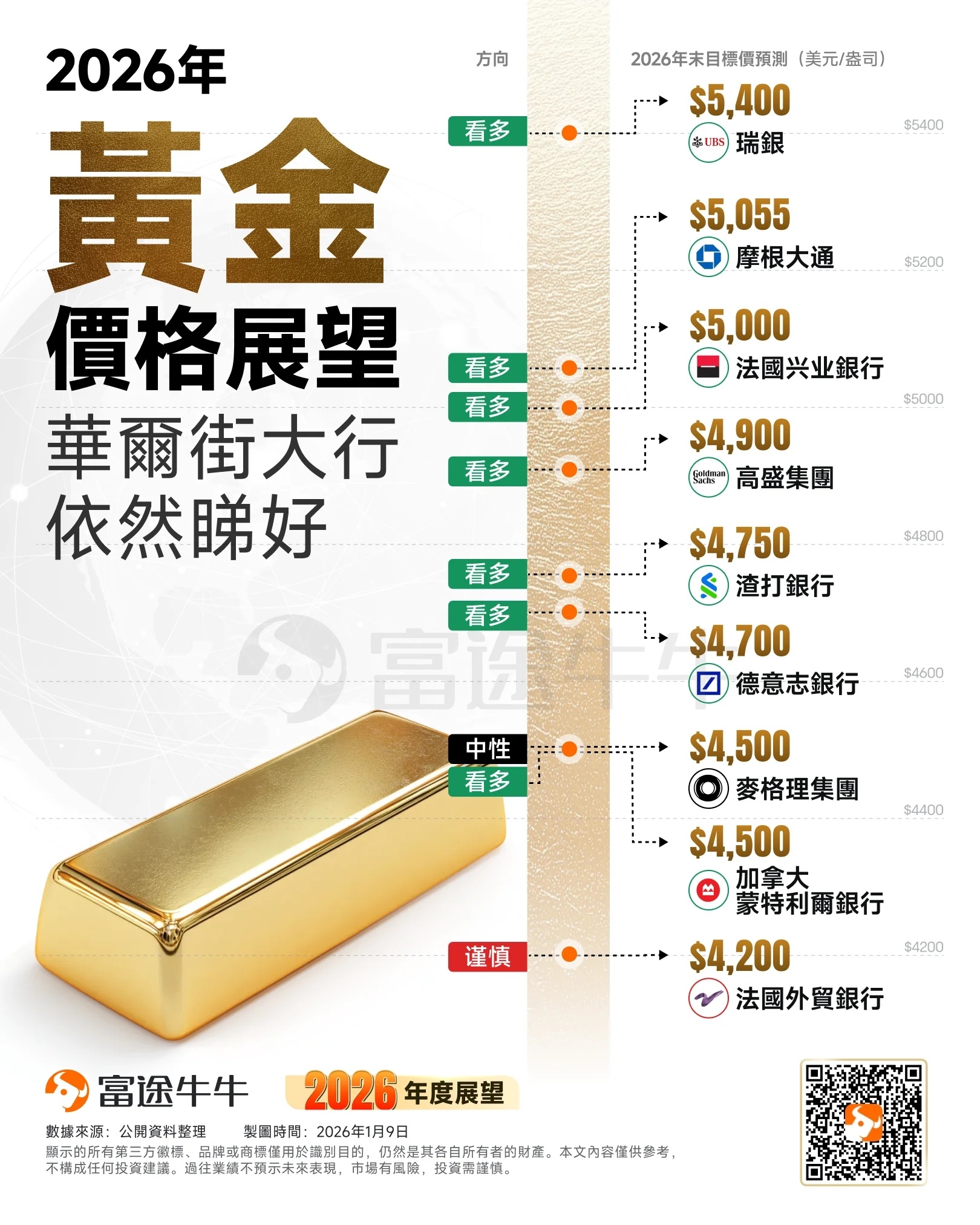
Gold investment can be categorized into investing in physical gold or investing in gold‑related stocks and related derivatives (such as gold ETFs, gold futures, etc.):
1. Physical Gold / Paper Gold
Investing in physical gold means purchasing spot gold items directly from a jewelry store, such as bracelets, necklaces, earrings, gold medals, gold granules, gold bars, and gold coins. However, this approach is relatively inconvenient, requires storage space, and entails higher investment costs. In contrast, paper gold involves investing in gold through a bank account—similar to a standard savings plan—where the "book" keeps track of the amount of gold held in ounces.
Advantages | Disadvantages |
Low entry barrier Take Hang Seng Paper Gold Granules as an example—entry fees can be as low as under HK$1,500. | No interest income + deposit insurance |
In addition to trading physical gold and paper gold, you may also consider investing through the following methods:
2. Gold-related concept stocks
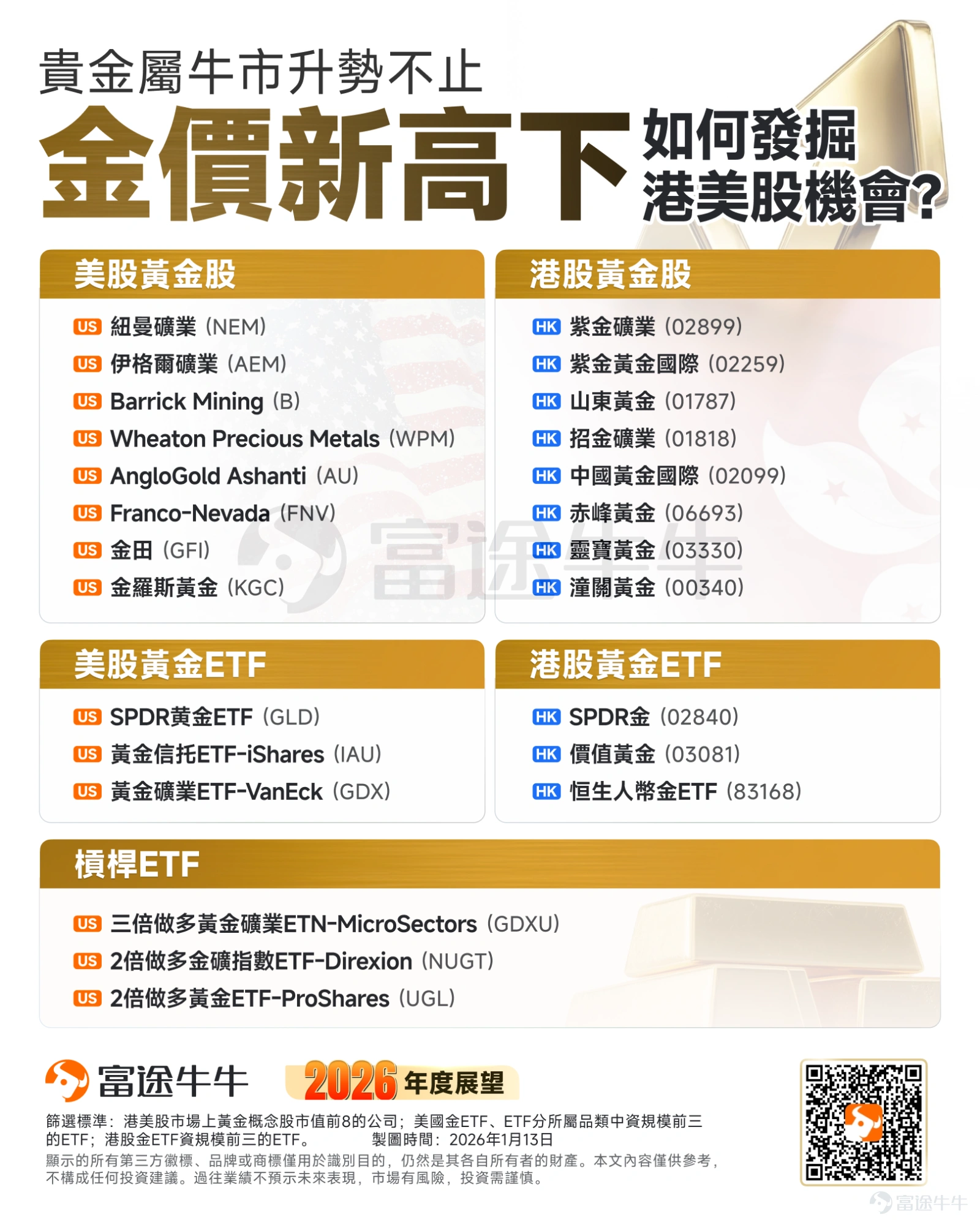
Gold‑related stocks encompass listed companies that focus on gold mining, processing, and sales. These stocks are closely tied to gold market dynamics, with their performance often mirroring international gold prices. Investing in gold‑related equities allows investors to participate in the gold market without holding physical gold.
Advantages
The gains in gold-related stocks have outpaced those of gold itself.
Disadvantages
Volatility is higher than that of gold.
Declining resource reserves and high extraction risks may adversely affect the company's profitability.
Gold stocks in the Hong Kong stock market | |
|---|---|
00340 | |
02489 | |
00815 | |
01818 | |
03330 | |
00274 | |
02099 | |
02899 | |
01787 | |
Filtering date: 2024/12/24 Filter criteria: Futubull - Stock Selector - Hong Kong Stocks - Concept Sector - All Gold Stocks | |
Gold stocks in the U.S. stock market | |
|---|---|
KGC | |
GOLD | |
BTG | |
CDE | |
NOTHING | |
IAUX | |
FSM | |
IAG | |
NGD | |
HMY | |
Filtering date: 2024/12/24 Filter criteria: Futubull - Stock Selector - U.S. Stocks - Industry Sector - Gold, top 10 by trading volume | |
3. Gold ETF
Gold ETFs are exchange-traded, open-ended funds that primarily invest in gold-related assets, such as physical gold or gold derivatives.
Advantages | Disadvantages |
Low investment threshold | The transaction is time-limited. |
Convenient investment: With just one app, you can get started. | Operated by the fund management company, additional fees may affect returns. |
Flexible operation: Real-time trading and free subscription/redemption. |
Introduction to Gold Investment
Gold ETFs vs. Physical Gold
When considering gold investments, which option is better? Gold ETFs offer several distinct advantages.

Gold ETF vs. Gold Mining ETF
When considering an investment in gold ETFs, it's important to understand that, depending on their tracking objectives and underlying assets, gold ETFs fall into two main categories:
Gold ETFs: These ETFs are directly linked to the price of gold in the market, with performance closely mirroring changes in the spot price of physical gold. Investors can gain indirect exposure to the gold market through these ETFs without holding physical gold.
Gold mining ETFs invest in the stocks of gold mining companies. Their performance is influenced not only by gold prices but also by factors such as the operating conditions and management efficiency of the mining firms.
Further Reading:What are gold ETFs, and how should you choose one?
Further Reading:[Gold ETF] Gold Prices Soar: A Comprehensive Analysis of Gold ETF Investments in Hong Kong and U.S. Markets
4. Gold Futures
Each gold futures contract typically represents a fixed weight of gold, such as 100 ounces. Investors can trade by posting only a fraction of the contract's value as margin, leveraging their position to amplify potential returns. Moreover, each futures contract has a specific expiration date, and investors must decide before expiration whether to close their position (liquidate the trade) or take physical delivery.
Advantages | Disadvantages |
Leverage effect By paying only a margin deposit, you can leverage your investment and potentially reap higher returns. | The transaction is time-limited. Futures contracts have an expiration date, and investors must make a decision within the specified period. |
High liquidity Gold futures are actively traded in the market and typically offer high liquidity, facilitating buying and selling. | High risk The market is influenced by various factors, resulting in high price volatility. Complex operation, not beginner-friendly. Leverage amplifies potential losses. |
How to invest in gold through Futu
Futu Securities offers you investment products such as gold ETFs, gold mining stocks, and gold futures. Open an account now and enjoy a new‑client reward of up to one thousand yuan.


What are the benefits of investing in gold?
Safe-haven asset
Because gold has long been regarded as a store of value and its price has remained stable over the long term, investors typically turn to gold during periods of economic uncertainty, rising inflation, or heightened market volatility to preserve the value of their assets.
Anti-inflationary
The value of gold typically rises with inflation, making it a reliable hedge against inflation. As the purchasing power of currency declines, gold's value tends to remain stable.
Liquidity
Gold is a globally recognized asset that is easy to buy and sell. The market also offers a variety of instruments for investing in gold, including physical gold (such as gold bars and coins), gold ETFs, and gold‑backed stocks, making it convenient for investors to trade.
Global demand
Gold enjoys a certain level of demand in jewelry, electronics, and industrial applications, which helps keep its value relatively stable.
Factors Affecting Gold Prices
With the collapse of the Bretton Woods system, gold prices began to float freely. This historic shift made gold prices more susceptible to market supply and demand as well as other economic factors.
What influences gold prices? | ||
Factors Affecting Gold Prices | Relationship | Cause |
Inflation | Direct proportionality | Inflation drives up prices, boosts gold demand, and pushes gold prices higher. |
Dollar value | Inverse proportion | When gold is priced in U.S. dollars, a stronger dollar does not affect gold's intrinsic value but makes other assets more attractive, yielding higher returns and, by extension, reducing demand for gold and pushing its price lower. |
Monetary policy | Both positive and negative | Gold serves as a hedge against inflation; therefore, when interest rates rise, gold prices tend to fall, and conversely, when interest rates are cut, gold prices typically increase. |
Risk-aversion demand | Direct proportionality | Market volatility, whether driven by geopolitical factors or other influences, tends to boost demand for safe-haven assets, thereby pushing gold prices higher. |
Product Demand | Direct proportionality | When market demand for jewelry increases, gold prices typically rise accordingly. |
Central Bank Policy | Direct proportionality | When central banks significantly increase their gold purchases to enhance economic stability, manage risks, and diversify their reserves, it drives up gold prices. |

The Relationship Between Gold Prices and Inflation Levels
Gold prices move in tandem with inflation levels. Whenever inflation rises, gold prices tend to follow suit. Because inflation drives up consumer prices and effectively devalues currency, and because gold is widely recognized as a hedge against inflation, investor demand for gold increases, pushing prices higher.
The Relationship Between Gold Prices and the U.S. Dollar Index
There is an inverse relationship between gold prices and the U.S. dollar index. When the dollar index rises, gold prices typically fall; conversely, when the dollar index declines, gold prices may rise.

This is based on the following four major factors:
Gold has safe-haven characteristics: it is widely regarded by the market as a safe-haven asset. Particularly when financial markets are volatile, inflation rises, or the U.S. dollar weakens, investors often turn to gold to safeguard their wealth, driving up both demand and prices.
Gold is traded in U.S. dollars: when the U.S. dollar index rises, it indicates that the dollar is strengthening, which increases the cost of purchasing gold in other currencies, thereby reducing demand from investors outside the dollar zone and pushing gold prices lower.
Interest Rate Impact: A rise in U.S. interest rates typically strengthens the dollar. In such circumstances, investors tend to shift toward higher-yielding assets to capture greater returns, thereby increasing the opportunity cost of holding gold and putting downward pressure on its price.
Market Sentiment: Changes in the U.S. dollar index often reflect market risk appetite. When market sentiment is optimistic, the dollar index tends to rise, and investors may shift toward higher-risk assets, such as equities, rather than safe-haven assets like gold.
The Relationship Between Gold Prices and U.S. Interest Rates
Gold prices and U.S. interest rates also move in opposite directions: when U.S. interest rates rise, gold prices tend to fall, while when rates decline, gold prices typically increase, because:
1. Opportunity Cost
Gold does not generate interest or dividends; therefore, when interest rates rise, investing in other assets—such as bonds or deposits—can yield higher returns, increasing the opportunity cost of holding gold and reducing its demand.
2. U.S. Dollar Strength and Weakness
Rising U.S. interest rates typically lead to a stronger dollar. Since gold is priced in U.S. dollars, a stronger dollar increases the cost for investors in other currency zones to purchase gold, thereby dampening demand and suppressing gold prices.
3. Inflation Expectations
A low-interest-rate environment typically coincides with rising inflation expectations. As inflation erodes the value of the U.S. dollar, investors may be more inclined to buy gold as a safe-haven asset to preserve their wealth. Conversely, when interest rates rise, it usually signals easing inflationary pressures, and investor demand for gold may decline.
4. Market Sentiment
Interest rate changes reflect the market's outlook on economic conditions. When the market anticipates strong economic growth and rising interest rates, investors are more likely to favor higher-risk assets over safe-haven assets such as gold.
5. Central Bank Policy
The U.S. Federal Reserve's interest-rate decisions have a significant impact on gold prices. When the Fed raises rates, gold prices come under pressure, while rate cuts tend to support them.