Receipt share 2026|Latest quality dividend selection strategy
Income Stocks 2026 | How to Use High-Yield Hong Kong Stocks to Support Your Retirement + Uncle Lu’s Income Stock Recommendations

After retirement, when your active income comes to an end, a steady stream of passive income can provide you with ample cash flow, helping to sustain your retirement lifestyle! Investing in relatively stable dividend stocks is one option for boosting your passive income. Today, we’ll be introducing dividend stocks listed on the Hong Kong stock market.
What are income stocks?
Investment income stocks (also known as dividend stocks) are shares in companies that regularly distribute dividends to their shareholders. As such, income stocks are typically held by companies with stable operations. On the positive side, they offer a steady stream of dividend income; however, on the downside, they can limit the stock’s growth potential. So what other advantages and disadvantages do income stocks have?
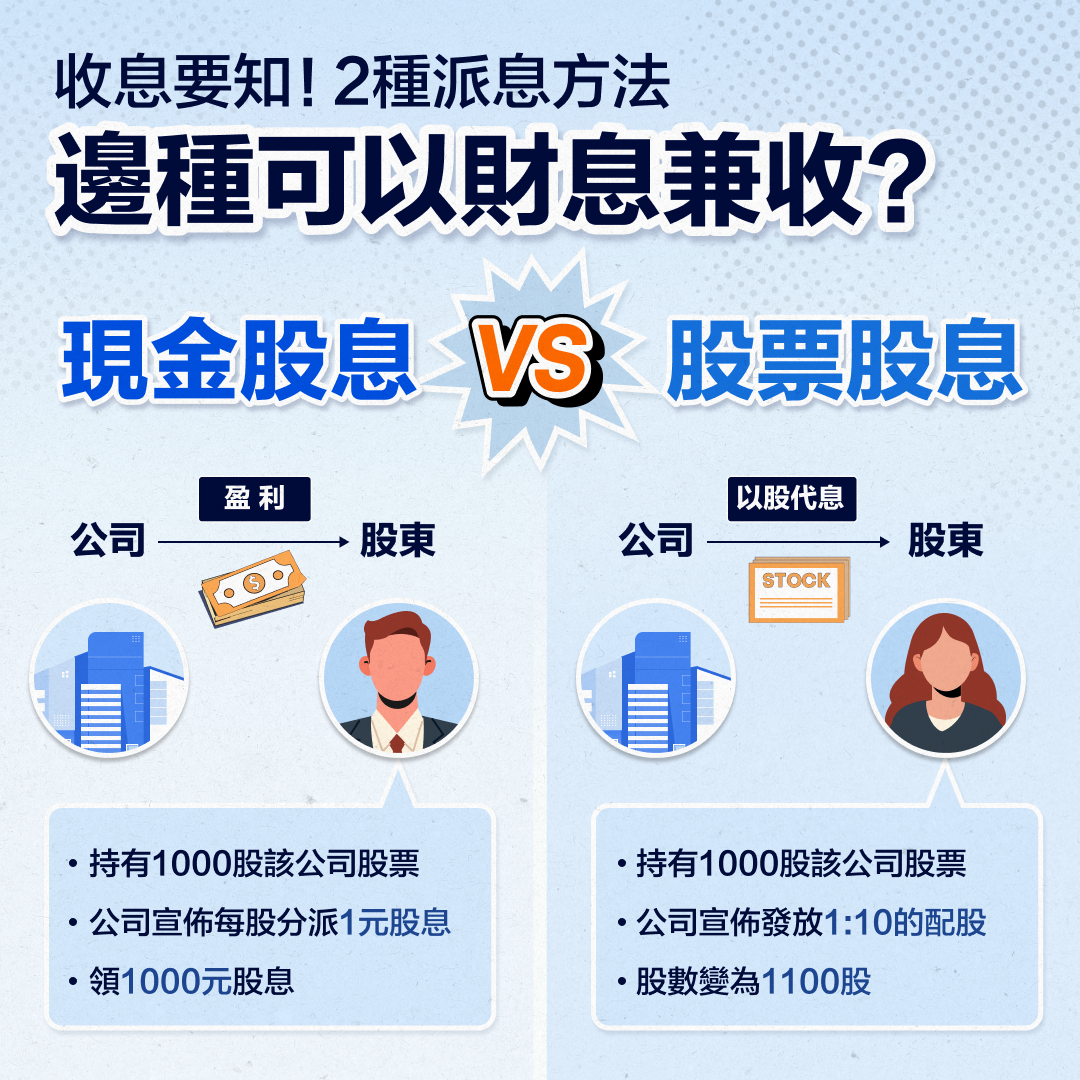
What are the advantages of dividend stocks?
Stable Income Source: Companies that pay dividend stocks can distribute dividends consistently because they possess stable profitability. If a company can continuously generate profits in a steady manner, investors can maintain a corresponding source of income.
Long‑term value preservation and appreciation potential: Income stocks are generally companies that are relatively mature and stable. Not only do their stock prices tend to be less volatile, but when earnings grow, they also have the opportunity to increase dividends, which can drive up stock prices and deliver capital appreciation.
Countering Market Volatility: Because investors have a certain demand for dividends, the price volatility of dividend stocks is generally lower, enabling these stocks to effectively withstand market downturns.
What should you pay attention to when investing in dividend stocks?
Dividends are not guaranteed: Even if a company is able to pay dividends on a consistent basis, the amount of dividends paid cannot be guaranteed. When a company reduces or suspends dividend payments due to economic downturns or declining profits, it may impact investors’ income.
Limited Growth Potential for Stocks: Precisely because income‑generating stocks come from companies that are relatively mature in their development, their growth potential is also comparatively limited.
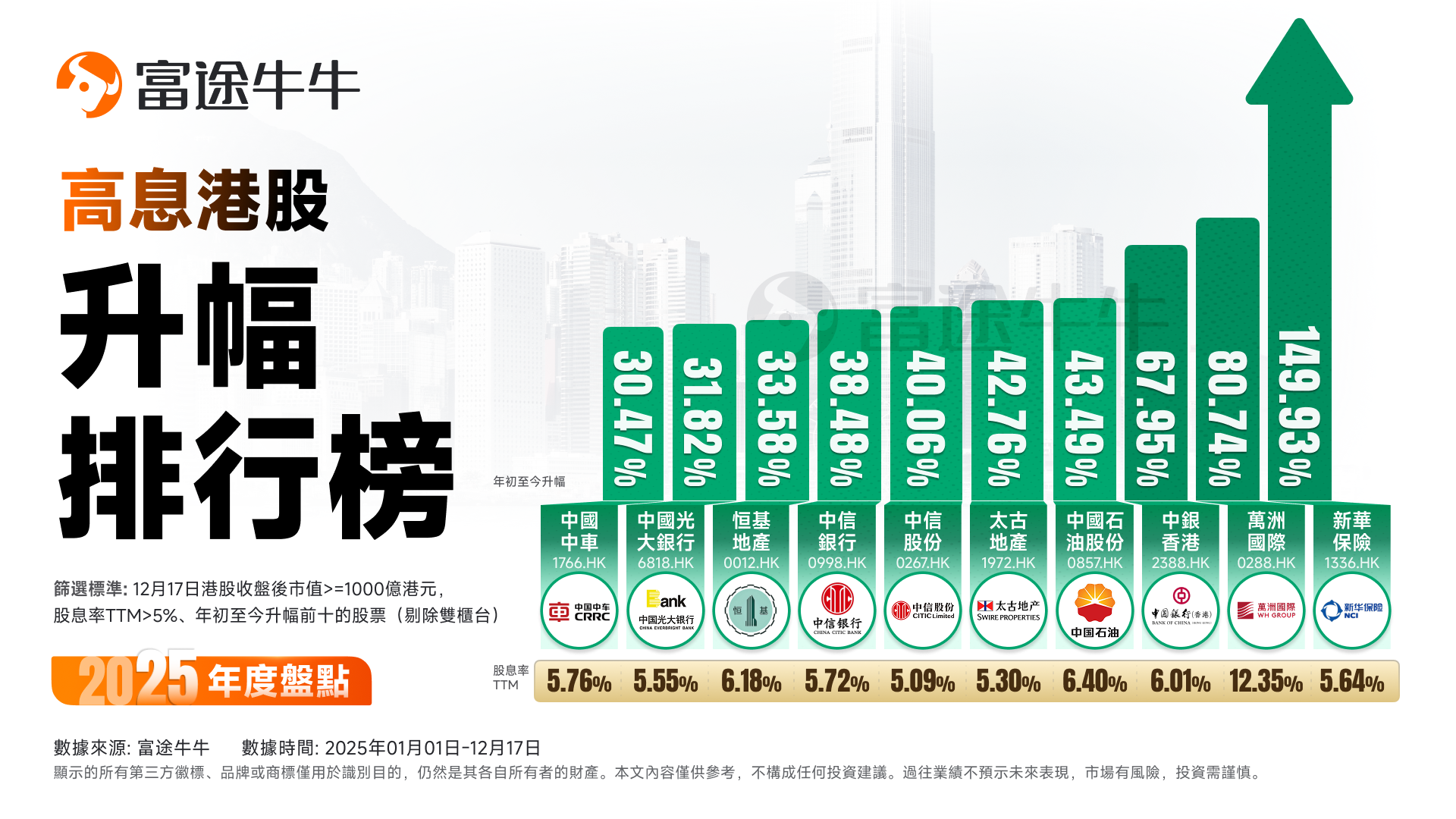
Lu Shu’s Stock Recommendations for Dividend Income
A veteran stock market commentator known as “Uncle Lu”Chen YongluAt the “Futu Investment Expo” investment strategy sharing session on March 2025, under the theme “Hong Kong Stock Market Analysis: Which Income Stocks Are Worth Noting in a Rate-Cutting Cycle?”, it was mentioned that “when considering income stocks, one must pay attention to the company’s prospects—how much dividend it may distribute in the future, whether the company has repurchased shares, and the sustainability of its business. Investing in income stocks requires a long‑term perspective; remember to factor in ex‑dividend dates, and also consider your overall investment portfolio.” Uncle Lu stated that most of his wealth comes from income generation.
AndFund Investment Director Lin Jiaqi (KK)During the sharing session, it was also emphasized that when investing in dividend stocks, one should pay close attention to the company’s cash flow and debt ratio to assess whether the company is financially capable of distributing dividends, as well as compare its dividend performance over the past five years. KK pointed out: “This year, I’m optimistic about domestic bank stocks—these companies boast high stability and solid fundamentals. For example, telecom stocks and China‑specific value stocks are worth considering, and you can further diversify risk by adding local public sector stocks to your portfolio.”
Stable Dividend Stock Picks: Bank Stocks
Bank stocksGenerally, they have stable income streams, diversified financial operations, strong financial performance, and relatively robust risk‑resistance capabilities. As the core of the financial system, they offer relatively stable dividend payouts, with high dividend yields, strong liquidity, and substantial policy support.
Stocks | Entry fee per lot (HKD, as of market close on February 6, 2026) | TTM Dividend Yield |
53,920 | 3.77% | |
6,490 | 5.14% |
A Low-Threshold Option for Yield: Utility Stocks
Utilities stocks refer to the shares of companies that provide public services such as electricity, natural gas, water supply, and other infrastructure—such as Hong Kong Electric and China Gas. Because these services are essential to everyday life, demand for them remains largely unaffected by economic cycles and tends to be relatively stable.
Stocks | Entry fee per lot (HKD, as of market close on February 6, 2026) | TTM Dividend Yield |
37,500 | 4.16% | |
31,100 | 4.53% |
Dividend Stocks: Insurance Industry
Insurance IndustryReclassified as “alternative dividend assets,” some companies offer attractive dividend yields and are benefiting from shifting interest rate environments.
Stocks | Entry fee per lot (HKD, as of market close on February 6, 2026) | TTM Dividend Yield |
6,045 | 4.67% | |
2,075 | 4.87% |
High-Yield Hong Kong Stocks: Energy Sector
The energy sector boasts robust cash flow, with leading companies enjoying a solid market position, delivering substantial dividend payouts and benefiting from rising average oil prices, resulting in attractive dividend yields.
Stocks | Entry fee per lot (HKD, as of market close on February 6, 2026) | TTM Dividend Yield |
24,020 | 5.75% | |
2,075 | 4.87% |
Stock Dividends: Telecommunications Industry
The telecommunications industry boasts stable revenue, strong cash flow, substantial dividend payouts, rigid demand, and strong defensive characteristics.
Stocks | Entry fee per lot (HKD, as of market close on February 6, 2026) | TTM Dividend Yield |
40,100 | 6.63% | |
10,140 | 6.06% |
High-Yield Hong Kong Stocks: Consumer Sector
Stocks | Entry fee per lot (HKD, as of market close on February 6, 2026) | TTM Dividend Yield |
4,720 | 11.58% | |
820 | 5.41% |
High-Yield Income Stocks: Hong Kong Real Estate Investment Trusts
Real estate can be considered a perennial industry in Hong Kong, and in accordance with the regulations of the Securities and Futures Commission,Real Estate Investment Trusts (REITs)At least 90% of income must be distributed to investors as dividends, and the returns are generally relatively high.
Stocks | Entry fee per lot (HKD, as of market close on February 6, 2026) | TTM Dividend Yield |
31,980 | 5.57% | |
3,490 | 7.43% |
*As of the close on February 4, 2025, the stock selector on the Futubull app screened for shares (sorted by market capitalization) based on the following criteria: market capitalization of HK$5 billion or more; dividend yield (LFY) of 4% or more; the sorting logic is to rank the top 2 in terms of market capitalization.
Other Income-Generating Options: Dividend Funds
Dividend funds typically pay investors interest on a regular basis, such as quarterly or annually. Investors can choose to have dividends paid directly in cash, or they can opt to reinvest those dividends back into the fund to purchase additional fund shares. In general, most dividend funds are primarily equity and bond funds.
Fund | Year-to-date increase (as of January 22, 2026) |
Fidelity Funds – Global Dividend Fund MDis | 19.74% |
Blackrock System Analysis Global Equity High-Yield Fund MDis | 12.22% |
Stable Value Fund – Global Equity Dividend Fund MDis | 9.30% |
Data Source: Futubull; As of the close on January 22, 2026; Screening Criteria: Trading currency in Hong Kong dollars, including funds that distribute dividends monthly, quarterly, semi‑annually, annually, and globally, with the top 3 largest funds in terms of asset size. | |
Futu helps you discover high-yield stocks with great potential.
In addition to the high-dividend list mentioned above, investors can also check the historical dividend records and dividend calendars of stocks anytime on the Futubull App. Use this information to identify companies that have consistently paid dividends in the past and make proactive arrangements before the dividend ex‑date!

How to Select High-Yield, High-Quality Stocks?
High dividend yields don’t necessarily mean it’s a good investment—there’s always the risk of earning dividends while losing money on the share price. In addition to looking at the dividend yield, you also need to consider the following seven key criteria:
1. Whether dividends can be paid on a sustainable basis
Good dividend stocks should have a history of stable dividend payments—ideally, they should have consistently paid dividends over the past few years without interruption or reduction.
2. Do you have a healthy financial position: stable profitability and low debt levels?
To determine whether a company’s financial condition is healthy, you need to assess whether its profitability is stable and whether it maintains low debt levels.
If profits are stable, it means the company can continue to distribute dividends; a low debt level indicates that the company’s financial burden will not be too heavy to affect its ability to pay dividends.
3. Is there sufficient cash flow?
Having sufficient cash flow means the company is able to pay dividends.
4. Does the dividend have growth potential?
In addition to looking at whether dividends are stable, you should also consider whether dividend growth is consistent. Consistent dividend growth can help combat inflation and boost real returns.
5. Industry and Market Position
If industry demand is sufficiently stable, the dividends of these income-generating stocks tend to be relatively steady; and companies that enjoy a competitive edge in the market are more likely to maintain stable revenue and dividend payments.
6. Is the shareholder return policy transparent and reasonable?
You can pay attention to whether the company’s shareholder return policy—such as its dividend payout ratio—is transparent and reasonable. If it is, investors will be more confident about making investments.
7. Does the economy have risk‑resilience?
During economic downturns or market volatility, good income stocks should be able to maintain relatively stable income and dividend payments.
How to Buy High-Yield Hong Kong Stocks
Go to the Futubull official website and register a new account.(Register Now)
Simply open a comprehensive account and deposit funds to start trading. Click “Open Account for New Customers” below to enjoy a welcome bonus of over 1,000 yuan!

Click 【Market】 > 【HK Stocks】 to find the high-dividend yield list and identify your preferred high-yield HK stocks. Futu offers commission-free trading for HK stocks for life!
Enter the desired face value and your expected purchase price, then place an order based on the “Reference Bid Price.” (This price is for reference only; the actual executed transaction price may differ from it.)
Click [Buy] — Enter your trading password. After the order is successfully submitted, please wait patiently for trade matching; the transaction price will not exceed the price you entered.